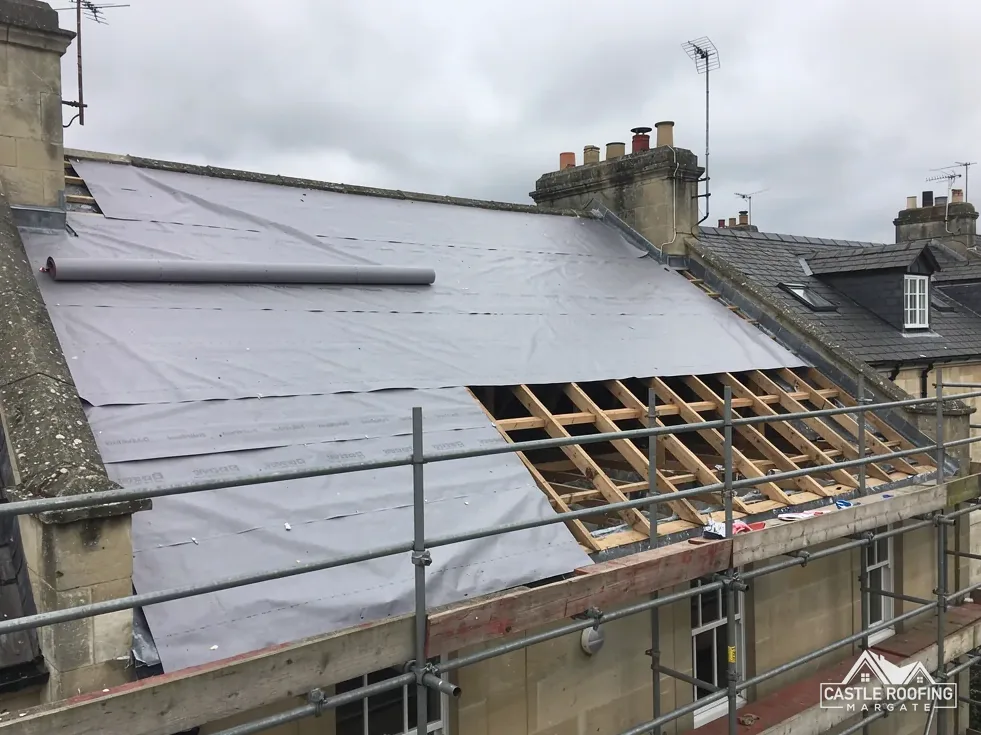
Sudden damage and slow decay are treated apart
A policy covers named events. A gale that strips a run of slates is an event. Nails that rusted through over thirty winters, battens that dried and split, and felt that perished in the loft add up to a lifetime of weather, and that is a different thing. Insurers draw this line, and the Ombudsman's consumer pages show where: gradual damage and wear and tear sit among the common exclusions.
This is why a claim may not pay for a brand-new roof in full. Suppose a storm lifts one slope. The policy may answer for that slope. If the surveyor then finds the rest of the covering was already past its best, the insurer can treat that part as ageing, which no policy of this kind is built for.
Before you ring anybody, read the exclusions in your booklet. Look for defective, deterioration, maintenance and workmanship. They often sit in a separate section from the headline cover. The signs you need a new roof page explains what ageing looks like from the garden and from the loft hatch.
The storm definition that counts is in your booklet
How windy does it have to be? There is no single answer, and any single figure deserves suspicion. In the Ombudsman's description a storm means violent wind, normally joined by rain, hail or snow, though any of those falling alone can amount to one; the Beaufort Scale is part of what it weighs. Some insurers write their own wind level into the policy.
So the test that counts is whatever your booklet says a storm is. Turn to the section headed storm, flood or weather damage and read it slowly. Some booklets name a wind force. Some describe the type of damage. Some say very little, and then the wording is argued over later.
Do not borrow a number from a website or a neighbour. Another firm's terms say nothing about yours. If the booklet is vague, ask your insurer in writing how it applies the definition to your roof, and keep the reply with your photographs. A clear question on paper is a better start than an argument on the phone.
Your first days after damage
The Institution of Structural Engineers puts photographs at the centre of any claim, as visual proof of what happened, and a claim goes smoother when they exist from the first day, dated and in focus. The order that tends to work is this:
- Tell your insurer first, before agreeing any repair, and ask what paperwork they want.
- Make the roof safe. Stopping rain getting in needs a roofer with proper access, never a ladder in the wind, and a temporary cover over the opening is often all that is needed until the insurer has seen the damage.
- Take photographs of the damage inside and outside before anything is moved.
- Keep every receipt for emergency work, because the insurer may ask to see them.
Which? reports that most insurers run 24-hour emergency helplines, and that only 32% of storm-related claims made in 2024 resulted in a payout. Read that second figure as a reason to document everything carefully, not as a forecast for your claim. No roofer can know the outcome before the insurer has decided, so treat any forecast of a payout as a guess.
When the new roof is a cost you plan for
If the insurer accepts part of the damage, expect an offer of repair or a payment for that part. Where the covering has simply aged out, replacement is the owner's decision and the owner's expense. That is a planned cost, and it is better spent on a calm survey in good weather than on an emergency in a gale. Planning early also lets you compare written quotes at your own pace, and Citizens Advice suggests getting at least 3 from different traders.
If you disagree with a decision, complain to the insurer first. When that does not settle matters, the Financial Ombudsman Service takes calls on 0800 023 4567. The question to put is what evidence of cause the insurer relied on.
Keep the roofer's paperwork apart from the insurer's. The roofer describes what was found and makes the roof sound. What the policy pays is decided between you and the company that issued it. For budgeting, the roof replacement cost guide gives typical UK ranges, and the roof replacement overview follows the job from survey to final tidy.