Pointing and brickwork
The stack stands in the open, and wind and rain act on it from every side. Mortar between the bricks, called pointing, is the first thing to show wear. A roofer looks for joints that are crumbling, recessed or missing, and for bricks whose faces are flaking.
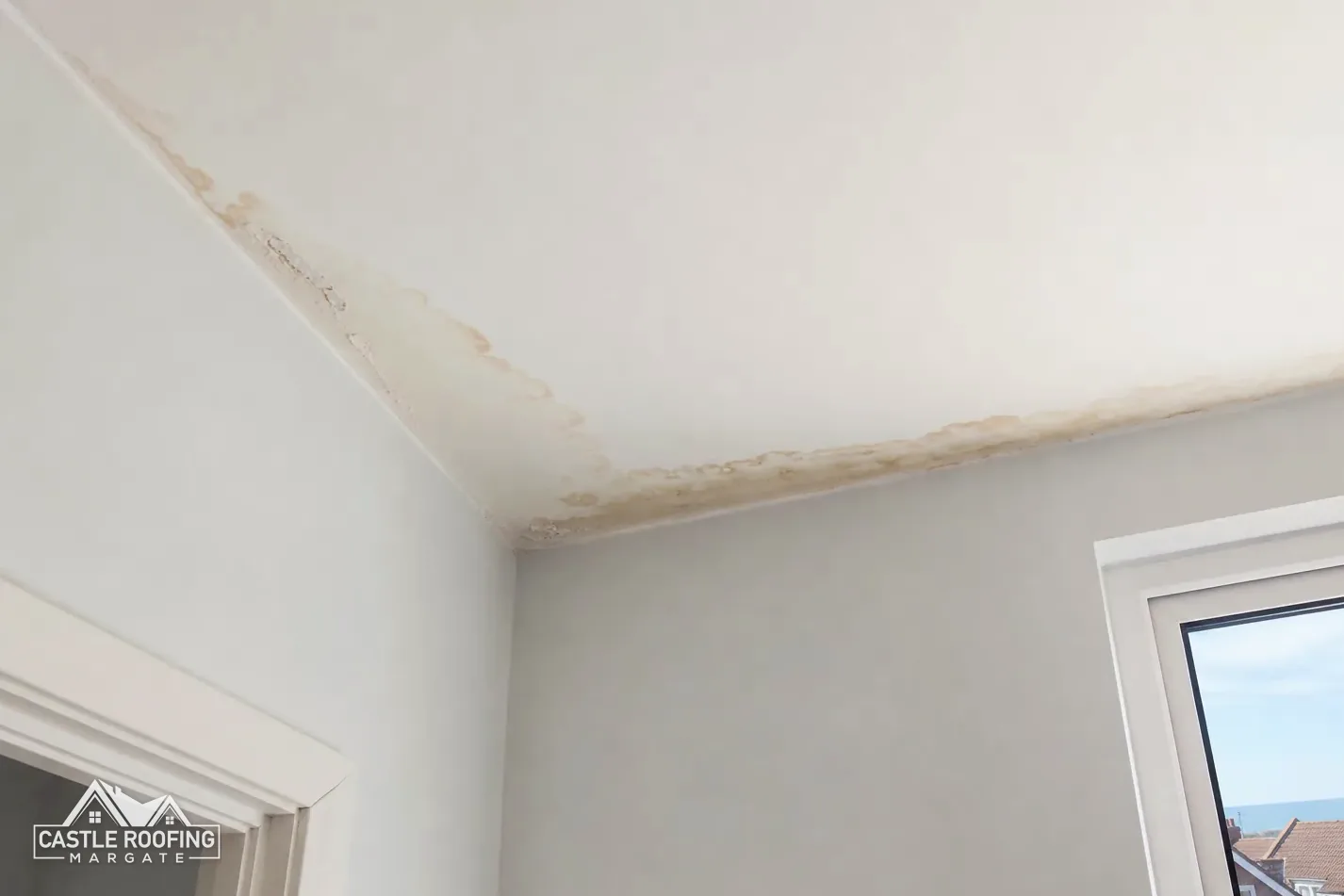
Gaps in pointing let water in, and water inside a stack can travel down into the chimney breast and show up as a damp patch on an internal wall. That is why a stain in a bedroom can lead the roofer to the top of the house.
The inspection also notes the general shape of the brickwork. A stack that looks even from the ground can look quite different up close, with cracks that run across several courses, bricks that have shifted or a face that bulges slightly. The roofer records each defect with a photograph and a location on the stack, for example the windward face or the side next to the roof. It matters because repair is by area: a few joints may need raking out and repointing, while a stack with failing bricks may need partial rebuilding.
For the repair side, see chimney stack repointing.
Flaunching, pots and the top of the stack
Flaunching is the sloping band of mortar capping the stack, which beds the pots and sheds rain away from them. It takes the worst weather, and it cracks, shrinks and eventually lets go of the pot. A roofer checks it for cracks, hollow sounds and gaps around the base of each pot.
The pots and any cowls come next. The inspection looks for cracks in the clay, loose or tilted pots, and caps or cowls that have worked free. A pot that rocks can fall on someone, and it lets water in as well.
An empty or capped flue also has to be checked. A cap should let air move through the flue, and an uncapped pot admits birds and rain. If a nest is found, the work waits, as set out in birds nesting in a chimney.
Everything at the top is photographed from above, using a tower, ladder or camera pole as the site allows, because the view from the ground cannot show a hairline crack in a flaunching. The photographs are the record you keep. If flaunching is new to you, the page on what is flaunching explains it in plain words.
Flashings, leaning and what you are shown
Around the foot of the stack, lead flashings seal the joint with the roof slope. The roofer checks that the lead is tucked into the mortar joints properly, that it has not lifted or split, and that the back gutter behind the stack is clear. A flashing that has pulled away is a common source of a leak.
The inspection also looks at the stack as a whole for any lean. A stack that has moved off vertical is a safety question, not only a repair one. Your roofer notes the direction and the extent of the movement, and whether it is old or new. Our page on a leaning chimney stack covers what follows.
The photographs are the point of the visit. You should receive:
- a close view of the pointing on each face;
- the flaunching and the pots from above;
- each flashing and the back gutter;
- any crack, gap or movement, marked with its position.
MyJobQuote (22 September 2026) puts chimney leadwork at between £350 and £920 as a national guide. Your own stack is priced once surveyed, and the findings show which repairs are needed at all.
From findings to a decision
An inspection ends with a short list, not a sales pitch. For each item the roofer should say what it is, how urgent it is, and what the options are. Some will be tidying jobs that can wait, such as a few worn joints. Others will be the kind that should not wait, such as a loose pot or a lifting flashing.
It helps to ask three questions of any chimney report:
- Which of these items lets water in, or could fall, and which are cosmetic?
- What happens if each one waits another year?
- Can the repairs be done together, so the access is used once?
That last point matters because stack work usually needs scaffold or a tower, and a scaffold standing on the pavement is licensed by Kent County Council. Access is easiest to plan once, and a list of findings makes that possible.
The inspection sits under our roof inspections service, and the repair work under chimney repairs. For how long a visit takes, see how long a roof inspection takes. Keep the photographs. They are useful for comparison next year and for any later conversation with an insurer or a buyer's surveyor.