Why look before the buyer's surveyor does
When an offer is accepted, the buyer usually commissions a survey, and a survey that mentions roof defects can reopen the price or slow the sale. A check beforehand turns that surprise into a list you already hold.
What the check is for is simple. It finds the faults you can see coming:
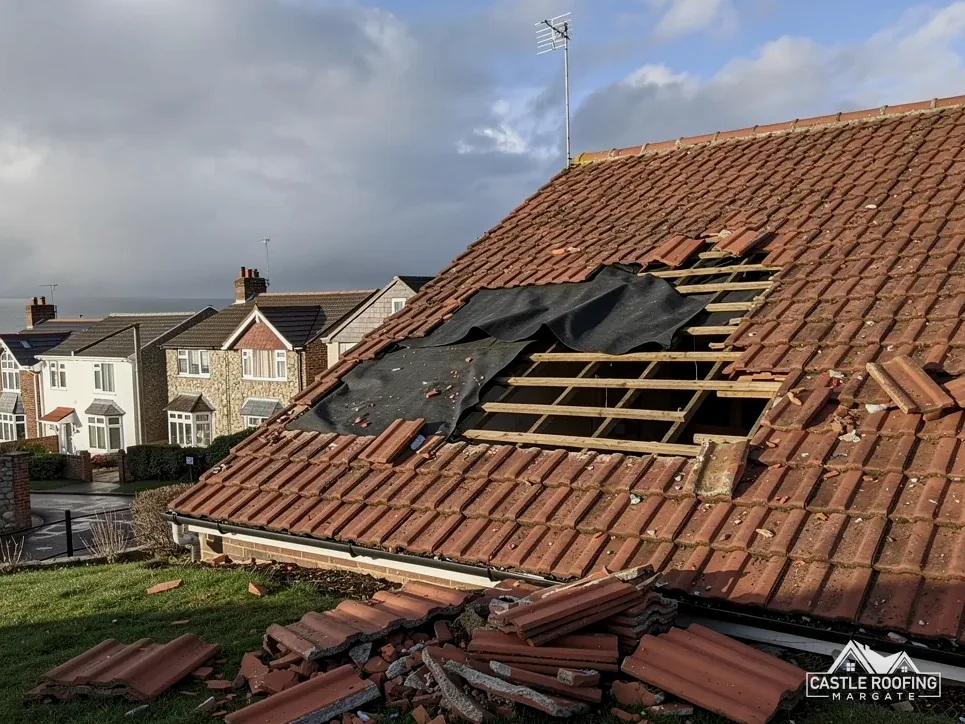
- Tiles or slates that have slipped, split or gone altogether.
- Worn or lifting lead flashings at chimneys and abutments.
- Ridge and hip pieces that have loosened.
- Blocked gutters or a leaking joint that has been staining the wall below.
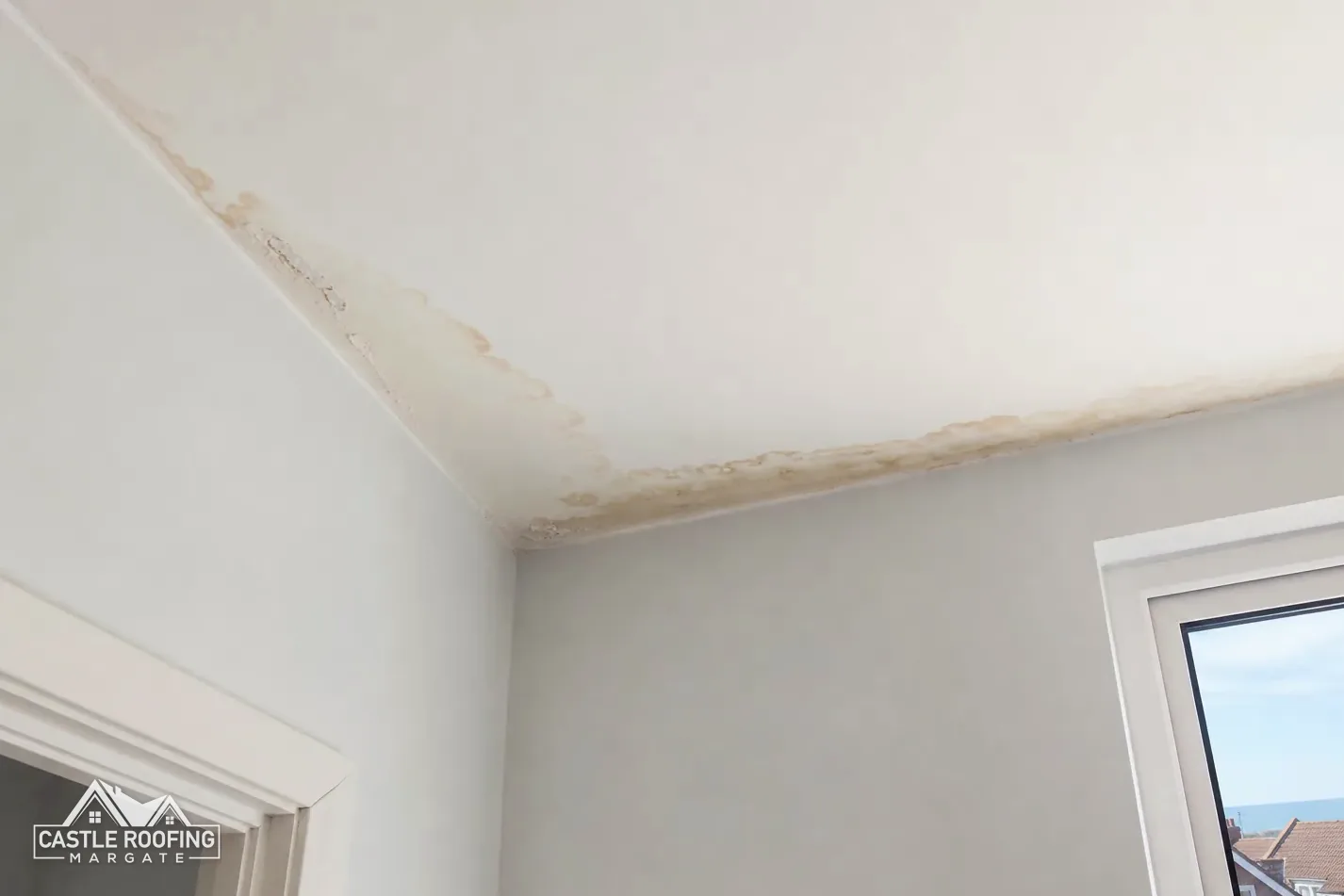
- Damp marks or daylight in the loft.
Some of these are small jobs. Which? Trusted Traders put a typical UK range of £75 to £400, ex VAT, on swapping between one and six standard tiles that are broken or gone (survey gathered November 2025). Which? says prices for London and South East homes tend to sit high on its scale, and that region takes in Kent.
MyJobQuote's October 2026 guide says a roof survey comes to around £300. Both are national typical figures, not our prices.
Fix small faults, but only the ones that matter
A pre-sale roof check is not an invitation to spend money for the sake of it. The useful split is between faults that let water in and faults that only look tired.
Water getting in is worth fixing before listing. A slipped slate over a bedroom, a failed valley lining or a gutter overflowing onto brickwork gets worse with every wet month, and a buyer's surveyor will mark each of them. Cosmetic wear, such as moss or faded tiles, is a smaller matter and a buyer can weigh it for themselves.
Repair is often the better buy over replacement. If the check finds an ageing covering with a handful of problems, mending those areas can be the right advice, and replacement comes up only where the roof leaves no sensible alternative. Lifespans are typical ranges, not promises: HomeBuilding gives 40 to 50 years for plain concrete tiles and 60 to 80 years for clay, so a roof in the middle of that range may need attention without needing renewal.
Do the repairs before photographs go in the listing, and keep the invoice with the report in the same folder. A fault repaired and recorded gives a buyer less to raise when the price is discussed.
Completion certificates and other paperwork
Buyers' solicitors ask about work done to the house, and roof work is no exception. If a previous owner or you had a re-roof, find out whether it needed building regulations approval and, if it did, whether a completion certificate was issued.
Approval is not always needed. The Planning Portal's test is that approval is normally not needed when the work touches under 25 per cent of the building envelope and under 50 per cent of the roof. Approval is needed for a new covering that is 15 per cent heavier or more. Dover District Council takes a stricter line inside its district, which makes a Dover house the exception.
If a certificate exists, building control holds the record. Thanet District Council, for example, charges £54 including VAT per copy of a completion certificate from its register, and its team is on 01843 577522.
Gather these in one folder:
- Completion certificates for re-roofs or chimney work.
- Invoices and written prices for past roof repairs.
- The check report, with photos of each slope.
Photos, the report and what to hand over
The most useful thing to hand a buyer is a dated account of how the roof stood on the day it was checked. A report with a photo of each slope, close-ups of repaired areas and a short note of findings answers most questions before they are asked.
Photos work best when they show the roof as it is. Wide shots place each slope against the house, and close ones show the detail at ridges, valleys and chimney flashings. Where a repair was carried out, keep the before and after pair together with the invoice.
Be straight about what the check could not reach. A roof studied from the street and the loft hatch is not the same as one examined from close access, and the report should say which it was. RICS makes a related point about spray foam: roof timbers buried under it cannot be fully checked.
Ask us for a look at the roof before you list. See roof inspections for how the visit works, and whether a homebuyer survey checks the roof for the buyer's side of the same question.