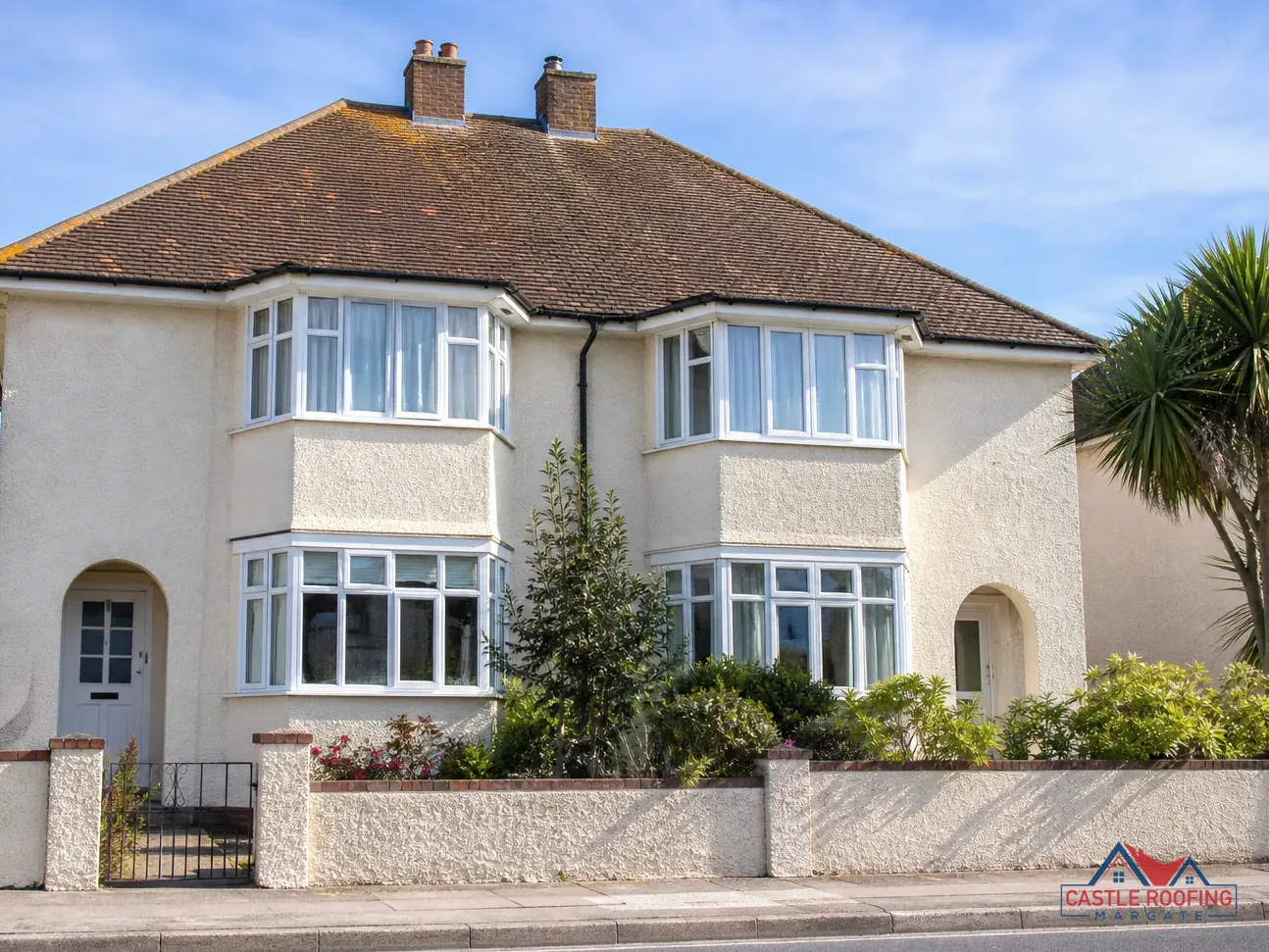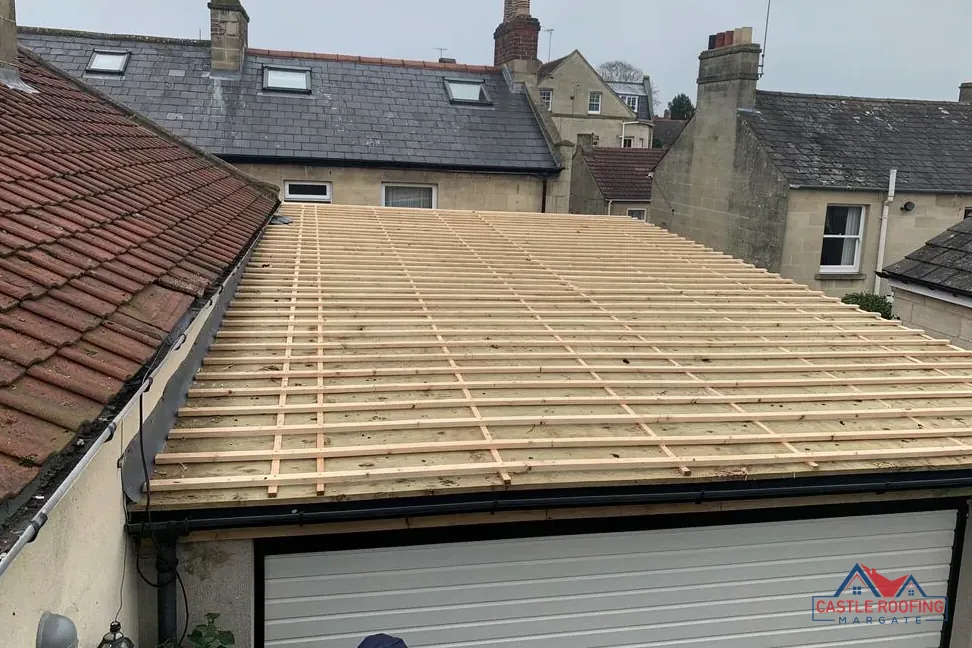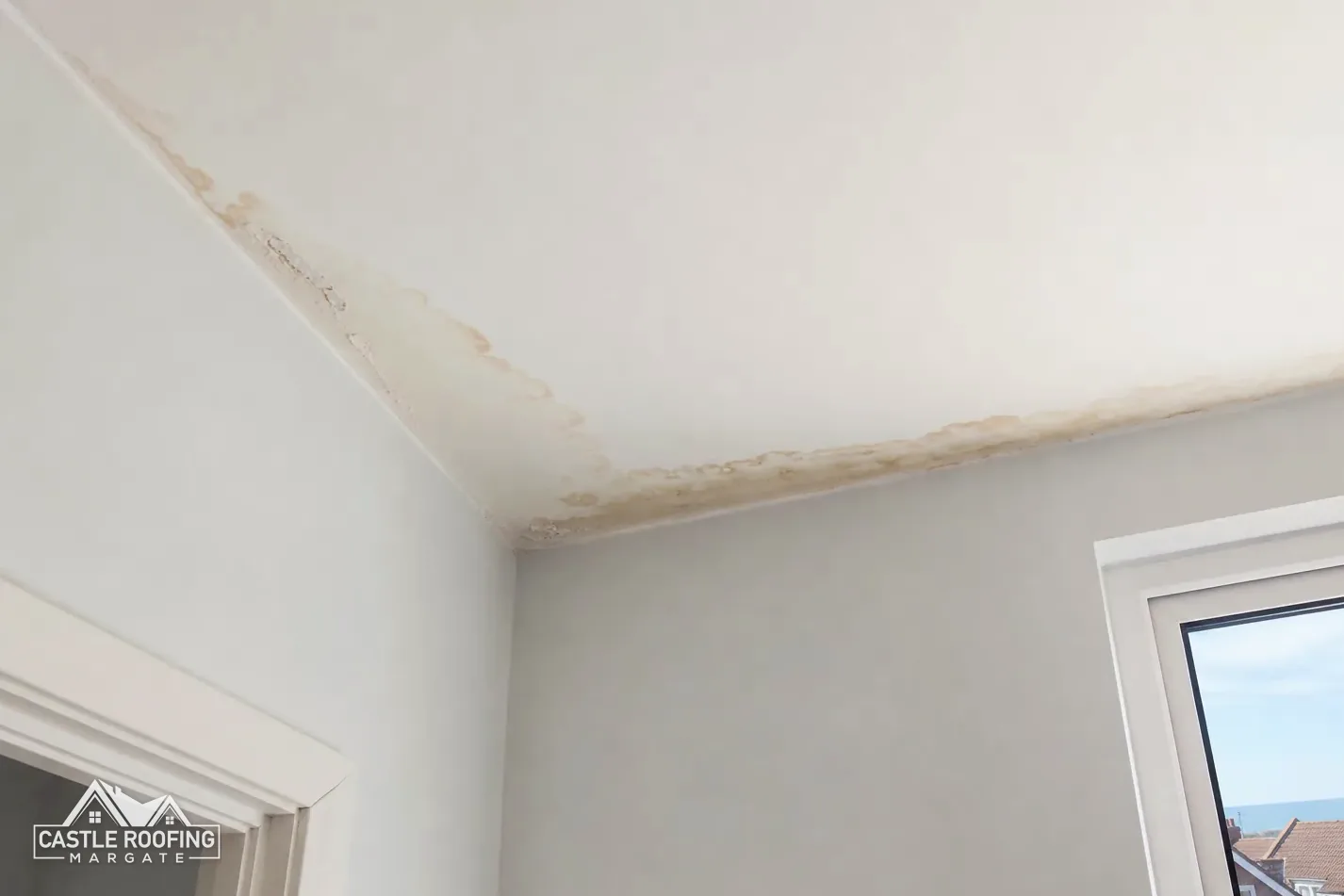
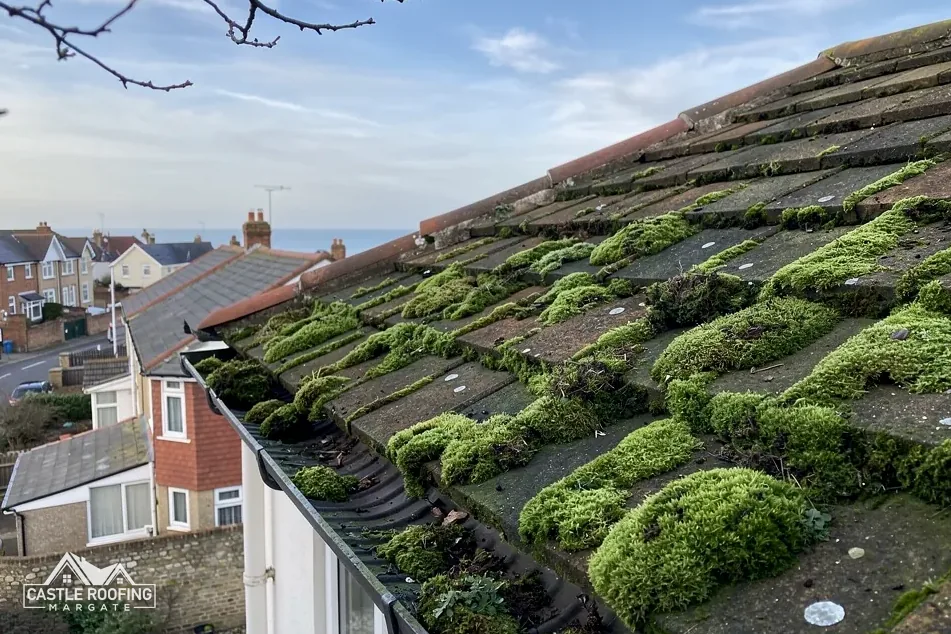
Six habits that slow a roof's decline, working from the gutters upward: keeping water moving, clearing moss, letting the loft breathe, mending small faults, knowing typical lifespans, and timing inspections.
Nobody can promise how long a roof will last. Slate, clay, concrete, felt and rubber each have a published range, and what a particular roof gets depends on how it was laid, how exposed the site is and whether somebody noticed the first loose fixing. What you can control is the speed at which small faults are found and put right.
The tips below are ordered from the ground up, starting where water leaves the roof. Water that cannot leave the gutter sits against the eaves. Moss that holds damp against the covering lets frost work at it. A cold loft with no air movement rots timber from the inside. A slipped slate left alone lets in water that the underlay was never meant to carry for long.
None of the checks needs you to climb onto the roof, and none of them should. A ladder, a pair of binoculars and a torch in the loft will tell you most of what you need to know. The rest is for a roofer, and our roof inspections page explains how a visit works and what the written report holds.
Keep the gutters moving first
Gutters carry rain off the roof edge and away from the walls. When an outlet blocks with leaves, silt or moss washed down from the tiles, water backs up and spills over the front edge, or it finds its way behind the fascia, the board that closes off the ends of the rafters, and into the soffit, the board under the eaves. Both boards rot slowly and quietly.
A gutter needs a gentle slope towards its outlet. Brett Martin, a gutter maker, advises 1 mm of drop for every 600 mm of run, so a joint that has sagged and holds a pool of water is a fault to correct, not just a mess to scoop out. Watch the gutters during the next heavy shower. Water pouring over the front, a drip from a joint or a damp streak down the wall below all point to something that needs attention.
On cost, Which? Trusted Traders priced the clearing of every gutter on a house at £75 to £350 ex VAT, from a survey gathered in November 2025. Which? says London and South East homes are likely to land at the upper end of its scale, and Kent sits in that region. A roofer's visit to clear and check the lot is priced after a survey.
- Look for gutters that overflow in rain.
- Look for green growth and plants along the gutter line.
- Look for stains below a joint or a downpipe shoe.
- Look for brackets that have pulled away from the fascia.
Moss, lichen and overhanging trees
Moss on a roof is not always a fault in itself, but it holds water against the covering and can slip into the gutters in clumps. On a pitched roof in poor condition, thick moss can hide a cracked tile or a gap at a verge, the edge at which a roof ends at a gable. Look at how much sits in the valleys and just above the gutter line.
Cleaning is a job to think about before you book it. Ask any cleaner how they remove the growth, what they do about the debris that comes down, and whether they will tell you about anything loose they see. The price depends on access, size and the covering, and it is set after a survey. Do not scrape moss off a roof yourself from a ladder, because it comes away in sheets and the gutter below takes the mess.
Trees close to the house add leaves, twigs and sometimes nests, all of which end up in the gutters. Branches that rub on tiles can wear them over time. Ask a tree surgeon to cut back anything that touches the roof. Wild birds' nests are protected while in use: section 1 of the Wildlife and Countryside Act 1981 makes it an offence to damage one intentionally while a bird is using it or building it, so check before any cutting begins.
Moss returns wherever conditions favour it, and a shaded slope is slow to dry. Expect to look at the same slope again next year.
Let the loft breathe
Warm, damp air from the house rises into the loft. If it cannot get out, it condenses on the cold timbers and the roof above them, and the result can look just like a leak. Over several winters it feeds mould and rot in the rafters and in the underlay on top of them. Underlay is the membrane that runs over the rafters and under the battens, which are the narrow timbers the tiles or slates are fixed to.
The current standard for managing damp in buildings is BS 5250:2021. Marley's cold roof guidance for HR underlay, a non-breathable type, asks for a 25 mm opening running the length of the eaves where the pitch is 15 degrees or less, and 10 mm above that. Another roof design needs different openings, so read those figures as a sense of scale and not as a specification for your house.
Trouble can start with something stuffed into the eaves. Loft insulation pushed hard against the edge, boxes stored against the roof or a blocked vent grille all choke the air path.
- Look for daylight or a vent at the eaves on each side.
- Check that insulation stops short of the eaves and does not block them.
- Look for damp patches, black spots or dripping nails on the underside of the roof on a cold morning.
- Make sure bathroom and kitchen extractors vent outside, not into the loft.
If the underside of the roof has been sprayed with foam, the timbers cannot be fully checked, so ask a roofer to judge the outside covering with extra care.
Mend small faults while they are small
A single slipped slate is a cheap job. Left, it becomes a wet batten, then a damp rafter, then a patch of ceiling. The same goes for a cracked piece of ridge mortar, a lifted flashing or a gap around a chimney stack. Each step along that chain makes the eventual fix bigger.
For typical UK ranges, Which? priced replacing between one and six standard tiles at £75 to £400 ex VAT, and a new ridge tile at £80 to £300 ex VAT. MyJobQuote's October 2026 page on tile replacement says around £215 on average, and its figure for an average roof repair in 2026 is around £650. These are national guides and not Castle prices, and the price for your roof is written after a survey. Our page on a roof check before winter covers the faults worth catching ahead of the cold months.
Ridges are worth a note. Marley points out that after the 2015 amendments to BS 5534, mortar alone could no longer be trusted to hold the roof covering in place. A loose ridge is therefore re-fixed mechanically or with a dry-fix system to BS 8612:2018. Dry-fix means the ridge, hip and verge pieces are held by clips and screws, not bedded on mortar alone.
- Slipped or cracked slates and tiles.
- Cracked or missing ridge and hip mortar.
- Lifted or split lead flashings and soakers, small folded lead sheets slid beneath the slates at a joint.
- Loose or missing verge fixings.
Photograph each one before and after the repair, so the roof has a record you can hand to the next roofer or a future buyer.
How long coverings last: typical ranges
The figures below are ranges that published guides give, and none is a promise. Where two guides disagree, both appear. Exposure, pitch, workmanship and upkeep all move a real roof up or down within them, and a covering that has outlived its range is not necessarily failing the day after.
| Covering | Years | Source |
|---|---|---|
| Welsh slate | 100+ | HomeBuilding |
| Clay tile | 60 to 80 | HomeBuilding |
| Plain concrete tile | 40 to 50 | HomeBuilding |
| Felt flat roof | 10 to 15 | HomeBuilding |
| Felt flat roof | 10 to 20 | Less |
| EPDM | 25 to 30 | HomeBuilding |
| EPDM | 30 to 50 | Less |
HomeBuilding's figures come from a page last updated on 30 September 2025. Marley reports that the BRE sets a minimum life expectancy of 60 years for clay tiles, and that figure belongs to clay alone. Marley also says that its own tile figure is not a guarantee. EPDM is a single-layer rubber membrane for flat roofs. HomeBuilding quotes a lead flat roof at 60 to 100 years, and MyJobQuote puts lead flashing at over 80 years, which is a floor and not a ceiling.
Use the ranges to plan, not to relax. A slate roof may survive longer than its fixing nails, and a young felt roof can fail early at an upstand, the vertical edge where the felt turns up a wall. Roofs on an open site work harder than sheltered ones, which is another reason to look often.
When to have the roof looked at
Pick fixed moments, so inspection does not depend on remembering. Two fit naturally: after a spell of severe weather, and in autumn before the cold arrives. Met Office figures for the Manston climate station, averaged over 1991 to 2020, show about 613 mm of rain a year, 110.05 days with 1 mm or more of rain and 21.43 days of air frost. Manston is in Thanet, so the frost count in particular is a fair reminder of what a winter roof goes through.
The same Manston averages give a mean wind speed of 9.86 knots at 10 metres, rising to 11.21 knots in January. That describes one station across thirty years and says nothing certain about your street. Fixings are calculated for a site's exposure under BS 5534, which is why a roof on an open plot is specified differently from a sheltered one.
Between visits you can do three things safely from the ground:
- Walk round with binoculars and look for slipped slates, tilted pots or missing ridge pieces.
- Check the gutters and downpipes in rain.
- Go into the loft in daylight and look for stains, damp or light where there should be none.
After a gale, see our guide to a roof inspection after a storm. How often a full inspection is worth doing is set out in how often a roof should be inspected. When a roofer visits, ask for photographs of anything found and for a total written price for the work. Keep the report with the house papers, because a dated record of past checks is useful when you sell.