Four things in order: where the water is really coming from, what to do inside before anyone climbs a ladder, who to ring first if you are insured, and what a proper permanent repair involves.
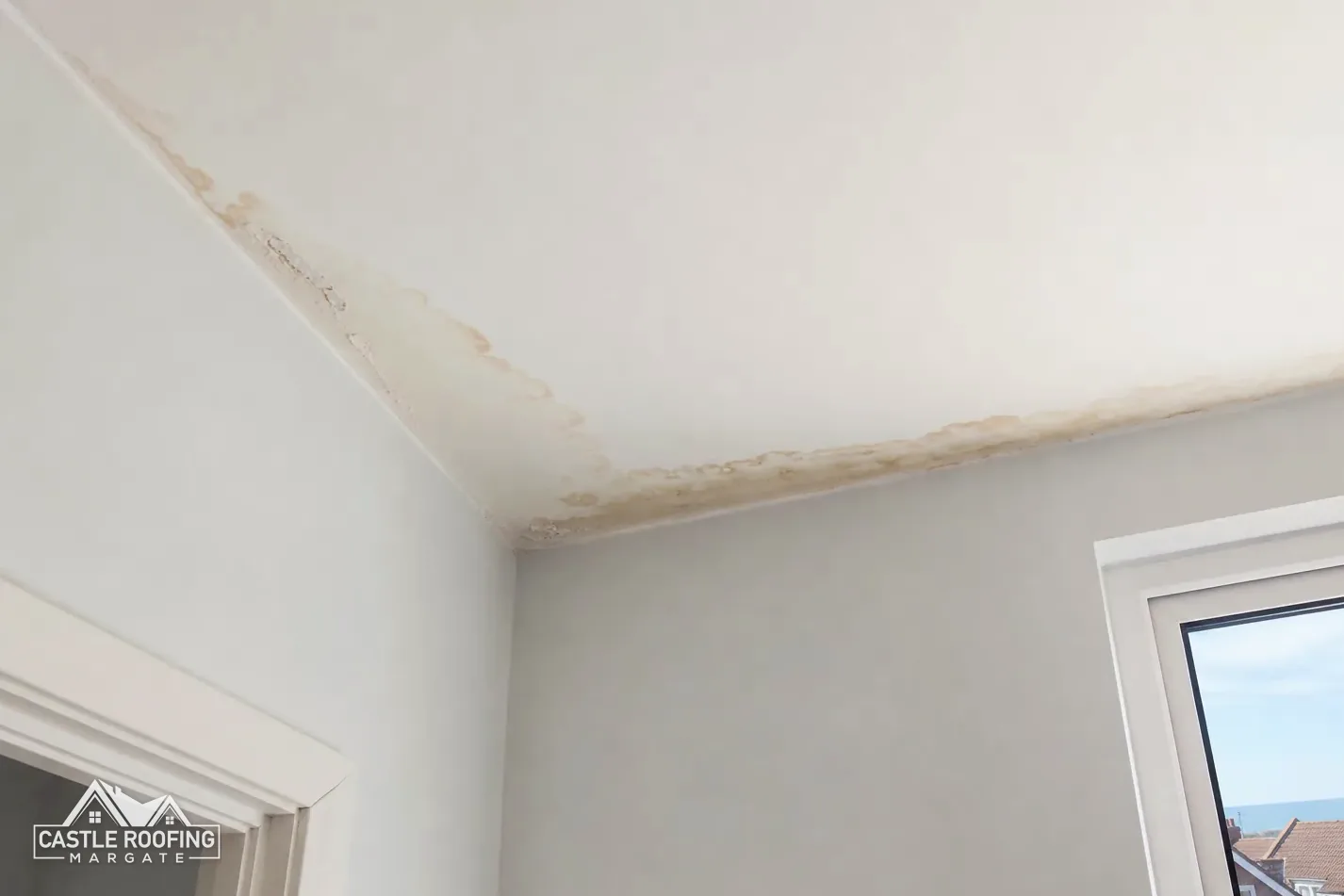
A leak tends to show itself at the worst moment: a brown ring on the bedroom ceiling after a wet night, or a steady tap into a bucket on the landing. The instinct is to find someone who will patch it quickly. That is fair enough, but repairing a leaky roof well starts with knowing where the water entered, and on an older Thanet house that point can sit a long way from the stain.
This piece walks through the job the way we work it on a call. First we find the cause, because a patch over the wrong spot only moves the problem along the rafters. Then we make the roof safe, which is a different job from fixing it. Then, once you have spoken to your insurer and the weather allows, comes the permanent repair, done to the standards slaters and tilers work to now. Last, we set out your rights when you invite a roofer round for an urgent job, because they are not the same as for a planned one. If you need someone on the roof now, our roof repairs and emergency page has the number and the WhatsApp route.
Why the stain is rarely under the hole
Rain that gets past a slate or tile does not drop straight through. It lands on the underlay, the sheet laid under the battens (the thin timber strips the slates hang from), and runs downhill until it meets a gap, a nail or a sag. From there it can follow a rafter or the top of a wall plate before it soaks into the ceiling below. On a roof with old bitumen felt, a tear near the ridge can show as a damp patch two metres lower, over a different room.
So the stain tells you roughly which slope to look at, and little more. On period terraces and villas, the places we check first are these:
- Lead flashings, the strips sealing the junction of roof and chimney or wall, and the soakers, little folded sheets of lead slipped under each course of tiles at that junction.
- Valleys, the channels where two slopes meet, which carry more water than any other part of the roof.
- Flaunching, the sloped mortar bed on top of a chimney stack that holds the pots and throws rain off.
- Ridge and hip tiles, the cappings along the top and the angled edges, especially where the mortar under them has cracked.
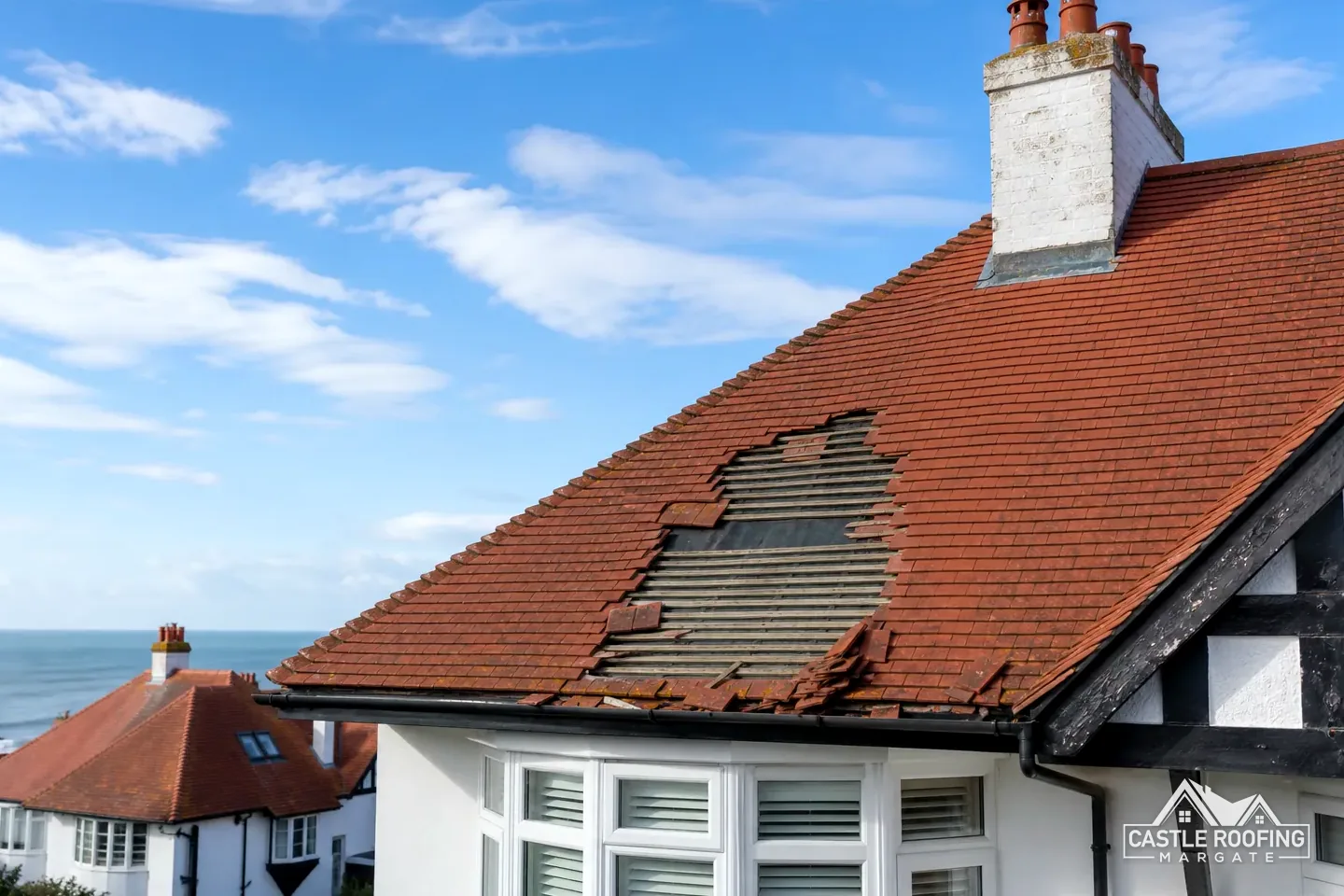
- Slipped or cracked slates, often from a nail that has rusted through.
- Gutters and outlets that overflow and push water back under the bottom course.
Our guide to finding the source of a roof leak goes deeper into how each of these fails and what the marks inside look like.
What you can safely check yourself
You can learn a lot without going near a ladder, and you should not go on the roof. Slates break underfoot, moss is slippery and a wet pitch gives no grip. Everything useful is visible from the loft, the garden or the pavement opposite.
- Go into the loft in daylight with a torch, if it is boarded or you can stand on the joists safely. Look at the underside of the roof above the stain and uphill from it. Dark streaks on the timber, wet insulation or daylight through the slates all point to the entry.
- Touch nothing electrical. If water is near a light fitting or a junction box, turn that circuit off at the consumer unit.
- From the ground, look along each slope for a slate sitting lower than its neighbours, a gap in the ridge, or a chimney pot leaning out of line. A pair of binoculars helps.
- Watch the gutters in the next downpour. Water spilling over the front edge, or a downpipe joint that drips, is worth noting.
- Note when it leaks. Only in driving rain from one side, only after days of wet, or only when the wind is up: each pattern narrows the search.
Some damp patches are not leaks at all. Moisture condensing in a cold loft can drip from nails and trickle down the underside of the roof, and it often appears on still, cold mornings rather than in rain. If you can, take a few pictures of what you see inside and out. They help us arrive with the right materials, and they help your insurer later.
Make safe first, repair properly after
When water is coming in, there are two jobs, and they are often done on different days. The first is to stop more damage tonight. The second is to put the roof back the way it should be, which needs dry weather, the right materials and sometimes access equipment that takes time to arrange.
Inside, the steps are simple. Move furniture and anything electrical away from the drip. Put a bucket under it with a towel in the bottom to stop the splash. If the ceiling has a bulge full of water, keep people out of that room; a plasterboard ceiling holding water can come down without warning.
| Stage | What it involves | What it is for |
|---|---|---|
| Make-safe | Slipped slates refixed, a sheet over the opening, loose ridge tiles secured | Stops water and falling pieces |
| Permanent repair | Failed slates, lead or mortar replaced to current standards | Ends the leak at its cause |
A make-safe should be described to you plainly as temporary, and it should be removed or built into the full repair. A sheet weighted with whatever was lying in the garden can lift in the next blow and do more harm than the original gap. Our page on temporary roof repairs covers what a sound make-safe looks like and how long it can reasonably stay.
Ring the insurer before the permanent repair
If the house is insured, speak to the insurer before the full repair goes ahead. IStructE sets the order out plainly: tell the insurer first, make the property safe, and keep photos and receipts. The make-safe stops further damage; the permanent work is better agreed with the insurer before it starts. On the evidence, IStructE's line is that photographs are "vital" to an insurance claim, because they show the damage.
Pictures worth taking, with the date if your phone records it:
- The stain or drip inside, wide enough to show which room it is in.
- Any wet belongings, carpets or flooring before you move or bin them.
- The roof from the ground, showing the slipped slate, missing ridge or bent flashing.
- Anything that came off the roof, left where it fell until it has been recorded.
Keep every receipt, including the make-safe invoice and anything you bought, such as a dehumidifier.
Your own policy's storm wording is worth reading first. In the Financial Ombudsman Service's description, a storm generally means violent winds, normally arriving with rain, hail or snow, and it adds that rain, hail or snowfall alone "can constitute a storm". Its guidance on storm damage claims also names gradual damage and wear and tear as common exclusions. Which? reported that only 32% of storm-related claims made in 2024 resulted in a payout, so a clear record matters. If you disagree with a decision, the Financial Ombudsman is on 0800 023 4567. We write up what we find on your roof; the claim itself stays between you and your insurer.
The lasting fix and the standards behind it
A permanent repair replaces whatever let the water in, and matches it to how the roof is built now. Several British Standards set out the method, and knowing their names helps you read any report a roofer gives you.
- BS 5534:2014+A2:2018 is the British code of practice that slaters and tilers work to. Marley notes that "Installing to BS 5534 isn't required by law", but the 2018 amendment brought normal re-roofing and repair work within its reach. Fixings are sized to suit the site's exposure, which matters on an open coastal plot.
- Mortar is still used on ridges and hips, but since the 2015 amendments it is no longer counted on alone to keep the tiles in place. Where a ridge has come loose, a mechanical fixing or a dry-fix system to BS 8612:2018 is the usual answer.
- Lead comes in codes by thickness. Code 3 is used for soakers and nothing else; each other detail, such as a chimney flashing or a valley, takes whatever code the specification sets.
- Underlay matters when patching. HR underlay is the non-breathable kind, so a cold loft under it needs ventilation in line with BS 5250:2021.
- Gutters need a fall to their outlet. Brett Martin's installation advice gives 1 mm for every 600 mm of run.
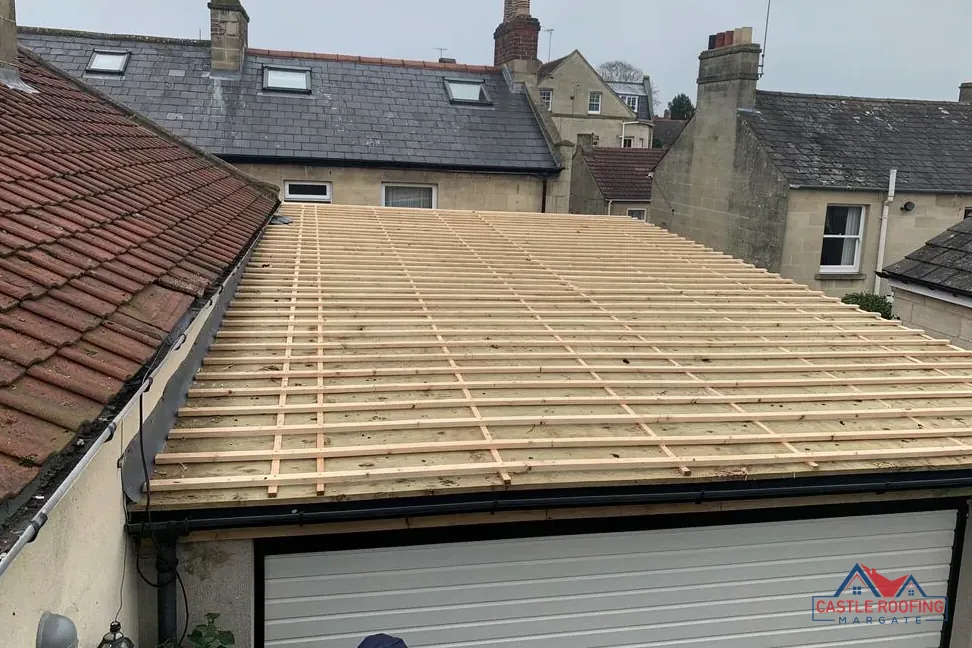
A good repair also leaves the roof around it no worse. That means matching slates or tiles where they can be matched, keeping the laps right and not burying a problem under fresh mortar or a smear of sealant. If the slope around the leak is failing everywhere, we tell you so, and explain whether a section can be stripped and relaid or whether the bigger job is the better spend.
Your rights when you call a roofer urgently
Work agreed at your home normally carries a cooling-off period, but an urgent visit you asked for is treated differently. It is worth knowing which applies before anyone starts.
- A contract made at your home, rather than at the trader's premises, is an off-premises contract. That covers one you sign after a survey at your kitchen table.
- For an off-premises service contract, the cancellation period ends 14 days after the day the contract is made, and you can cancel inside it without giving a reason.
- If the trader never supplied the cancellation information, the period can stretch by up to 12 months.
- Work may begin within the 14 days only when you request it in writing.
The exception is the call you make yourself when the roof is letting water in. Regulation 28(1)(e) of the Consumer Contracts Regulations 2013 removes the right to cancel where "the consumer has specifically requested a visit from the trader for the purpose of carrying out urgent repairs or maintenance". You can read regulation 28 on legislation.gov.uk. The exception covers the urgent repair itself; a larger job proposed on the same visit is a separate contract with its own rights.
Whatever the contract, the Consumer Rights Act 2015, section 49, requires the work to be done with reasonable care and skill. For free advice, the Citizens Advice consumer helpline is 0808 223 1133.
For planned work after the leak is stopped, Citizens Advice suggests asking at least 3 traders to quote in writing. Our answer on cancelling an emergency roof repair sets out where the line falls.