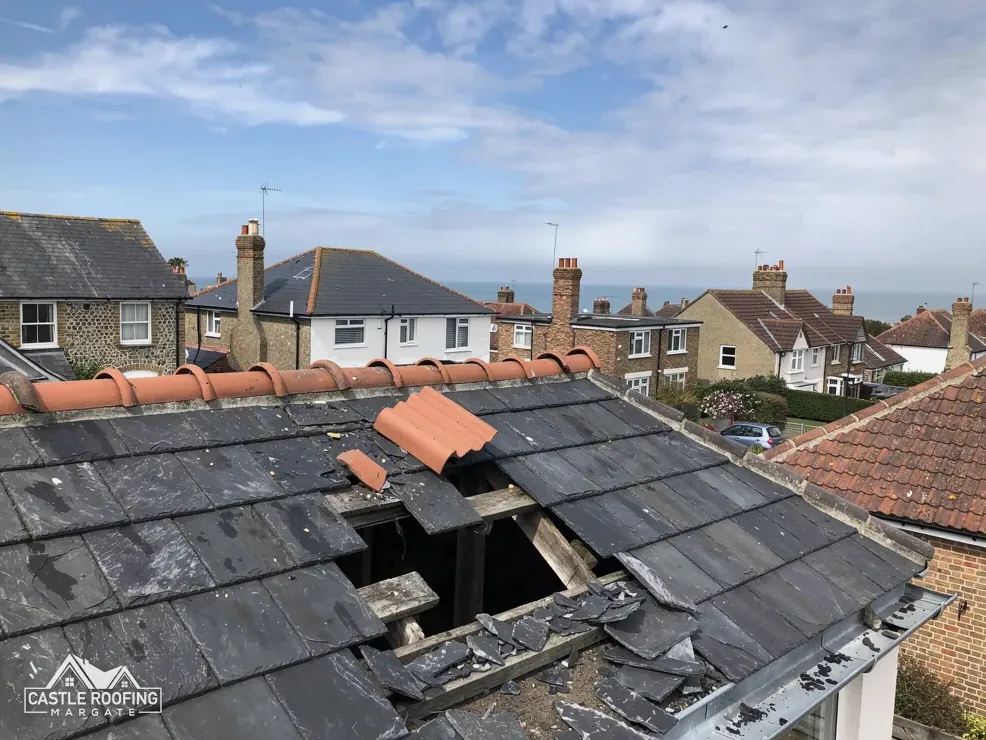
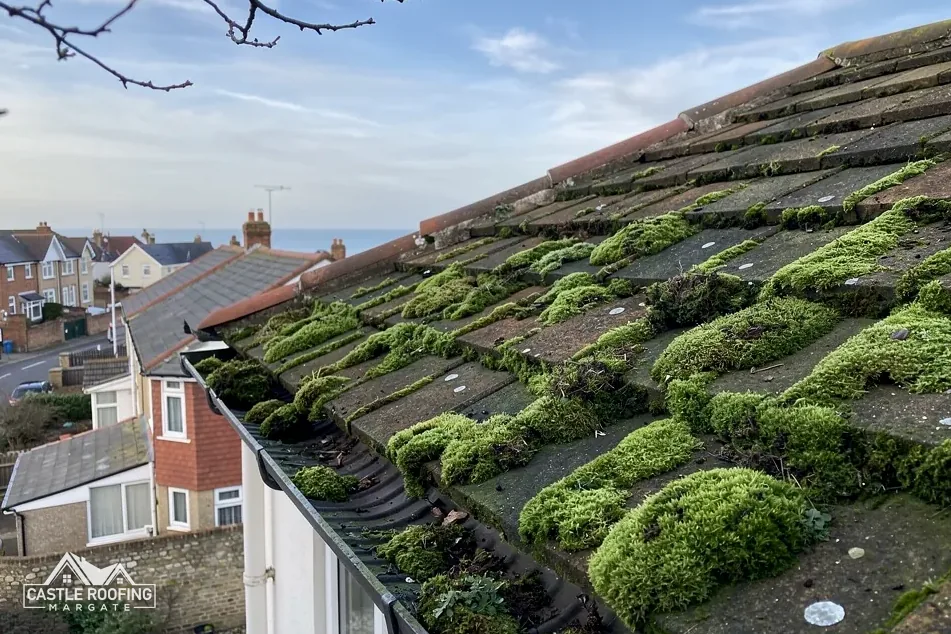
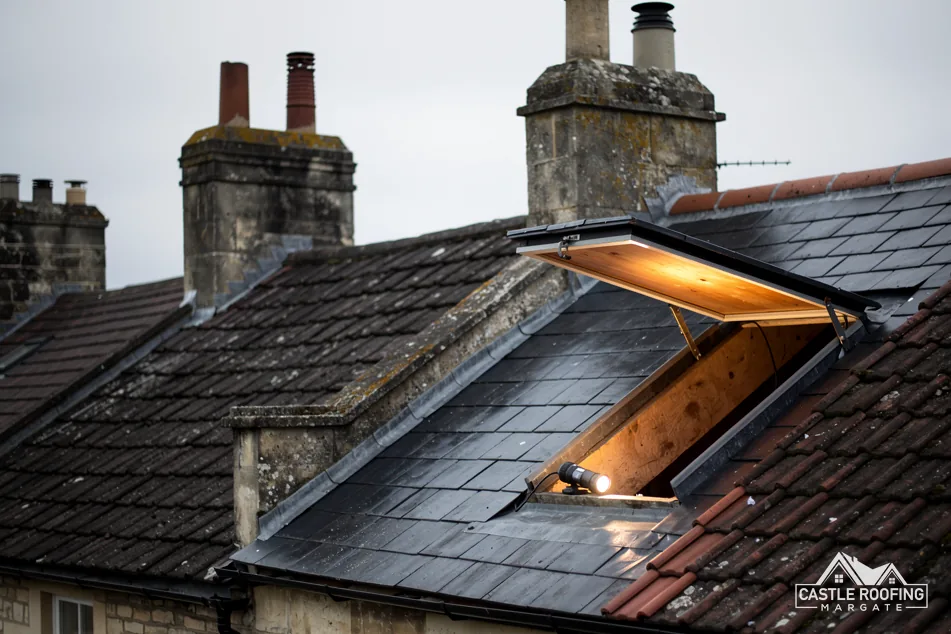
How one tile comes out and goes back
Roof tiles overlap like scales, and each row sits partly under the row above. That overlap is why one tile can be swapped without stripping the roof. The sequence on a typical repair runs like this:
- Reach the slope safely, with a roof ladder spreading the load across several rows so no tile takes a foot.
- Lift the tiles in the row above, just enough to free the broken tile's fixing. A purpose-made tool, called a tile lifter, is slipped under the edge for this.
- Take out the nail or clip holding the broken tile, and slide the pieces out.
- Check the batten under the gap. If it is soft or split, that section is cut out and a new piece fixed.
- Slide in the new tile, secure it with a nail or clip, and lower the tiles above back into place.
The whole job is small, but it depends on getting the new tile to sit at the same lap as the old ones. A tile that stands proud of its row collects water and lifts in wind.
What a small repair costs
Typical UK ranges from two published guides are below. The Which? figures leave VAT out, and the guide warns that prices rise in the South East, where Kent sits.
| Guide | Figure | Date |
|---|---|---|
| Which? Trusted Traders | £75 to £400 for one to six standard tiles, ex VAT | Nov 2025 |
| MyJobQuote | Around £215 for replacing roof tiles | Oct 2026 |
Neither figure prices your roof, which turns on access, the number of tiles and how hard the slope is to reach. A roof that needs a scaffold or a tower to work safely costs more than one that can be worked from a roof ladder, and a rare tile that has to be found second-hand costs more than a standard one off the shelf.
What you are quoted is a single total, set after the survey. Make sure VAT and any access cost are covered in the figure you are given, so the number on the page is the number you pay once the tile is in.
When one broken tile points to a wider problem
A tile that broke from a knock, a fallen branch or a ladder is a one-off. A tile that cracked or slipped by itself is asking a question, and it is worth looking at the neighbours before you book a one-tile job.
- Several tiles in a line have slipped, which suggests the nails or the battens behind them have failed.
- The same slope has a loose tile that rattles, a sign the fixings there have lost their grip. The page on rattling roof tiles explains that.
- The broken tile is the old type and a matching one is hard to find. Matching old roof tiles covers how reclaimed ones are sourced.
- The tile around the break has flaked or crumbled in layers, so a new tile would sit among others that will fail soon.
In those cases a single swap buys time rather than a repair, and the roofer should tell you that at the outset. If only the one tile has failed and the rest rings sound when tapped, one tile is the right answer and nothing larger is needed. The page on whether roof tiles need clips shows what holds a tile once it is back in place.
Slate and the single-slate question
A natural slate roof is repaired the same way in principle: the failed slate is slipped out and a new slate hooked or nailed in. Slates are thinner and more brittle than tiles, so the work is slower, and the fixing is usually a small metal clip that holds the slate's lower edge. Cupa advises against hook fixings on any slope shallower than 25 degrees, so the pitch of the roof decides which method is allowed.
Checkatrade's repair-rate table gives natural slate repairs at £150 to £220 per m², ex VAT, in June 2026. That rate applies up to 3 m², so it describes small patches, not a roof.
Slate is a long-lived covering. HomeBuilding gives Welsh slate 100 years or more, so a failed slate on a sound roof calls for a repair, not a new roof. The logic matches a tiled roof: find what has failed, mend that, and leave the sound slates where they are. The roof is worth re-covering when the nails have rusted across whole slopes, not when a handful of slates have dropped.
For more on the wider repair picture, see pitched roofing.