What BS 5534 sets out
BS 5534:2014+A2:2018 is the current British Standard for tiling and slating pitched roofs. It carries wind uplift formulas, and the point of them is that the type and number of fixings are calculated for the roof, not guessed by eye on the day.
Marley states that installing to BS 5534 is not required by law. That is accurate, and it is also the wrong place to stop. It is still the British Standard that the fixing schedule for a tiled slope is worked out under, repairs included.
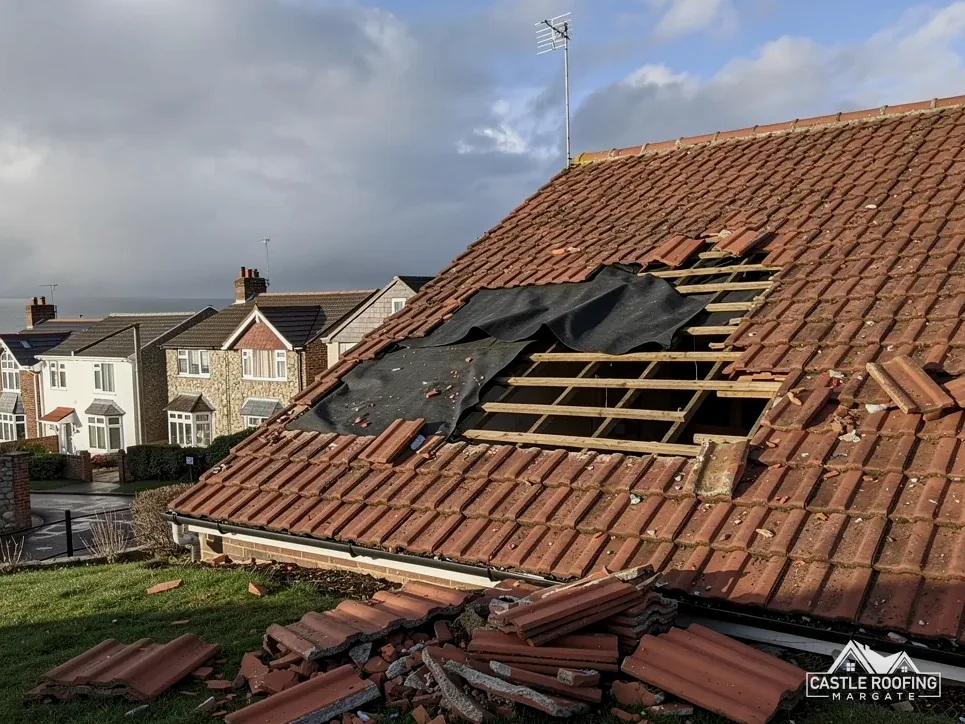
Since the 2018 amendment, ordinary re-roofing and repair work falls inside its scope. So a re-roof, or a repair that disturbs a good number of tiles, now sits under the same thinking as new work, and a patch job is no excuse for loose tiles.
The fixings themselves are simple. Nails hold the tile or slate to the batten. Clips are small metal retainers that pin a tile's lower edge down against uplift, and they matter most on interlocking tiles along the eaves, verges and ridge, where wind does the most lifting.
Fixings are set for the site
There is no single answer such as one nail per tile. How many tiles carry a clip, and whether every tile is nailed, depends on the tile, the pitch, the height of the building and how exposed the site is.
Cupa, the slate maker, notes that houses on slopes, hills or the coast, and tall houses, are graded as more exposed. On a Thanet roof the schedule is worked out from that roof's own exposure, using the BS 5534 calculation, so a house on an open site can need more clips than its neighbour behind a wall of trees.
For weather context, the Met Office records a mean wind speed at Manston of 9.86 knots for 1991 to 2020, with January at 11.21 knots. Those are averages, and a fixing schedule has to cope with gusts well above them.
| Factor | Why it matters |
|---|---|
| Tile type | Maker's own fixing rules |
| Pitch | Steeper slopes load fixings differently |
| Building height | Wind speeds rise with height |
| Exposure | Open or elevated sites grade higher |
Mortar, ridges and verges
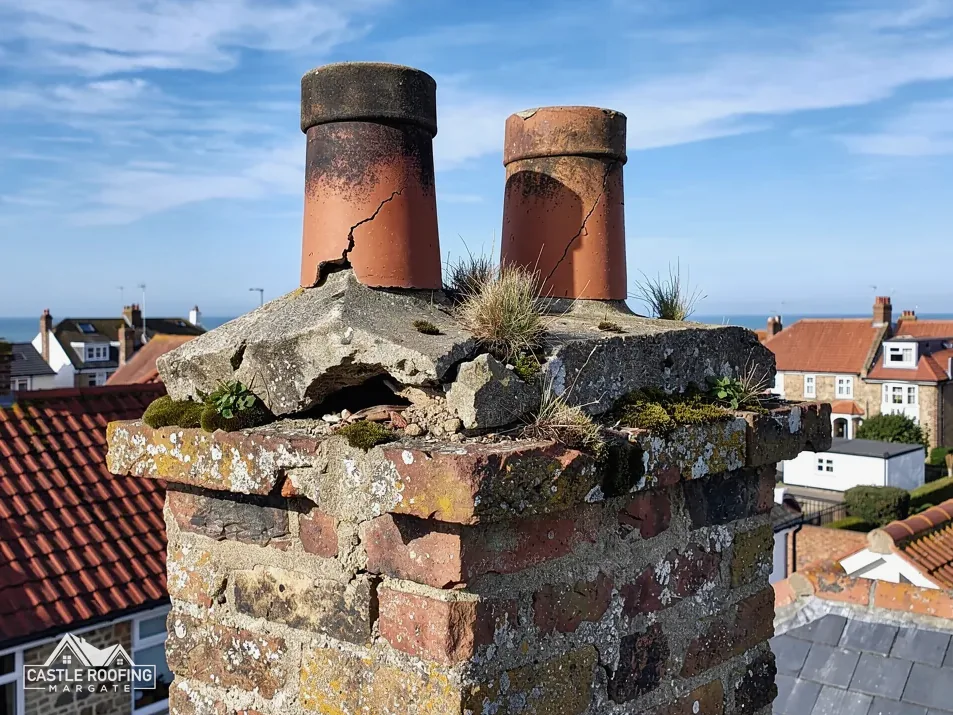
Mortar is not banned. What changed with the 2015 amendment is that mortar cannot be the only thing holding the covering down, and Marley adds that mortar's own tensile strength is no longer something to lean on by itself.
In practice a ridge, hip or verge bedded in mortar also needs a mechanical fixing, a clip, bracket or screw, so the tile stays put if the mortar cracks. Mortar tends to crack first at ridges, where the roof moves with the weather. A dry-fix system made to BS 8612:2018 does the same job with no mortar bed, and some owners choose it for the lower upkeep.
The two approaches suit different roofs:
- Mortar bedding with added fixings, where a traditional look is wanted.
- Dry-fix ridge, hip and verge units, made to BS 8612:2018.
Slate has its own rule. Cupa's advice for slate is nails rather than hooks once the slope drops below 25°, so a low slate roof is nailed.
Fixing details, and how a loose tile is spotted from the ground, are in the BS 5534 tile fixing guide.
What to ask on a quote
A re-roof quote should say how the tiles will be fixed. Vague wording such as fixed to standard does not help; you want it to say which standard, and who decided the schedule for your slope.
Ask for these four things in writing:
- The standard being followed, with its year.
- Whether every tile is nailed and which are clipped.
- What fixes the ridge line, the hips and the verge edges.
- Whether any mortar is used, and what holds the units beyond it.
If you are repairing rather than re-roofing, the same questions apply to the tiles being disturbed. A handful of replaced tiles in an old roof still need holding down properly, and a patch left unclipped can lift in the next gale and take its neighbours down with it. Ask also what happens to the old nails and clips around the patch, because rusted neighbours can fail next.
Our page on rattling roof tiles in wind covers the repair side, and the wider work sits under pitched roofing. Photos of the slope where tiles are lifting are a good start, and a note of when the noise or movement began helps.