What frost does to mortar and to tiles
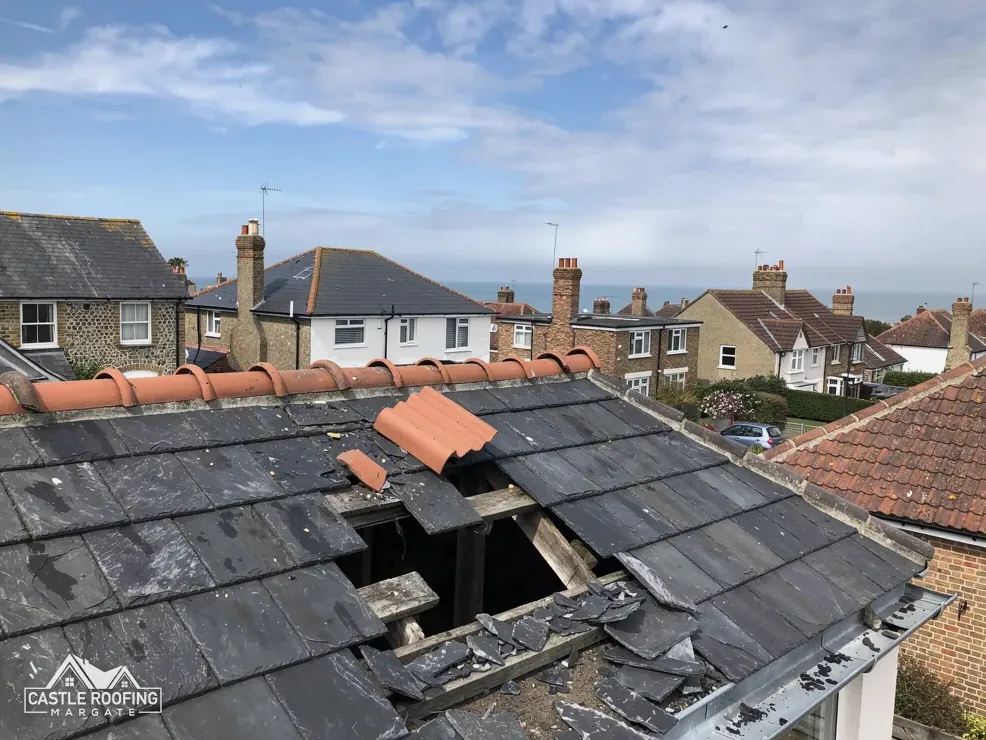
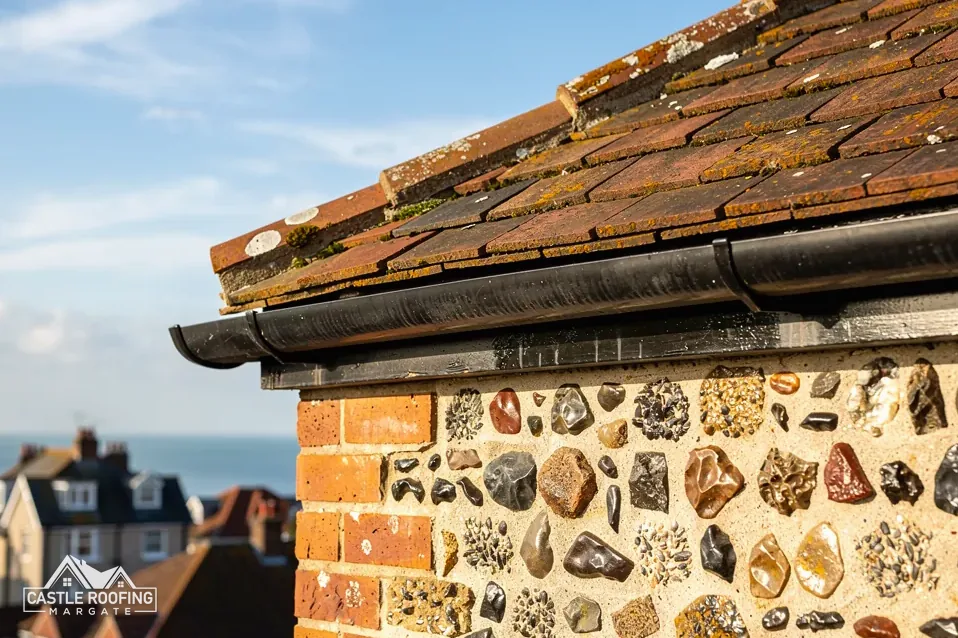
Water expands when it freezes. A tile that has drunk in water, or a mortar joint that has taken rain, is pushed apart from inside when the temperature drops below zero. That is how old tiles flake and how pointing crumbles, and it is why winter finds out weak spots.
Fresh mortar is the other half of the problem. Mortar needs time to set, and if frost reaches it before it has hardened it can be damaged, leaving a weak bed that fails later. So bedding work on ridge, hip or verge tiles waits for a dry spell with no frost forecast.
The Met Office climate record for Manston, 1991 to 2020, puts air frost at 21.43 days in an average year. Over the whole record that figure reads as a normal winter figure, not a rare event, and it does not mean every cold week blocks every repair.
Tiles themselves are laid dry, on battens, with nails or clips. Cold, so long as the slope is not iced, does not stop a tile being replaced. A roofer waits only for ice, a wet slope or a wind that makes ladders unsafe.
Jobs that go ahead and jobs that wait
The line between the two is whether the work needs anything to cure, or whether the weather makes it unsafe on the day.
| Job | In winter |
|---|---|
| Replacing a loose or broken tile | Yes, on a dry, unfrosted day |
| Refixing tiles with clips or nails | Yes, on a dry day |
| Covering a leak with a temporary sheet | Yes, in most weather |
| Bedding ridge or hip tiles in mortar | Wait for a dry spell without frost |
| Pointing a verge or chimney in mortar | Wait for a dry spell without frost |
Dry-fixed ridge and hip systems, specified in BS 8612:2018, hold the covering without any mortar to cure. Marley's account of the 2015 BS 5534 amendments is that mortar by itself stopped counting as a secure fixing for a covering. So a repair that uses a dry-fix system can go ahead in cold, dry conditions that would spoil a mortar bed, and the finished ridge is fixed straight away. The test for any job is whether it will still be sound if the temperature drops to freezing in the hours after it is finished.
Making safe now, mending on a dry day
When water is coming in during a gale or a freeze, the first job is not the permanent repair. It is to stop the water, and the second job is the permanent mend, once the weather lets it happen. A sensible sequence for a winter leak runs like this:
- Find where the water enters, from the loft if it can be reached safely, or from the stain on the ceiling.
- Cover the opening or secure the loose tiles so the water stays out, even if the fix is temporary.
- Photograph the damage before and after, and keep every receipt.
- Agree a date for the permanent repair, on a dry day with no frost forecast.
If a storm has damaged the roof, Institution of Structural Engineers guidance on storm damage is to contact the insurer, make the roof safe, and keep photos and receipts. MyJobQuote put emergency roofer call-out costs at £150 to £300 in October 2026, a typical UK range.
The page on replacing a single roof tile shows the dry-fixed repair, and home insurance and slipped tiles covers the claim side.
Booking a winter repair sensibly
Winter slows roofing because the working window is short. Daylight ends early, wet slopes are slippery, and a roofer will not work on an icy roof. That is a safety call, and it is the right one, so a repair that waits two days for the ice to clear has not been put off without cause.
A few things help the job go ahead:
- Photos of the damage taken from the garden, with a note of which slope it is on.
- Clear access to the side of the house where the work is, including any gate.
- A note of where the ceiling is stained, so the entry point can be found quickly.
For anything beyond a tile or two, the survey comes first and a written price comes after it. A roof that is leaking now and needs a larger repair in spring is made safe in winter and mended in better weather, and that order costs less than rushing a big job into a frosty week.
The pitched roofing page sets out the full range of tiled roof work: pitched roofing. If the roof is leaking now, your message goes to the same phone and WhatsApp number as any other job.