Read this before you accept a quote to cap your roofline. It explains what capping is, what MyJobQuote says it costs on average, what has to be true of the boards underneath, and the signs that point to replacement instead.
Fascias and soffits are the boards along the edge of the roof. The fascia is the board facing outward, which the gutter is fixed to, and the soffit is the board under the overhang, closing the gap between the roof edge and the wall. On many houses both were painted timber, and both need repainting every few years or they begin to fail.
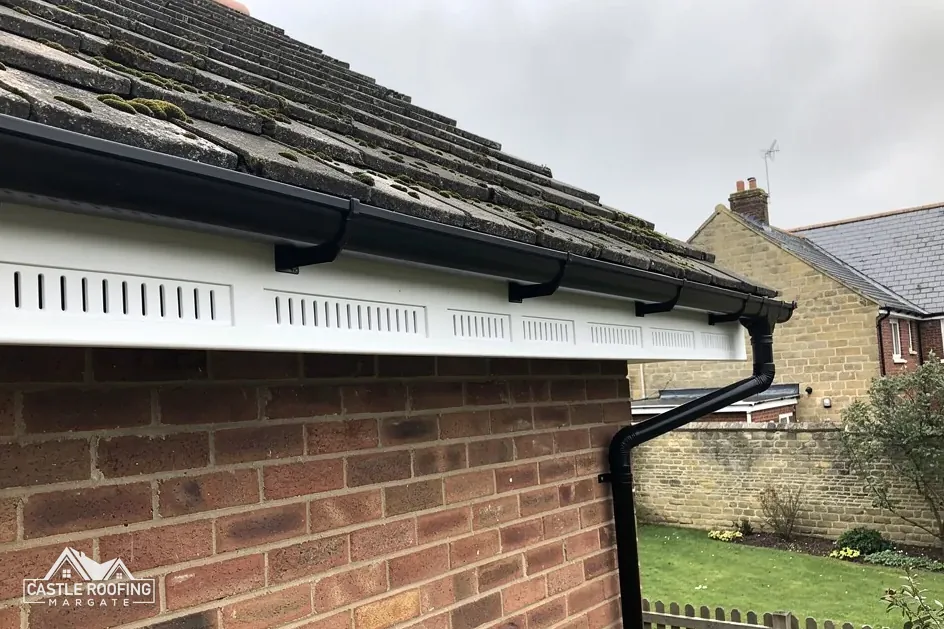
Capping is a way of avoiding that cycle. New boards, usually uPVC, are fitted over the old ones like a sleeve. The old timber stays where it is, hidden underneath, and the new plastic gives a clean, paint-free face. Because nothing is pulled off, capping is quicker than a full replacement and makes less mess at the roof edge.
The question is whether the timber underneath is fit to be covered. Capping is a good job on a sound roofline and a poor one on a rotten roofline, and the two look identical from the ground. This guide sets out how to tell them apart. It belongs to our guttering, soffits and fascias work, and it is written to help you read a quote rather than to sell you either route.
What capping a roofline actually involves
The process is simple to describe. The old boards are cleaned and checked. Any loose or lifting paint is scraped back. Then new uPVC sections are cut to length and fixed over the top of the old fascia and, where wanted, the old soffit. Corner pieces, joints and a trim at the wall finish it off.
Because the old boards stay in place, three things carry over from the existing roofline:
- the fixings that hold the old fascia to the rafter ends
- the shape and condition of the timber underneath
- the position of the gutter brackets, unless the gutters are renewed too
That list shows both the attraction and the risk. The attraction is that there is far less to take down and put back. The risk is that the new boards depend on the old structure underneath, and nobody can see the old structure once it is covered.
Capping is sometimes called overboarding or overcladding. The names mean the same thing: new material over old. It is a different job from a replacement, where the old boards are taken off, the rafter ends and the wall plate can be seen, and new boards are fixed to the structure itself.
A third route sits between the two, in which the fascia is replaced and the soffit is capped, or the other way round, depending on which board is in better condition. The survey decides which of the three suits each side of the house.
What capping costs on average
MyJobQuote's cost guide for capping fascias and soffits, updated on 17 September 2026, puts the average for capping fascias and soffits at around £800. That is a national typical figure from a third-party guide, never a Castle price.
Several things move a figure like that up or down, so treat it as a marker and never as a price for your house:
- the length of roofline, which depends on the size and shape of the house
- whether it is a bungalow, a two-storey house or a three-storey terrace
- how much access is needed, from a tower to a full scaffold
- whether the soffits and the bargeboards on any gables are included
- whether gutters are being changed at the same time
- the region, since Which? and HomeBuilding both put South East prices higher, and Kent is South East
Capping is generally cheaper than a full replacement of the same roofline, because there is less to remove and less to rebuild. That saving only counts if the capping lasts. A capped roofline that rots behind its new face within a few years has to be stripped and replaced, and the first job is then money spent twice.
When a quote arrives, look for a clear statement on whether VAT and scaffold are in the total. Our page on fascia and soffit replacement covers the other route, and the written price follows a survey of your own house.
When capping works
Capping works when the old boards are sound and the only complaint is the paintwork. The conditions are narrow, and a firm acting in your interest checks each one before it recommends the job.
The roofline is a good candidate when:
- the timber is firm all the way through, with no soft patches when it is probed
- the boards are straight, not bowed, sagging or pulling away from the rafters
- the fixings behind them are holding, and the rafter ends are dry and solid
- there are no signs of past or present leaks from the gutter or the roof edge
- the existing boards are flat enough that the new sections sit tight against them
Situations where it suits include a house built in the 1970s or 1980s with timber boards that have been well painted, a roofline that has never leaked and a house where flaking paint is the only trouble. Nobody wants to climb a ladder every few years to repaint, and a well-fitted cap ends that chore, so long as the structure underneath stays dry and sound. A cap also needs a regular wash with water, and an occasional look for gaps at the joints.
uPVC does not rot, but it does age. A fascia-board retailer gives a life of between 20 and 40 years for uPVC fascias, which is a wide range and never a promise. Plastic that has yellowed or become brittle can be capped no further, and our page on uPVC fascia lifespan explains how to judge old boards.
Why capping over rot fails
Rot is a living process, and it does not wait. Timber rots when it stays wet, and it stays wet when water can get in and cannot get out. A rotten fascia that is covered over is still rotten, and the cover traps moisture against it, which can make the process go faster.
There are four ways it fails.
- The new board is fixed into soft timber. Screws and nails need solid wood to hold, and in rotten timber they have nothing to grip, so the cap loosens and sags.
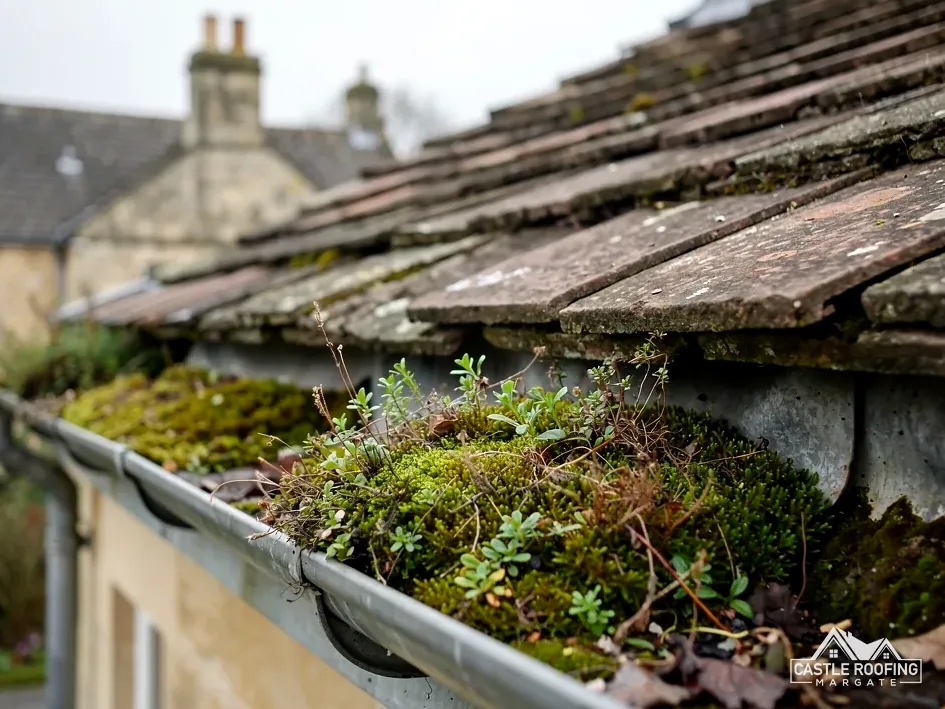
- Water gets behind the cap. It enters at joints, at the gutter line or from the roof edge, and runs down behind the plastic where nobody can see.
- The rot spreads to the rafter ends. A rotten fascia is a sign that water has been reaching the timbers behind it, and those timbers carry the roof.
- The problem returns months later as a bulge, a dark stain or a gap, by which time the work has to be undone.
The deeper issue is that a cap removes your ability to inspect. Before capping, you can probe the board and look at the paint. After capping, the evidence is sealed away. That is why the checks before the job matter so much, and why a firm that offers to cap without a close look at the timber should be questioned.
Our page on rotten fascia boards shows what soft and failing timber looks like at the roof edge.
The checks that decide between capping and replacing
Four checks, made before any board is ordered, settle the question. None of them takes long, and you should see photos of each result.
| Check | Passes if | Fails if |
|---|---|---|
| Probe the board | Firm, resists the point | Soft or crumbling |
| Rafter ends | Dry, solid, no staining | Dark, wet or spongy |
| Straightness | Flat along its length | Bowed or sagging |
| Roof edge | Felt and tiles sit right | Water tracks behind |
The probing check is a simple test with a screwdriver or bradawl. It is done at several points, but especially at the joints and at the lowest points of the board, since rot starts where water collects. The rafter ends are checked from the roof side or by lifting a short section of board.
The roof edge matters because a fascia often rots from above. If the roofing felt, the first row of tiles or the gutter has let water run behind the board, the cause is up on the roof and has to be put right at the same time. A cap alone leaves the source untouched.
Soffits get a separate look. Old soffits from before 2000 may be asbestos insulating board, and the HSE advises treating a house from before that date as containing some until a test shows otherwise. Fixing a cap through such a board means drilling it, so the board must be tested first. Our guide to asbestos in soffits sets out what to do.
When full replacement is the right call
Some rooflines should be stripped, and the best advice is to say so. Replacement is the right answer when the checks above fail, and also in a few cases where capping would technically be possible but would be poor value.
Replace rather than cap when:
- any part of the fascia is soft, split or crumbling
- the rafter ends have gone dark or spongy behind it
- the gutters are due to be renewed, since the fascia carries them and is easiest to fix first
- the existing boards are badly bowed, so a cap would follow the bend
- the soffit needs ventilation that the old board cannot take
- the house is listed, where altering its character through a new board brings in listed building consent
In each of these, replacement gives you a sound base, and the cost of the extra work is spent on something you can rely on. It also lets the rafter ends be repaired and treated, the felt be dressed over the fascia properly, and the vents be fitted into new soffit boards.
A mixed answer is perfectly sensible. One bad run at the back of the house, caused by a leaking gutter, can be replaced while the sound front is capped. We will tell you which parts are which, and the written price for the whole job comes as one total after the survey.
If you have been quoted for capping and want a second look at the timber underneath before you agree, send us a photo of the roofline and say what the other firm proposed.