Signs you can see from the ground
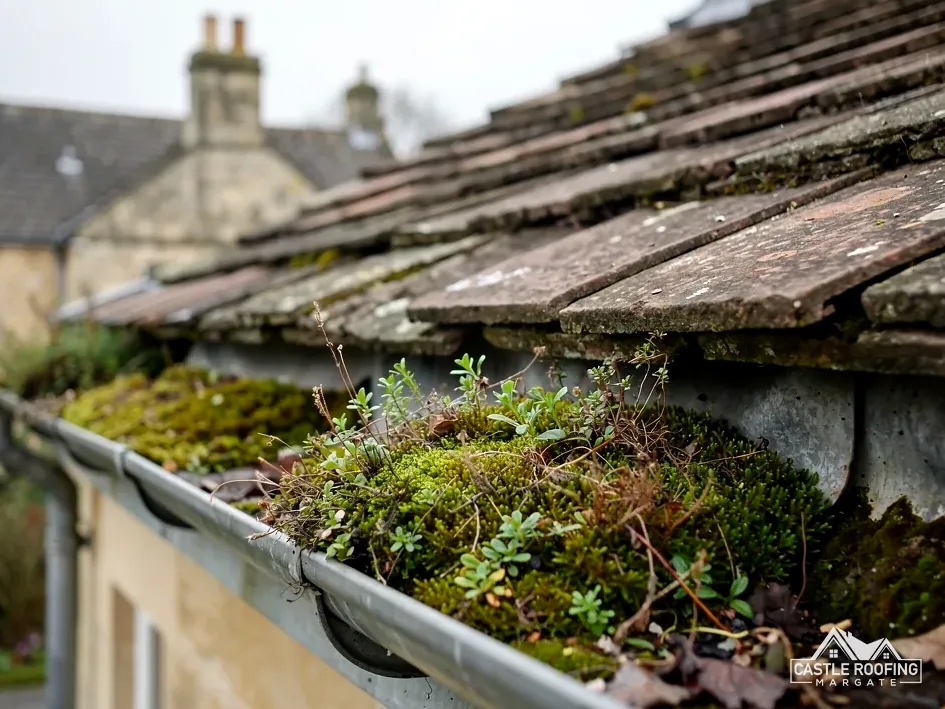
The fascia is the board that runs along the eaves, beneath the edge of the tiles or slates, and carries the gutter. Timber ones sit out in the weather all year, and water that gets behind the paint soaks into the grain. You will not always see the rot itself, but you will see what it does to everything around it.
Walk round the house and look up at the board from a few angles:
- Paint that blisters, flakes or peels in strips, especially at the joints and the bottom edge.
- Dark, damp-looking patches, or a green bloom of algae along the board.
- Splits or cracks that follow the grain, and corners that have opened.
- A gutter that droops, tilts back towards the wall or has pulled off a bracket.
- Daylight or a gap where the fascia meets the soffit under the eaves.
Any one of these may have another cause, such as old paint or a blocked gutter. Several together point to the board, and the gutter is often the first part that gives it away.
Checks up close
The reliable test is done from a ladder or platform. Push a screwdriver or a bradawl into the bottom edge of the board and into the end grain at the corners. Sound timber resists. Rotten timber is soft, feels spongy or crumbles into brown fibres, and the tool goes in with little pressure.
A roofer checks three further places. The first is the back of the board, where water runs down behind the gutter. The second is the rafter ends, the sloping timbers that the fascia is fixed to, because rot can spread from the board into the wood behind it. The third is the line of the soffit, the underside of the eaves, where damp tends to mark the joint with the board.
If you find rot, stop at checking. Do not lean a ladder against the gutter or climb along it, because a weak gutter can fail without warning under your weight. Our page on what a fascia board is sets out how the boards, soffits and gutters fit together, which helps when you describe the problem to a roofer.
Why capping hides it
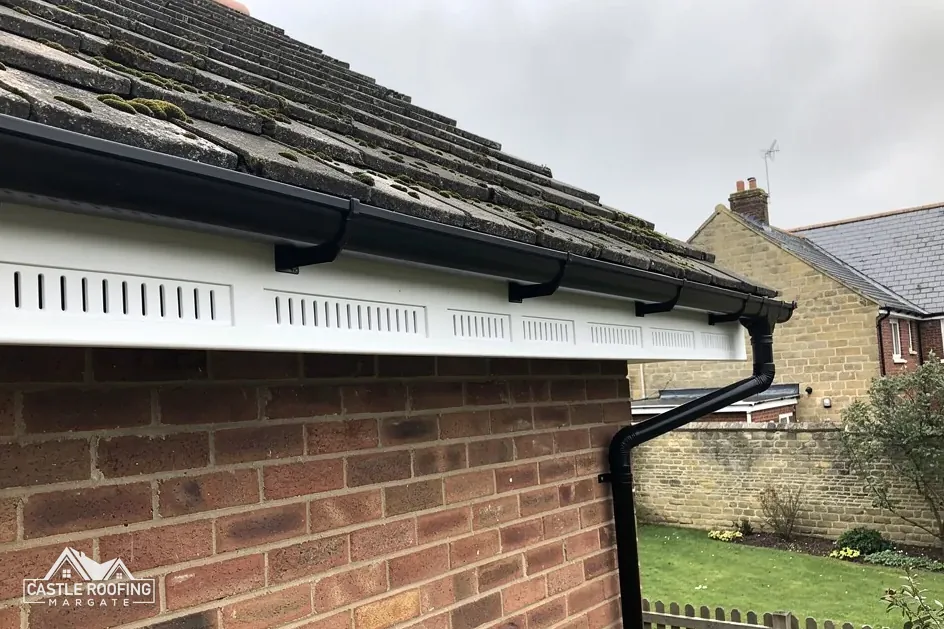
Capping means fitting uPVC covers over the existing timber fascias and soffits. It is quick and gives a clean white finish, and MyJobQuote put the cost of capping at around £800 in its September 2026 guide, a national average for covering boards and not our price. If the timber underneath is sound and only needs protecting, capping can be a fair choice, and our page on capping fascias and soffits explains when.
If the board is already rotten, capping seals the damp in and hides the damage. The timber keeps rotting under the plastic, the fixings loosen as it softens, and you will not see it until the gutter drops or the cover is lifted. That is why a roofer should check the timber before agreeing to cover it, and why a cheap cover over a soft board is poor value.
A retailer's guide puts the life of uPVC roofline products at between 20 and 40 years. A cover over a failed board will not reach any figure like that, because the fixings have nothing sound to bite into.
Replacing the board in full
Where the board is soft, the repair is to take it off and fit a new one. The gutter comes off first, then the old board, and the rafter ends behind it are checked. Any rafter end that is soft is cut back to sound timber and made good, and then the new board is fixed, with the soffit joint closed and the gutter refitted to the right fall. The order of work is the one used for any fascia and soffit replacement.
Small patches of rot on an otherwise sound board can sometimes be cut out, but a board with rot along its length is replaced. Painting over soft timber only hides the problem for a while. A new board should be primed on every face, including the back and the cut ends, before it goes up, because bare end grain takes up moisture first.
Take care if you find droppings or small gaps where bats may be roosting. GOV.UK names repairing or replacing a roof among the work that can disturb bats, whose breeding sites and resting places the law protects fully. Stop work and get advice before going on. Our page on bats behind fascia boards explains why, and the whole subject is under guttering, soffits and fascias.