HSE's three categories of asbestos work
HSE sorts asbestos work into three bands, and the band sets the paperwork and training the job needs.
- Licensable work: the higher-risk jobs, which only a contractor holding a licence from HSE may take on.
- Notifiable non-licensed work: no licence, but the work is notified to the regulator and a register of the work is kept.
- Non-licensed work: it has to be sporadic and of low intensity, and meet at least one of four conditions.
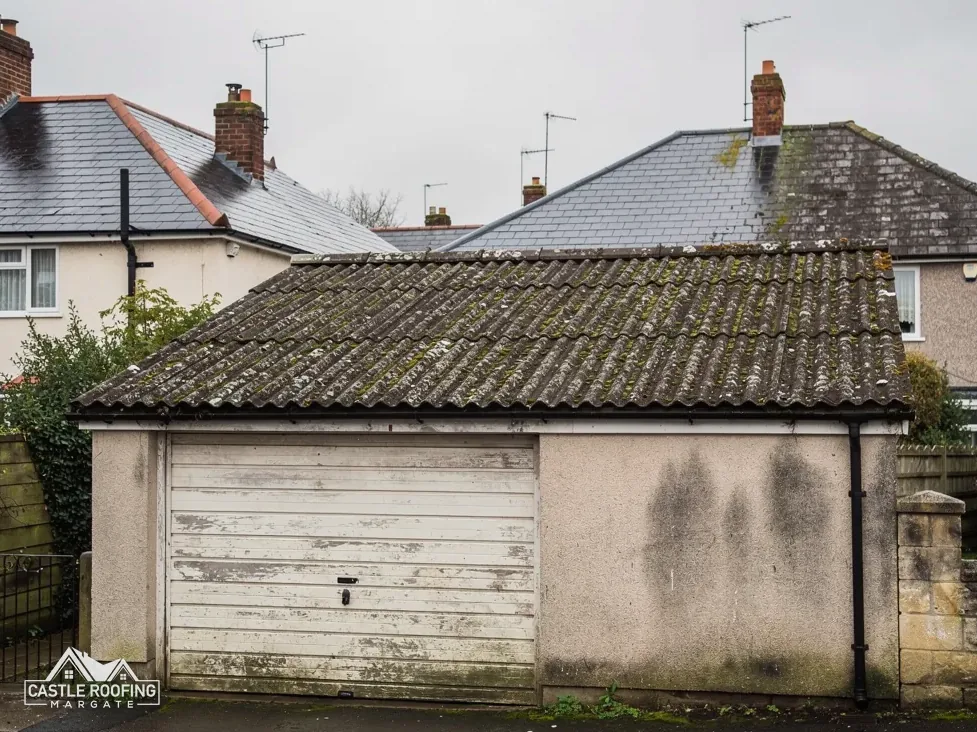
One of those conditions is a removal task where the material is in reasonable condition, is not being deliberately broken up, and keeps its fibres firmly held in a matrix such as cement. Its page places asbestos cement products in this band, naming roof sheeting and gutters among them, so long as they are lifted out in one piece with care.
Careful removal of garage sheets sits in this band. That does not make the work casual. It still needs a plan, protective equipment, damping down, wrapping and a lawful route for the waste, and the roof it comes from is fragile to work on.
When the same roof becomes notifiable
The line moves when the sheets stop coming away in one piece. HSE puts asbestos cement into the notifiable band once it has been, or is going to be, badly damaged or broken apart. A roof that is old but whole stays non-licensed. A roof where the sheets have collapsed, split under a fallen branch or crumbled at the fixings does not.
Condition is therefore part of the decision, which puts the survey ahead of any plan. HSE's page on notifiable non-licensed work adds that the registers of work, which hold health records, must be kept for 40 years, and the duty falls on the contractor doing the job.
For you, the effect is small but real. If you ask a firm to clear a garage roof that is already in pieces, expect it to treat the job as notifiable, with a different set of arrangements from a whole roof that lifts off intact. Our page on a broken asbestos roof sheet sets out how damage is handled.
A quick fix is the wrong response to any of this. Establish the condition first, and keep the survey report with the garage's papers.
Soffits, boards and the licensable material
Asbestos cement is only one of the materials a garage can carry. HSE lists asbestos insulating board, known as AIB, among the products found in external soffits, and AIB is treated differently. Anyone working on it requires a licence, unless the risk assessment shows the task to be short, and HSE gives quick removal of AIB inside a refurbishment project as its example.
A garage with a boxed-in eave or a soffit board under the roof edge can therefore carry two materials with two sets of rules. A survey names each one separately. HSE's guidance sheet for removing asbestos cement also says it should not be used where other asbestos-containing materials are present, such as lagging, limpet or insulating board, and points that work to a contractor holding the licence.
Where a job includes any licensable element, that element is handed to a licence-holding firm, and you hear before work starts which parts belong to whom. Put the same question to anyone you invite onto the roof: which category is this job in, and who does the licensable part, if there is one?
Our page on asbestos garage roof removal shows how a normal job runs from the survey to the clear-up.
Waste, paperwork and what to ask
Whichever band applies, the sheets have to go somewhere lawful. HSE guidance wants waste sealed in two layers and labelled, and a lockable container for the sheets themselves, because an uncovered skip is not acceptable.
Householders can take small amounts of their own asbestos to Kent County Council's recycling centres, apart from Sheerness, by booking and double-wrapped. A roofing firm's waste is trade waste instead. It moves under a consignment note with a carrier holding the right registration, and the household exemption for domestic hazardous waste does not extend to asbestos. See the page on asbestos waste carriers.
Before you agree to a removal, ask:
- Has the roof been surveyed, and can I see the report?
- Which HSE category is the job in, and why?
- Who carries the waste, and will I get the paperwork afterwards?
The main garage and asbestos roofs page covers the job as a whole, from the first look at the sheets to the last load leaving the drive, with the written total price following the survey.