Where felt shingles belong and where they do not
A felt shingle is a small, flat piece of bitumen-coated felt, usually cut to a shape and laid in overlapping rows, often with a sanded or mineral face. On a shed it gives the look of a tiled roof for less weight and less fuss than real tiles.
The name is imported, and the trade here treats the product as a covering for garden buildings only: sheds, summerhouses, log cabins and play houses. On a tiled or slated house roof, felt shingles are no stand-in for either covering.
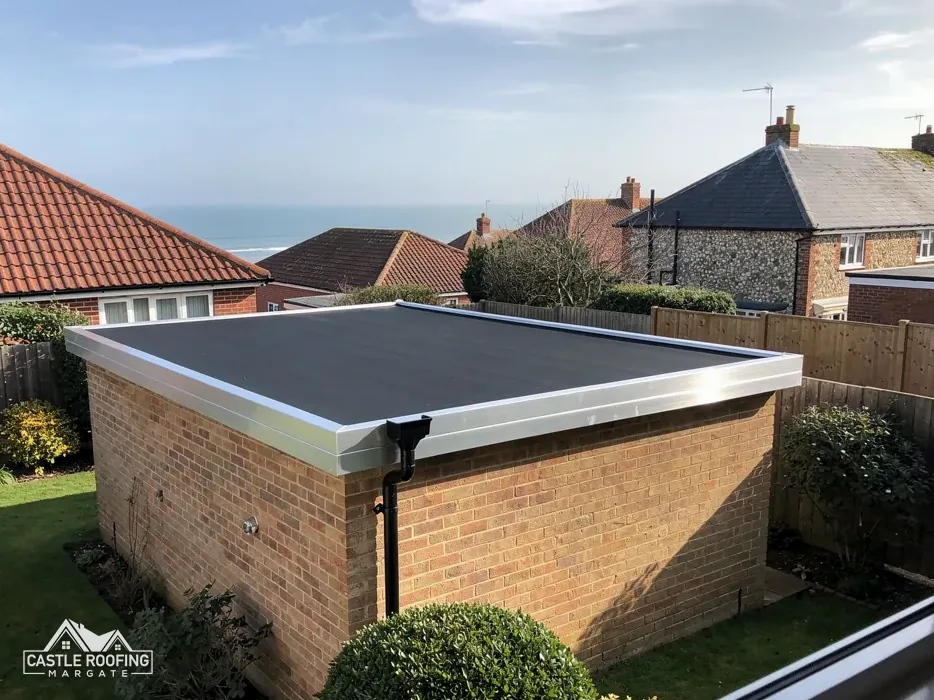
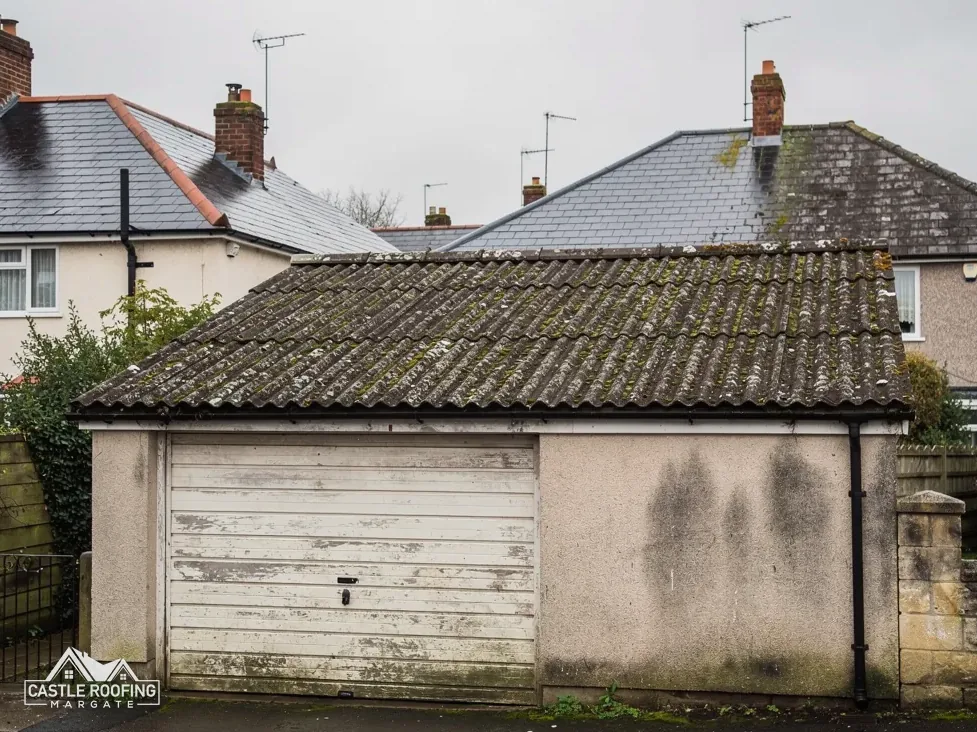
That sets the boundary. If the building is a house, a garage with a pitched roof of tile or slate, or a converted outbuilding with Building Regulations to meet, felt shingles are not the answer. For a garage there are better matches, which our pages on felt garage roofs and steel sheet garage roofs cover.
For the shed itself, the question is not whether the covering is good in the abstract but whether this particular roof and deck suit it, which the survey settles on the day.
Pitch, boarding and the details that decide it
Three things decide whether felt shingles will work on a given shed:
- The pitch of the roof, set against the minimum on the product's data sheet.
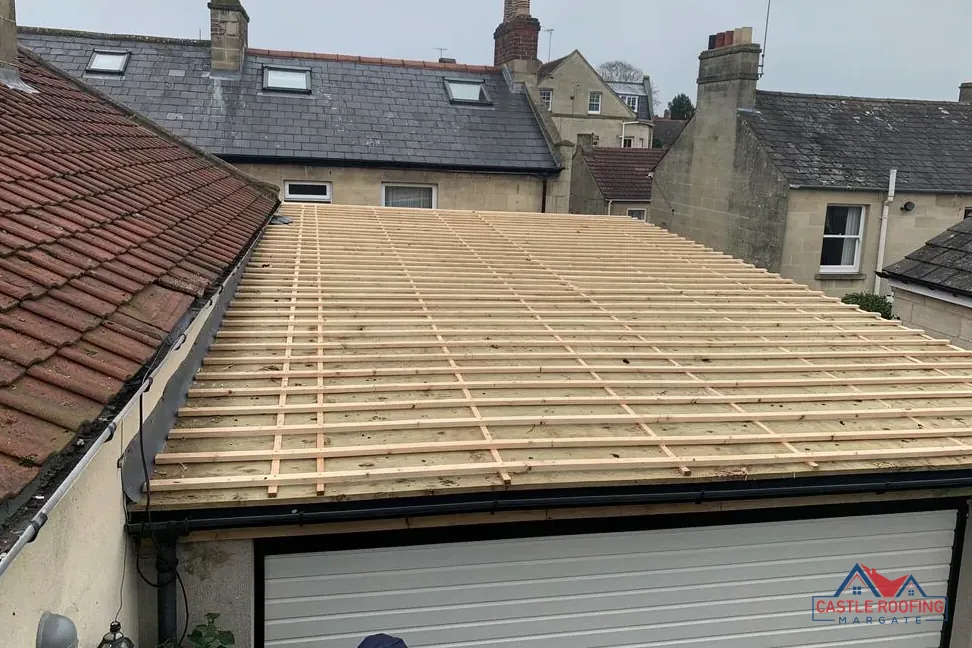
- The deck beneath, which has to be dry, sound and flat enough to take the fixings.
- The edges: eaves, verges and the ridge, which need the manufacturer's trim pieces or an equivalent detail.
Pitch is the one to check first. Every covering has its own minimum, and the figures differ widely. Marley's published minimums for its tiles run from 12.5° to 35° for concrete and 15° to 40° for clay, depending on the product. A felt shingle has its own figure, set by the maker, and a shed with a shallow fall may fall below it.
The deck matters just as much. Boards that are damp, rotten or lifting will not hold fixings, and felt shingles laid over them will fail early however well they are nailed. On an old shed, replacing a few boards is often part of the job.
When you price a shed roof, the product name and its data sheet are the first things to get hold of, since every figure above is read from them.
How long felt coverings are reported to last
The published life figures are for felt roofing as a family of coverings, and the two guides below do not agree, so both are named.
| Guide | Felt (torch-on) |
|---|---|
| HomeBuilding | 10 to 15 years |
| Less | 10 to 20 years |
Both describe a usual range for felt, not for one particular felt shingle, and neither is a promise. A shed that sits under trees, takes the weather from the sea side or has weak boards will do worse than the range suggests. One that is dry, ventilated and fixed to the data sheet has a better chance.
Take the numbers as a prompt to plan, not a deadline. A shed roof is cheap to inspect twice a year from a ladder, and curling edges, lifted corners and bare patches are visible well before water gets in.
Met Office averages for Manston (1991 to 2020) show about 613 mm of rain a year and 110 days with 1 mm or more, which is a fair measure of how often a shed roof is tested.
When to repair, when to recover, when to rebuild
A few lifted felt shingles on a sound deck are a repair job. Missing rows, soft boards or repeated leaks point to a full strip.
The choice runs roughly like this:
- Patches or a few torn felt shingles: replace those, and check the rows either side for lifted corners too.
- Widespread curling or bare felt: recover the roof, after checking the boards.
- Soft or rotten boards: renew the deck, then recover.
- A shed too shallow for the product: choose a different covering.
We cover sheds and garden buildings as part of garage and outbuilding work, and the page on shed roof replacement goes further into the process. Our garage and asbestos roofs hub lists the rest.
Before any quote, the deck is looked at from inside the shed as well as from above, because stains on the underside of the boards show where water has been getting in, and how long it has been doing so. That tells you whether the job is a patch or a recovering. Photos of both sides help us judge it, and one total in writing follows.