Why fresh mortar never looks like the old bed
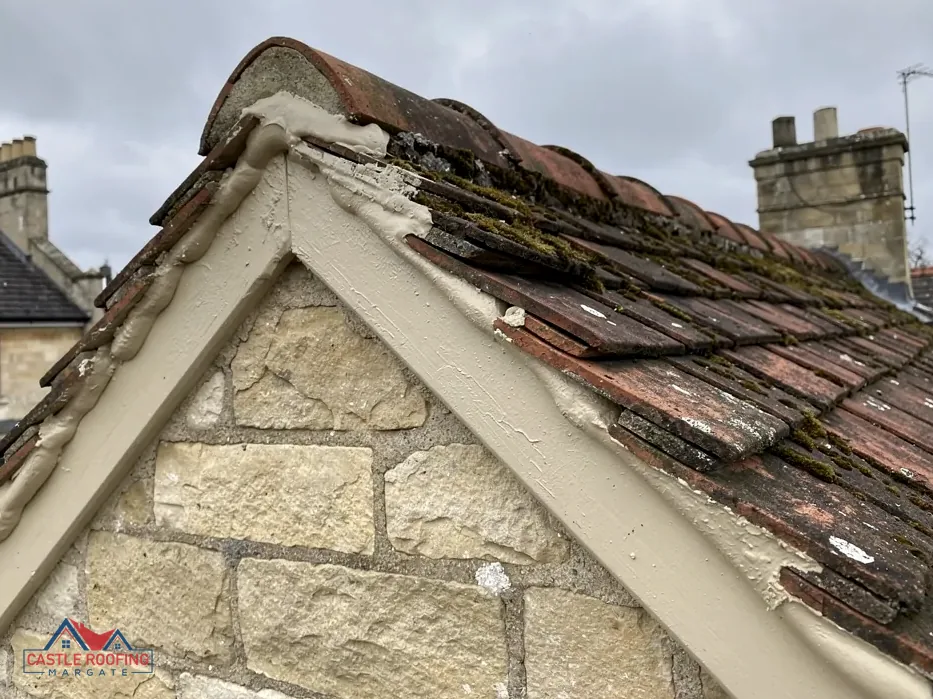
Look closely at an old ridge and the mortar is not one colour. The face has been rained on, baked by the sun and frozen on winter nights. Fine grains have washed out and left the larger sand grains standing proud. Lichen, soot and green algae sit in the pores. All of that is surface history, and none of it can be mixed into a bucket.
Fresh mortar starts with a clean, uniform face. It goes on damp and dark, then dries out lighter, and the shade you judge on the day of the job is not the shade you will live with. On a clay ridge the contrast is sharper, because the tile around the joint has its own weathered tone.
That is why a new repair often reads as a stripe along the old ridge for the first season. It does not mean the work is wrong. It means the new face has not yet had the years of weather that the old one carries.
A roofer cannot hide that gap completely, but can narrow it by choosing sand, binder and finish with care, as set out below.
What decides the colour of a mortar mix
Colour in a mortar comes mainly from the sand, and then from the binder that holds it. A roofer who wants a close match works through four things:
- The sand: its grain size and shade. Sharp, buff sand reads warmer than pale silver sand, and a coarse sand leaves a rougher face than a fine one.
- The binder: lime gives a softer, lighter tone, while cement makes a harder and greyer one. The mix proportion shifts the shade too.
- Any pigment: a small addition can steer a mix towards the old tone, but it is easy to overdo.
- The finish: struck flush, raked back or tooled smooth, each catches the light differently.
There is a fixing question behind the colour question. Marley's reading of BS 5534 is that a ridge tile needs a fixing beyond the mortar, so a bedded ridge also carries a clip or screw. The mortar still shows from the ground, and its match still matters for the look of the roofline, yet it has stopped being the part that carries the load.
Test patches, drying time and the first season
The way to judge a match is to try it, not to guess from a wet mix. A sound approach is to make up a small test patch on a hidden stretch, or on a spare tile, and leave it to dry fully before anyone decides. Wet mortar misleads the eye, and a damp, overcast day makes it worse.
The patch also shows whether the sand grains look right beside the old joint. If the new grain looks too fine and too even, the sand needs changing, not the pigment. Adding colour to cure a texture mismatch only gives you a dull stripe in the wrong tone.
After the repair, set your expectations for the weather. Rain, frost and moss do the blending. The join between old and new softens over the first seasons, and much of the stripe fades without further work. If you need the ridge to look uniform at once, raise it at the survey, so the roofer can talk through the options with you.
Where the old mortar has cracked right through, the match is a secondary question, and cracked ridge mortar explains when the whole bed should go.
Conservation areas and the case for like for like
On a home in a conservation area, the look of the ridge can matter to the council as well as to you. Thanet District Council's conservation area page suggests that work putting back the same material means planning permission is a less likely requirement. A change of look, such as a new tile colour or a switch from mortar to a dry-fixed system, is a different matter and is worth raising with the council before the work starts.
A separate question is whether an Article 4 direction reaches your street, which the council for your address can answer. Some directions withdraw permitted development rights for changes to the front of a house, and a council can tell you what yours covers.
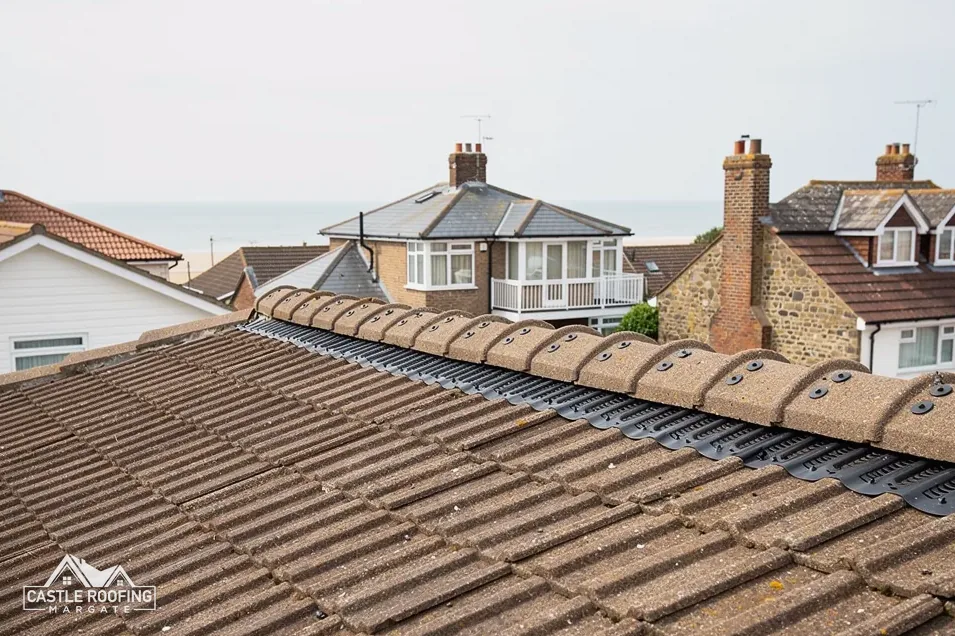
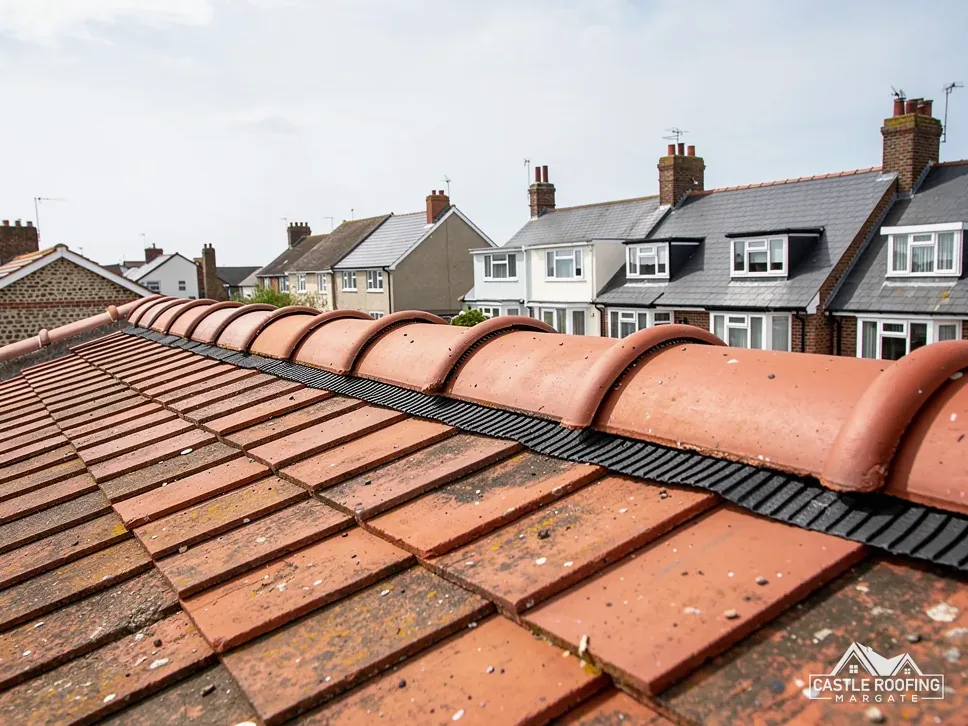
Where matching the mortar is proving hard, a dry-fixed ridge is an alternative worth knowing about, since it has a clean visible line and no mortar to match. Our page on a dry ridge in a conservation area sets out how that works, and repointing ridge tiles covers the lighter repair. The full range sits under dry ridge and verge.