What each choice is meant to solve
The two are often compared as if they were rivals, yet they work on different faults. A blind is a shade. It is fitted below the roof, inside the room, and it changes how much sunlight and heat reach the people and furniture. It does nothing to the roof above it.
A new roof replaces the covering and often the bars, and it changes the weather barrier, the insulation and the sound of the room. Its job is the roof's own condition.
The easiest way to decide is to write down the complaint and see which fix is aimed at it:
- glare on a screen or a television, and a room too bright to sit in: a blind
- a room that bakes on sunny days: a blind helps, a different roof helps more
- drips, damp patches or stained bars: a roof repair or a new roof
- a room too cold to use in winter: a new roof with insulation
- loud rain, and sheets that rattle: a roof change
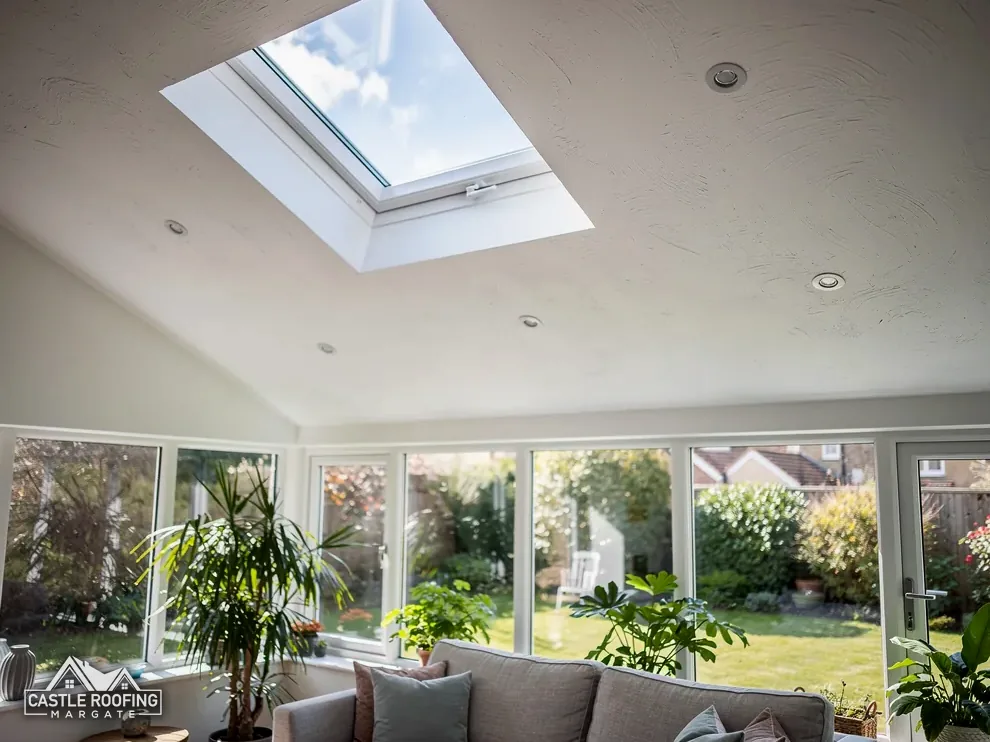
You can also see where the two overlap. A blind softens summer heat and cannot warm a room in winter, while a solid roof improves both and removes the sky view.
The cases where blinds are enough
Blinds make sense when the roof itself is in good condition. If it is watertight, has sound bars and the single complaint is sun, then spending money on a new roof is spending on the wrong thing.
A blind also gives control that a roof does not: you can open it for light on a dull day and close it on a bright one. A solid roof is fixed, and a glass roof lets in whatever the sky gives.
Points to check before buying blinds:
- Whether the bars and frame can take the fixings without damage.
- Whether the roof is a shape the blinds fit, because Victorian and P-shaped roofs have several faces to cover.
- How the blinds work: manual, cord or motor, and what the room's supply allows.
- What the supplier says about the roof glass or sheet, as some covers do not like heat building up behind a blind.
Blinds are priced by the supplier from how big the roof is and its shape. A cheap blind on a tired roof will not change the winter room, so the age of the roof is worth knowing first. Our guide to a conservatory that is too hot in summer looks at the heat problem in detail.
The cases where the roof needs to change
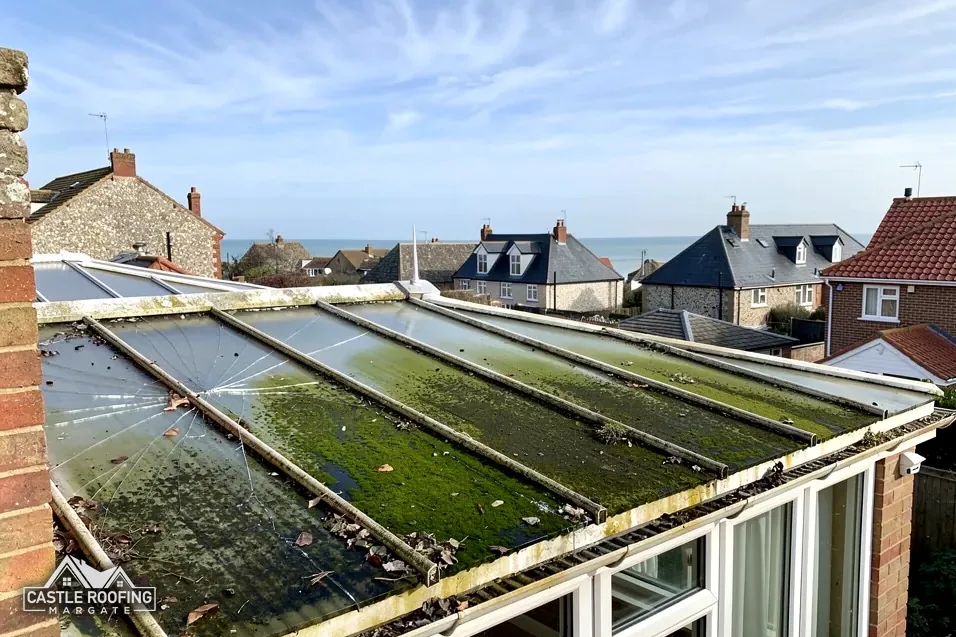
A blind cannot repair a roof. If water is coming through, if the sheets are crazed or the seals have failed, shading the inside leaves the cause in place. The same goes for a room that is too cold: blinds under a thin roof do little to hold the heat in.
Read the pattern across the roof, not one stain. The signs that point to the roof are these:
- water marks or drips after rain, at the bars or the wall junction
- sheets that are yellowed, crazed or brittle
- condensation running down the inside of the roof
- a room that is hard to use for much of the year
Age counts too. HomeBuilding puts polycarbonate at 10 years, while The Eco Experts say about 10 to 15. For a replacement, MyJobQuote quotes between £3,200 and £6,000 (page dated 20/10/26) and The Eco Experts between £2,300 and £6,000 (updated 29 April 2024).
The guides on a conservatory too cold in winter and on roof condensation help to match the symptom to the fix.
Doing both, and in what order
Some owners end up with both, and the order is worth thinking through. A new roof first and blinds after is the sensible sequence when the roof is failing, because blinds hung from an old frame may have to come down for the work.
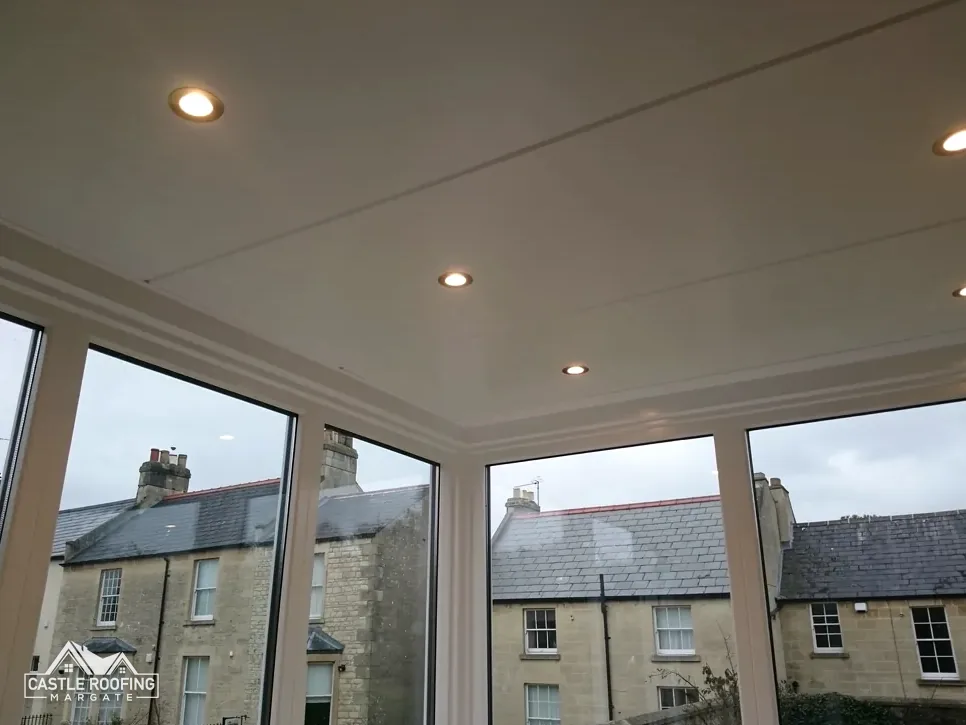
If a new roof is solid, it reduces the sun reaching the room, and the need for blinds may fall away. A glass roof with a solar control coating changes the heat in another way. Whichever you choose, tell the supplier about the roof so the fixings and the blind type suit it.
A short list to take into the decision:
- Name the main complaint, in one line.
- Check the age and condition of the roof.
- Ask what a repair would involve.
- Get the blinds quoted on their own, and compare.
A new roof for a conservatory with a solid covering needs Building Regulations approval, as the Planning Portal sets out, while fitting blinds does not. The conservatory roofs page lists the options we survey and price.