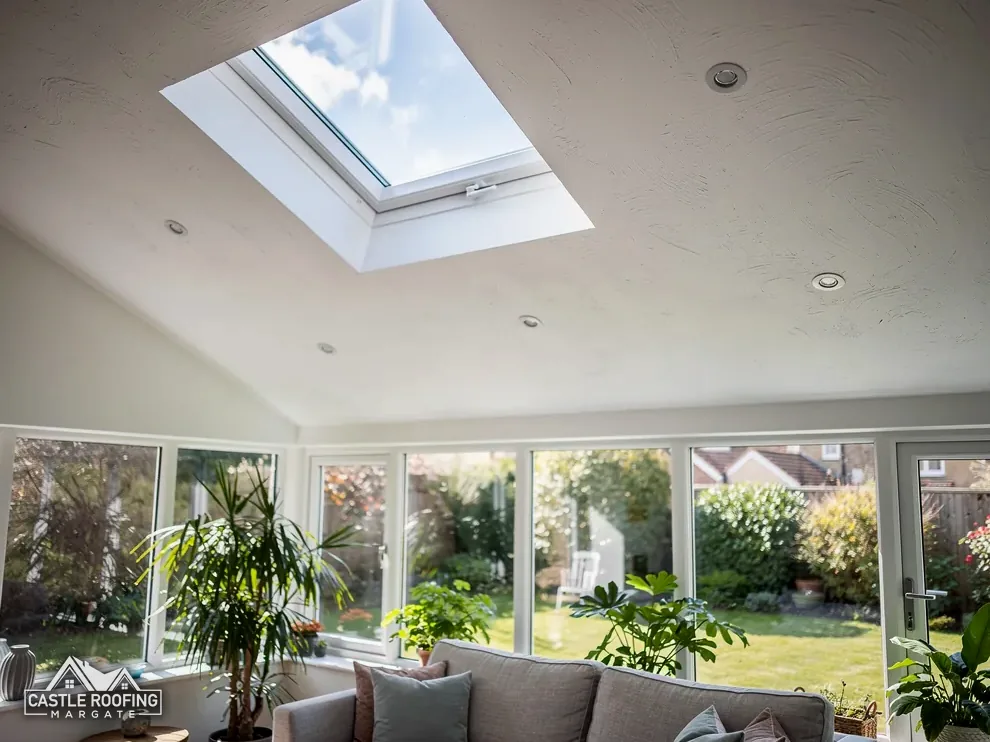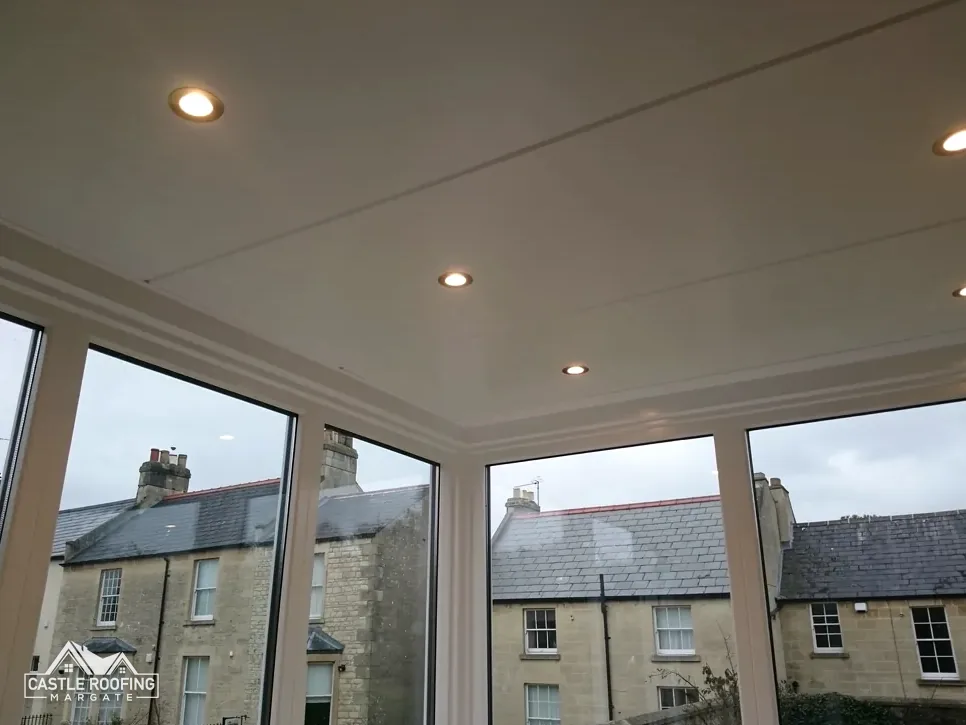
Read this to see what the two published lifespan figures say, which signs on a polycarbonate roof point to the end of its life, and when a repair is a better buy than a new roof.
A polycarbonate conservatory roof is a set of twin-wall plastic sheets, each one hollow inside, held in place by glazing bars that run down the slope from the wall plate at the house to the eaves of the frame. It is light enough for a modest conservatory frame to carry, which is why it is so often chosen. It is also the part of the building that tends to give out first, because it sits in full sun, takes every shower and moves a little with every change in temperature.
Two national guides give a lifespan for it, and they do not quite agree. One says 10 years, the other says about 10 to 15. Neither is a promise about your roof, and the gap between them is worth understanding before you decide whether to repair, patch or replace.
The sections below set out what each guide says, the signs we look for from inside and out, and how the choice between repair and replacement usually falls. If you are weighing a replacement, our conservatory roofs page covers the wider picture, from glass and solid roofs to the survey that comes first.
What the two guides actually say
HomeBuilding says polycarbonate conservatory roofs "have a typical lifespan of 10 years". The Eco Experts gives about 10 to 15 years, on a page it marks as updated on 29 April 2024. Both figures are typical ranges for the material in general, written for readers across the whole of the UK, and they are no forecast for any one roof.
| Guide | Figure given |
|---|---|
| HomeBuilding | A typical lifespan of 10 years |
| The Eco Experts | About 10 to 15 years |
The sensible way to hold the two numbers is as a window. A roof at 8 years old is not failing by the calendar, and a roof at 16 is not certain to be finished. What matters is the state of the sheets, the bars and the seals today, which only a look at the roof can settle.
A lifespan is also a different thing from a warranty. A maker's warranty is a promise about defects, not a forecast of how long a roof will keep rain out, so the two should never be read as one number. If your roof came with paperwork from the installer, keep it, but do not treat any date on it as the date the roof will stop working.
One more point about reading the table. Both guides describe the covering as a whole, sheets and bars together. A roof can outlast the lower figure if its bars, seals and flashings have been looked after, and it can fall short of it if water has been sitting in the channels for years. That is why the same age can mean very different things on two houses.
Why a lifespan is a range, not a date
Plastic sheeting ages with its surroundings. A roof facing the afternoon sun works harder than one in the shade of a tall neighbour, and a conservatory with a lean-to roof and a long, shallow pitch holds more water and debris than a steep one. Overhanging branches drop leaves and sap into the gaps between sheet and bar, and a gutter that overflows in a downpour soaks the wall plate beneath it.
The way the roof was fitted matters as much as the weather. Sheets cut short, bars with worn gaskets and a flashing against the house wall that was never dressed properly all shorten a roof's useful life, whatever the plastic is capable of. A gasket is the rubber strip that seals a sheet against its bar, and a flashing is the metal strip, usually lead, that closes the joint between the roof and the house wall.
These are the things that move a roof towards the lower figure or the upper one:
- how much direct sun the roof takes through the day
- how shallow the pitch is, and how well water leaves it
- whether leaves and moss are cleared from the bars and gutter
- the condition of the seals along the bars and the wall flashing
- how the sheets were cut, fitted and capped at the eaves
None of these can be scored from a desk, which is why a conservatory roof is looked at before it is priced, and why two neighbouring conservatories of the same age can be in very different states.
Signs that a polycarbonate roof is nearing the end
The signs show up on the roof, under it and on the walls around it. Some are cosmetic and can be lived with for a while. Others mean water is already getting where it should not.
What to look for from inside the conservatory:
- sheets gone yellow or cloudy, so the room is darker than it was
- moisture or green growth trapped inside the hollow channels of a sheet
- drips or damp marks along a glazing bar, especially after heavy rain
- a flashing line at the house wall that is stained or lifting
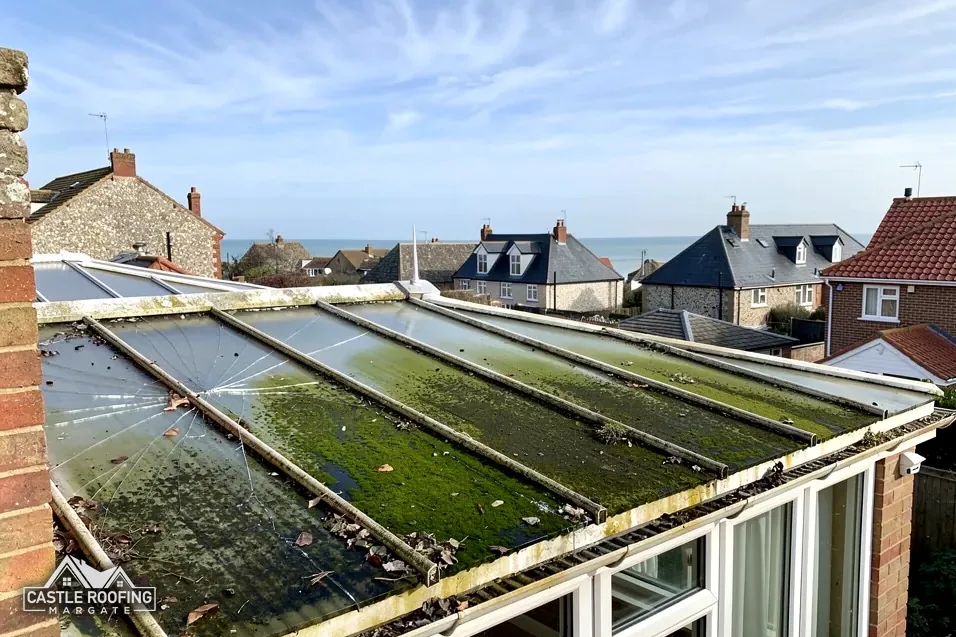
From outside, look for hairline cracks around the screw positions, sheets that have bowed or lifted at an edge, and bars with a gap between cap and sheet where the gasket has hardened. Moss along the eaves is a sign that water is sitting there rather than running off. A ladder is not the safe way to look, so a clear photograph from an upstairs window or a long lens is often enough to start a conversation.
A single drip at one bar is often a seal or a cap, not the whole roof. Several drips across different bars, together with discolouration and cracked sheets, point the other way. A roof that has reached that stage has usually done what the guides describe, and spending money on patches tends to be money handed to a roof that is leaving anyway.
What the survey checks before we say repair or replace
A survey takes in the roof and everything it rests on, because a new roof placed on a tired frame does not last either. We look from outside for the sheets and from inside for the underside, and you see photos of what we saw.
The list for a conservatory roof is short but specific:
- The sheets: cracks, discolouration, bowing, and the state of the sealed ends.
- The glazing bars and their caps: gaskets, loose screws and corroded fixings.
- The eaves beam and gutter: sagging, blocked outlets and overflow staining.
- The wall flashing, where the roof meets the house, since a leak there is easily blamed on the sheets.
- The frame: whether it can carry the same roof again, or a heavier one.
The last point decides a good deal. A frame that carries a light roof comfortably may not suit a heavier glass or solid replacement without further checks, and a solid roof has its own Building Regulations route, covered below. The eaves beam is the horizontal member along the low edge of the frame; if it has dropped, every sheet above it sits wrong.
What we find decides which routes are open, and we tell you before a figure is written down, so that repair or replacement rests on what was seen on the roof and not on a guess from the ground. Photos of the frame joints, the eaves beam and the wall flashing go with the survey.
When a repair is the better buy
Keep the roof and fix the fault when the problem is confined to one spot and the sheets are still sound. A failed bar cap, a hardened gasket along one bar, a blocked gutter outlet or a flashing that has lifted at the wall are each repairs in their own right, and a roof at 7 or 8 years old with one of them is worth keeping.
Replacement is the better buy when the sheets themselves have aged: widespread yellowing, cracks at the fixings, water inside the channels and leaks in more than one place. Fixing one leak on a roof like that tends to uncover the next, and the cost of repeated call-outs soon passes the cost of doing it once.
Where a repair is chosen, ask for it to be written down as a repair, with the parts it covers named. That keeps the conversation about the roof's remaining life straight, and it lets you compare the repair against a full replacement on equal terms.
Our pages on repairing a conservatory roof and on a leaking conservatory roof cover the repair side in detail.
A repair on a roof near the end of the published range is a decision about the next few seasons, and it helps to take it knowingly. If the roof is already past 10 years and showing several of the signs above, the repair money is usually better put towards the replacement.
If you decide to replace it
Replacing polycarbonate sheets with new sheets in the same frame is a like-for-like job. Swapping the whole roof for something different is a bigger decision, and it is where Building Regulations come in. The Planning Portal's conservatory roof page says a replacement roof is subject to the Regulations, so a solid roof is approved by building control before it goes on.
Which team deals with it depends on your address:
- Thanet District Council runs its own building control team on 01843 577522.
- Canterbury and Swale use STG Building Control, on 01634 331133.
- Dover District Council and Folkestone & Hythe District Council each run their own service.
- Folkestone & Hythe's number is 01303 853538.
- Ashford Borough Council runs its own Building Control team.
A registered building control approver offers a private route for the same approval.
The three roof types sit side by side in the guide to solid, glass or polycarbonate roofs, which is the place to start if the frame could take something heavier.
Replacement comes in three broad forms:
- New polycarbonate sheets in the existing bars and frame, the quickest and lightest route.
- New sheets and new glazing bars, which renews the seals as well as the plastic.
- A different covering altogether, where the frame is checked for the extra weight.
Whatever you choose, the price arrives as a single written figure once the survey is done, so a repair can be set against a replacement without piecing anything together.