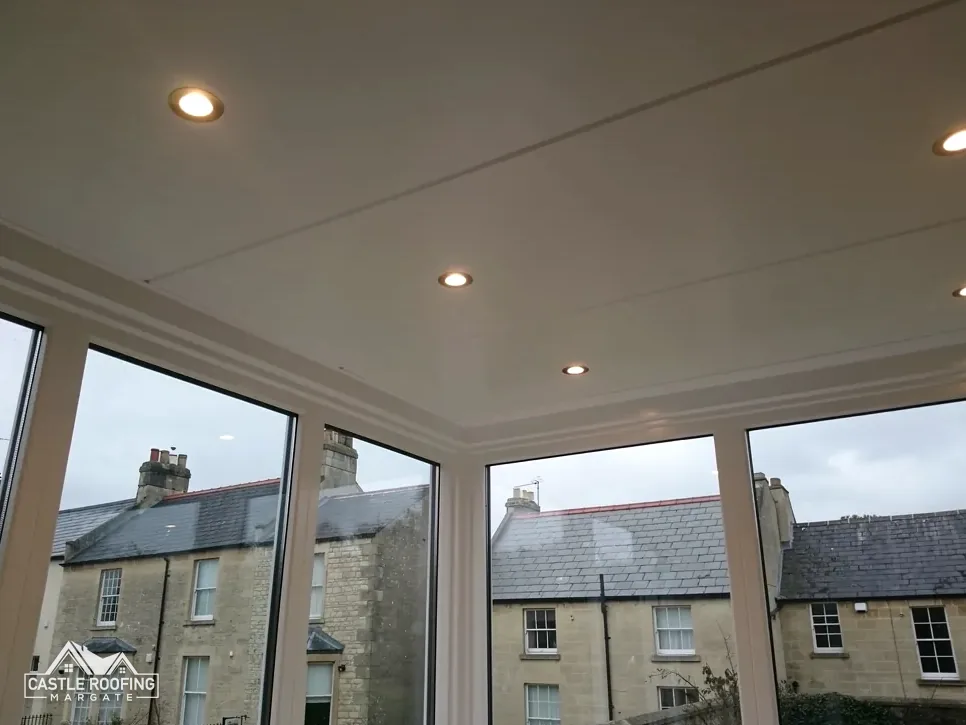
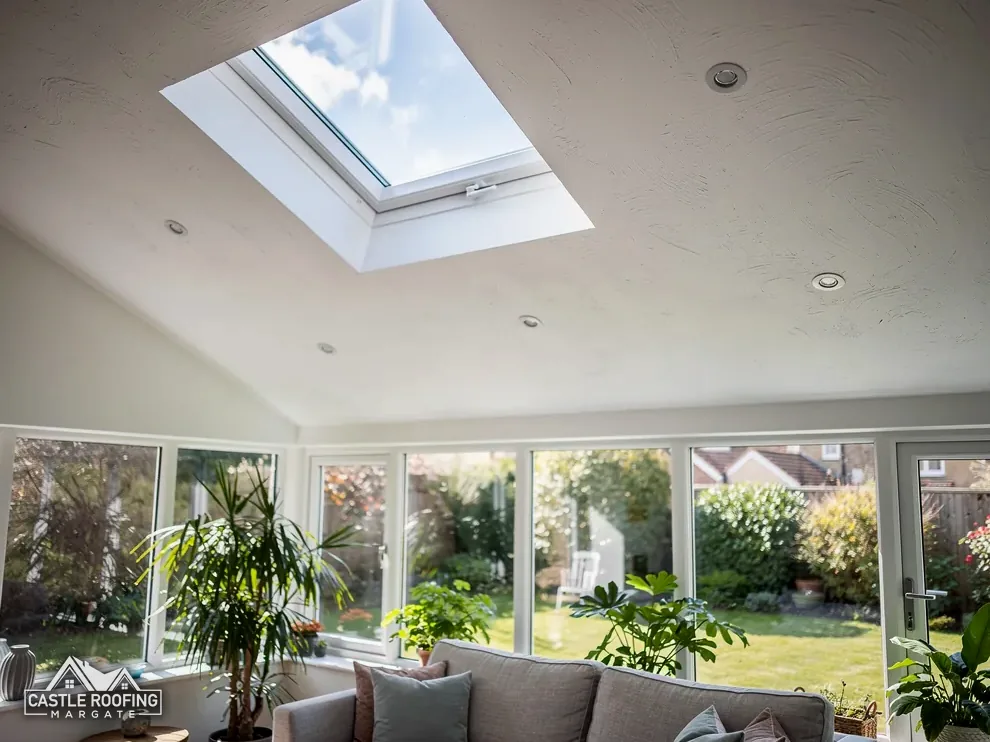
Why a glazed room overheats
Sunlight comes through clear glazing as light, lands on the floor, furniture and walls, and turns into heat. That heat is then held in by the same glass that let the light in. The room warms quickly because it has a large glazed area facing the sun and little thermal mass to soak up the rise.
The roof matters most because the sun is high in summer and shines straight down through it. A conservatory with a clear or lightly tinted roof gets a lot of its heat from above. Side glazing facing south or west adds to it in the afternoon and evening, so the aspect of the room changes when it is at its worst.
Warm air also collects under the roof with nowhere to go unless the room is ventilated. That is why a conservatory can feel comfortable at ten in the morning and unbearable by three. The same thin, glazed roof is behind the winter problem too, because it loses heat as readily as it gains it.
Glazing and polycarbonate in general terms
Not all glazing behaves the same way in sunshine. Clear polycarbonate sheet lets in most of the light and a good deal of the heat. Tinted or opal polycarbonate and some glass units cut part of the glare, which helps, though a tint alone does not stop a room from warming.
Solar-control glass is made with a coating or interlayer intended to reflect part of the sun's heat while still passing daylight. It is sold in several tints and performance levels, and the coatings differ in how much heat and daylight they pass, so ask the supplier for the figures for the specific product you are offered rather than a general promise of a cooler room.
Polycarbonate has a typical lifespan of 10 years, according to HomeBuilding, and the Eco Experts give about 10 to 15 years. Over time, sheets can yellow and cloud, which changes how they behave in the sun. If you are weighing a replacement, replacing polycarbonate with glass sets out what changes, including the weight the frame then has to carry. Sheets that have clouded are a good prompt to change the glazing type.
Roof options that run cooler
The roof is the main lever, because the high summer sun comes straight down through it, while the side glazing meets it at a lower angle. The choices below run from adding to what you have up to replacing it.
- Solar-control glazing units fitted into the existing frame, where it can carry the weight.
- A part-solid roof, with tiled or panelled areas and glazed strips for light.
- A fully solid tiled roof, which blocks direct sun almost entirely.
- Roof blinds fitted inside or outside, the lowest-cost route to try first.
A solid roof makes the room cooler in summer as well as warmer in winter, at the price of daylight. Our page on light in a solid roof conservatory covers that trade, and roof blinds or a new conservatory roof helps you decide between shading and replacing.
A new solid roof needs Building Regulations approval, with structure, energy use and ventilation all considered. The frame is also checked for the extra weight of tiles before any figure is given, since a frame built for polycarbonate is not always built for tiles.
Ventilation and shading, step by step
Whatever the roof is made of, moving air takes heat out of the room faster than the sun puts it in. The order that works best is:
- Open roof vents or a roof window as the first thing each morning, before the room heats.
- Open a door or window low down, so cooler air enters as warm air leaves at the top.
- Close blinds on the sunniest side at midday, and open them in the evening.
- Keep the door to the house shut on the hottest afternoons so heat does not flow in.
A high vent needs a low inlet to work, which is why opening one without the other does little.
If the room is still unbearable with vents and blinds in use, the roof is the next question. A survey looks at what the frame will carry, what suits the aspect, and whether a part-solid roof would give the balance of light and shade you want. The conservatory roofs page sets out the work, and the price you receive is in writing and follows from that look at the roof.