What the coating is designed to do
Self-cleaning glass is ordinary glass with a thin coating on the outer face. The idea has two stages. In daylight the coating acts on organic dirt, such as pollen, leaf stain or bird droppings once dry, and loosens its grip on the glass. Then rain runs over the surface in a sheet instead of beading up, and carries the loosened dirt with it.
The words matter, and the name promises more than the process delivers. Nothing is being scrubbed. The coating assists the weather in doing a job it would do slowly and unevenly on plain glass. Makers set out the details on their own data sheets, and those are the place to read how a given product behaves.
It is fitted on the outside face only, so which way round the pane goes into the roof matters. Fitted the wrong way round, it does nothing useful. A good installer checks the marking on each pane before it is set in the bars.
The coating can alter how the glass looks, often with a faint tint or reflection. Ask to see a sample pane in daylight before agreeing to it.
Where it works and where it does not
The glass depends on weather, slope and the kind of dirt, so the same coating gives different results on different roofs.
| Condition | Effect |
|---|---|
| Rain falling often | Rinses the loosened dirt away |
| A long dry spell | Dirt sits until the next shower |
| Low roof pitch | Water runs slowly and may leave marks |
| Shade under trees | Less daylight to work on the dirt |
On rain, Manston's Met Office averages (1991 to 2020) are about 613 mm a year, with 110.05 days of 1 mm or more. That is a long-term average for one station, and it says nothing about when the rain will fall on your roof, so a dry fortnight can still leave the glass dirty.
Pitch matters because water sheets off a steeper slope faster. On a shallow roof the same shower leaves a thin film behind, and the marks it dries into show up on the clear glass.
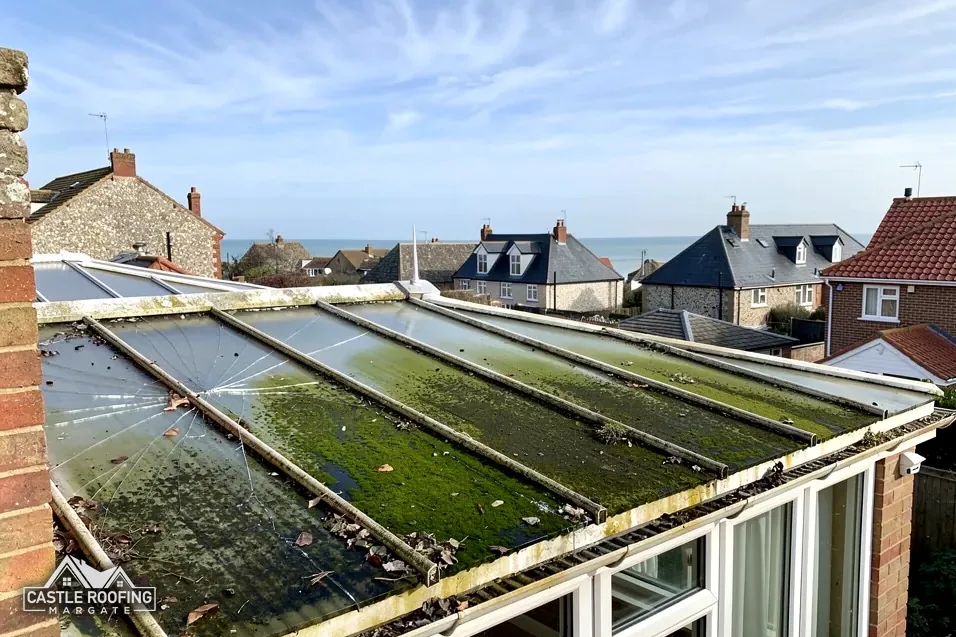
Heavy deposits are a limit as well. Bird droppings in quantity, moss and algae growing along the bars and dust that has set hard are not the thin organic film the coating is made for.
What still needs doing by hand
A self-cleaning roof reduces cleaning without removing it. Several things stay on the list:
- The inside face of the glass, which gets condensation, cooking film and dust.
- The glazing bars and the seals, where green growth settles.
- The gutters and the outlets, which fill with leaves and send water back onto the roof.
- Any stubborn marks the coating has left behind.
Plan the clean for after rain, when marks are softest. A soft brush on a long pole, used from the ground, keeps weight off the glass. When you do wash it, follow the maker's cleaning instructions. Abrasive pads and strong cleaners can damage a coating, and cleaning from a ladder against the roof can put weight on the glass. Cleaning from outside needs a safe way to reach the roof.
Regulation 6(3) of the Work at Height Regulations 2005 makes an employer responsible for fall prevention, so far as is reasonably practicable. A glass conservatory roof is fragile, which is a reason to use a proper access method.
Gutters that overflow can leave dirty bars, and the guide to conservatory gutter leaks covers them.
Deciding whether the coating is worth having
The coating is an option on new glass, and it is not a feature you can add easily afterwards. The question is whether the extra cost buys enough saving in effort. A few points help:
- How hard is the roof to reach? A high or awkward roof gains more from a coating than one you can clean from a step.
- How much shade does the glass get? A roof under trees has less daylight to work with.
- What is the pitch? A shallow slope rinses poorly, whatever the glass.
- What else do you want from the glass: solar control, noise reduction, strength?
The coating is one choice among several. If your main complaint is heat, a solar control glass addresses that directly, and if it is noise, the weight of the glass counts most. The page on replacing polycarbonate with glass lays out the types side by side.
Quote requests for the conservatory roofs service can say which glass you are considering, and the survey then shows whether the frame and pitch suit it.