What is happening on the glass
Air carries water vapour, and warm air can hold far more vapour than cold air. When room air touches a surface colder than itself, the air next to it cools, the vapour can no longer stay airborne, and it turns into droplets. The droplets collect, run along the bars or ribs and drip off the roof.
A conservatory can be the coldest room in the home on a winter night. The roof is thin, the glazing area is large, and the room is often unheated. At the same time it collects moisture: breath, damp coats, wet laundry on a clothes airer, houseplants being watered and a kettle left to boil. Moisture goes up, finds the coldest surface, which is the roof, and condenses there.
This is why condensation can look worse in a conservatory than elsewhere even when the rest of the house is dry. It is also why wiping the glass does not cure it. The wiping removes the water; the cause is still there tomorrow morning. Mould on the seals, black spots on the bars and a musty smell are the signs that it has been happening for a while.
Ventilation does the first half of the job
Reducing the moisture in the air is the least costly fix. BS 5250:2021 is the standard that guides moisture control in buildings, and the principle is the same in any room: let moist air leave, and stop surfaces being cold enough to catch what remains.
In a conservatory that means:
- Open roof vents or windows for a spell each morning, rather than leaving a gap open all day.
- Trickle vents, or a small extractor if the room doubles as a utility or drying space.
- Keep laundry, a tumble-dryer exhaust and a crowd of plants out of the room in winter.
- Leave the door to the house shut when the conservatory is unheated, so house moisture does not drift in.
Our page on conservatory roof vents covers the vents themselves. If a roof has none, a surveyor can say whether one can be fitted to the existing frame, or whether a window opening lower down would do more good. Either way, the aim is moving air, which carries moisture out before it reaches the glass.
A warmer roof surface does the second half
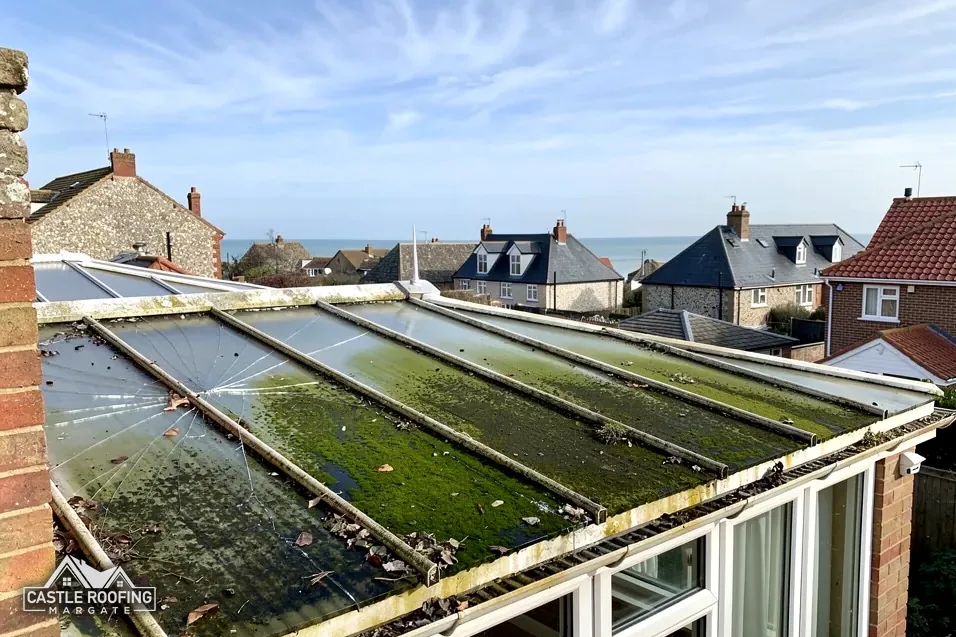
Even a well-ventilated room holds damp air on a cold, wet day, so the roof surface matters too. A surface that stays closer to room temperature collects far less moisture. That is the argument for replacing an old polycarbonate or single-glazed roof with something that keeps its inner face warmer.
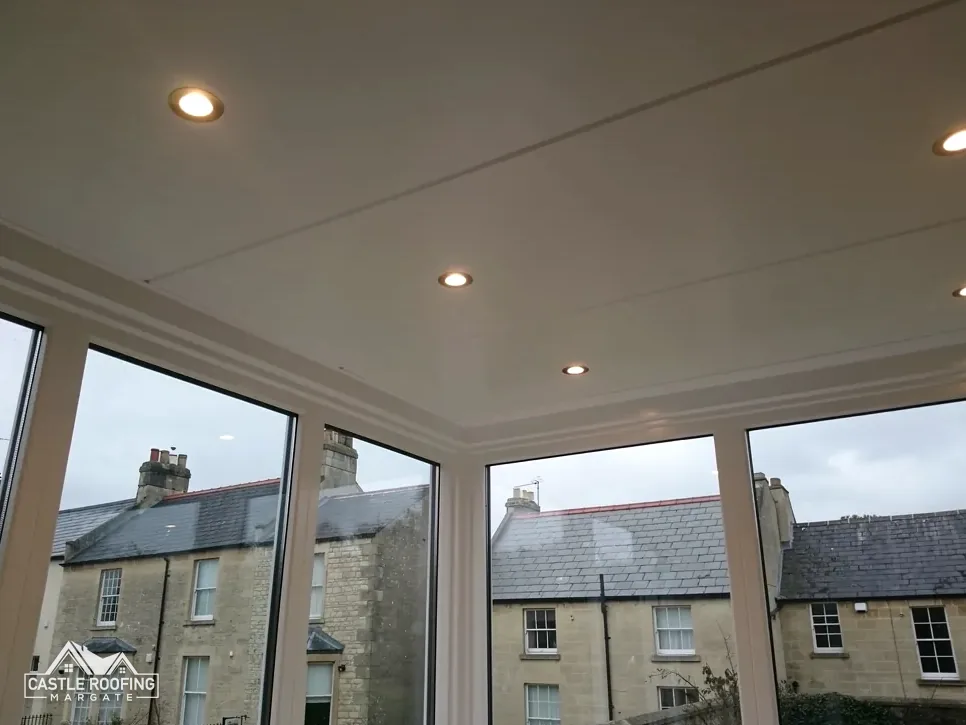
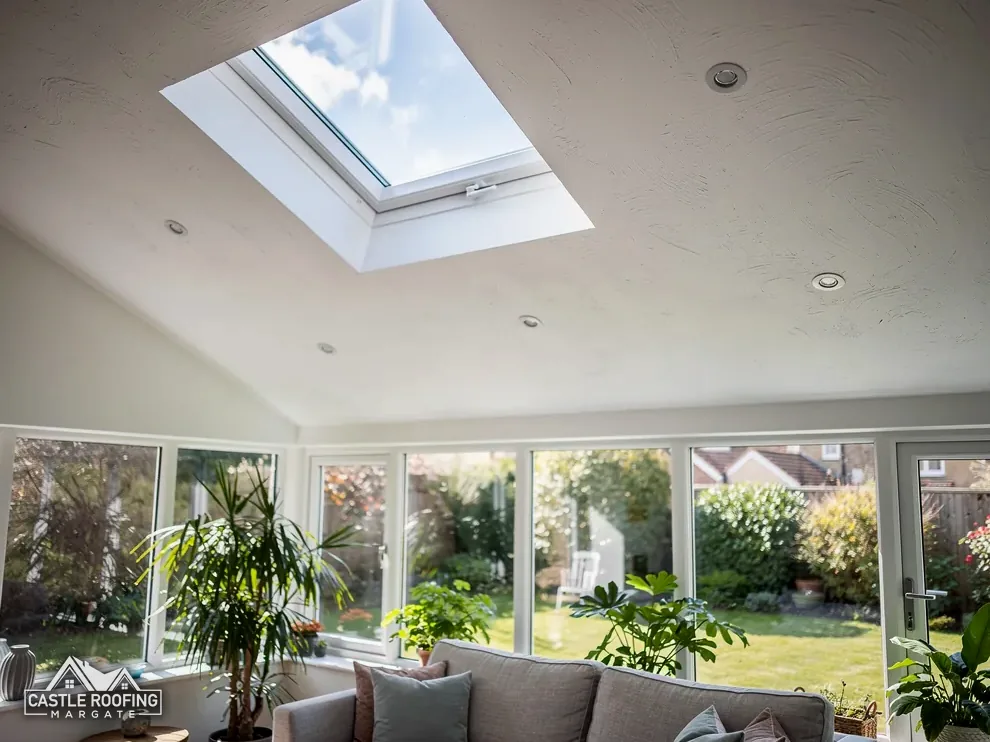
The options run from modern glazing units, through insulated panels fitted into the existing frame, to a fully solid tiled roof. A new roof of any kind has to meet the Building Regulations, which the Planning Portal describes in terms of structure, energy use and ventilation, so a solid roof is designed with all three in mind. Each of the three bears on the others: a heavier, insulated roof asks more of the frame, and a ventilated build-up keeps that insulation dry.
The comparison page sets the choices side by side: solid, glass or polycarbonate. A solid roof also changes the build-up inside the roof, so the survey checks the frame, the eaves and the junction with the house together. The result is a surface that stays dry far more often, and a room you can use in January. A warmer surface needs less help from the vents, so the two measures work together rather than competing.
When the drips are not condensation
Not every drip is vapour. A leak and condensation can look alike, and the way to separate them is by timing and place.
| Sign | Condensation | Leak |
|---|---|---|
| When | Cold mornings, dry or wet | During or after rain |
| Where | All over the glass or panel | One joint or edge |
| Water | Clear, beads on the inside | Can carry dirt or stain |
If drips appear at the same spot, always after rain and mostly along the wall edge, the cause is more likely a failed seal or flashing than moisture in the air. The leaking conservatory roof guide covers that case.
When both are present, mend the leak first, because wet framing keeps a room damp for months, and settle ventilation and surface afterwards. Our conservatory roofs service begins by inspecting the roof from outside and inside. Marks on the frame, stained seals and the places where water gathers all help to separate a fault from simple vapour, and the price is set in writing once that is done.