What the noise actually is
Rain on a conservatory roof is a lot of small impacts on a thin skin. Polycarbonate sheet is light and flexible, so each drop moves it slightly, and the air space in the room below turns that movement into a drumming you can hear. A multiwall sheet has air channels inside it, which helps with heat but does not add much mass, and mass is what quietens a roof.
Not every sound is the rain itself. Three other noises get mistaken for it:
- a rattle, where a sheet is loose in its glazing bar or a fixing has worked free
- a tick or crack as the sheet warms and cools and moves against the bars
- a rumble from the gutter, where the water falls off the roof edge into a full or poorly sloped run
These are worth separating before anything is bought, because a rattle and a ticking bar are repairs, while the drumming on the sheet is a property of the material. Listen from inside during a shower and look from the garden afterwards: a sheet that moves under a pressed hand is a different problem from one that is firmly held and simply loud.
Sheet thickness and fixing, in general terms
Sheet thickness changes how much a roof flexes, and the way the sheet is held changes how much it rattles. A thicker sheet is stiffer, and a stiffer sheet carries less of the sound, although the difference is gradual and not a switch. The glazing bars, the seals along the sheet edges and the screw caps all have to be in good order, because a sheet that sits loose in a bar will knock however thick it is.
What can be done without changing the roof is limited, and these are the realistic steps:
- Check the seals and caps along the bars, and replace any that are brittle or missing.
- Make sure each sheet is fully seated and the fixings are tight but not over-tightened.
- Look at the gutter fall and clear the run, so water leaves the roof quietly.
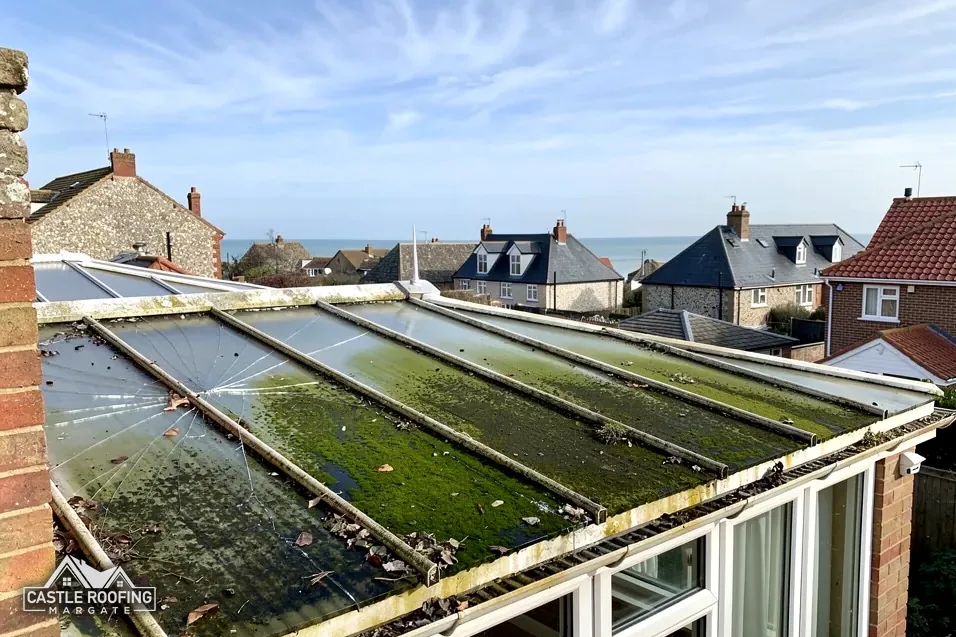
Each of those is a modest repair job. None of them turns a thin polycarbonate sheet into a quiet roof. Polycarbonate roofs are described by HomeBuilding as having a typical lifespan of 10 years and by The Eco Experts as about 10 to 15 years, so an old roof may also be near the point where a change makes more sense than a repair.
Solid and glass options compared
If the noise is the main complaint, the real change is a roof with more mass. Glass and a solid tiled roof both do that, in different ways, and each brings other things to weigh.
| Roof | Rain sound | Also changes |
|---|---|---|
| Polycarbonate | Drums on the sheet | Lightest on the frame |
| Glass | A softer note, more mass | Heavier, brighter room |
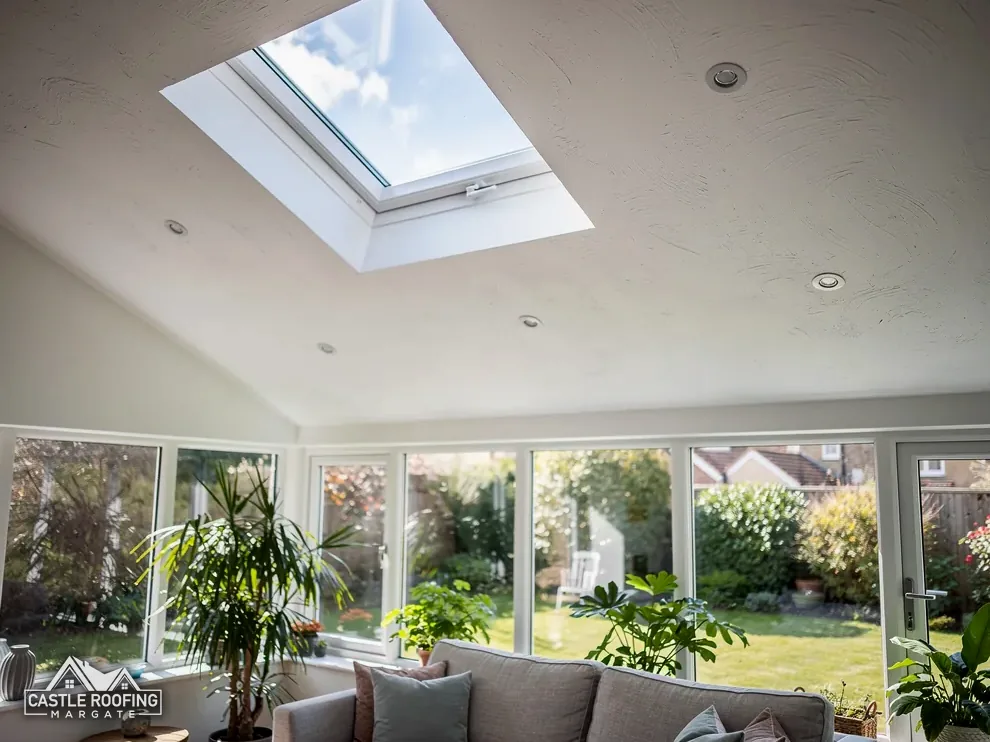
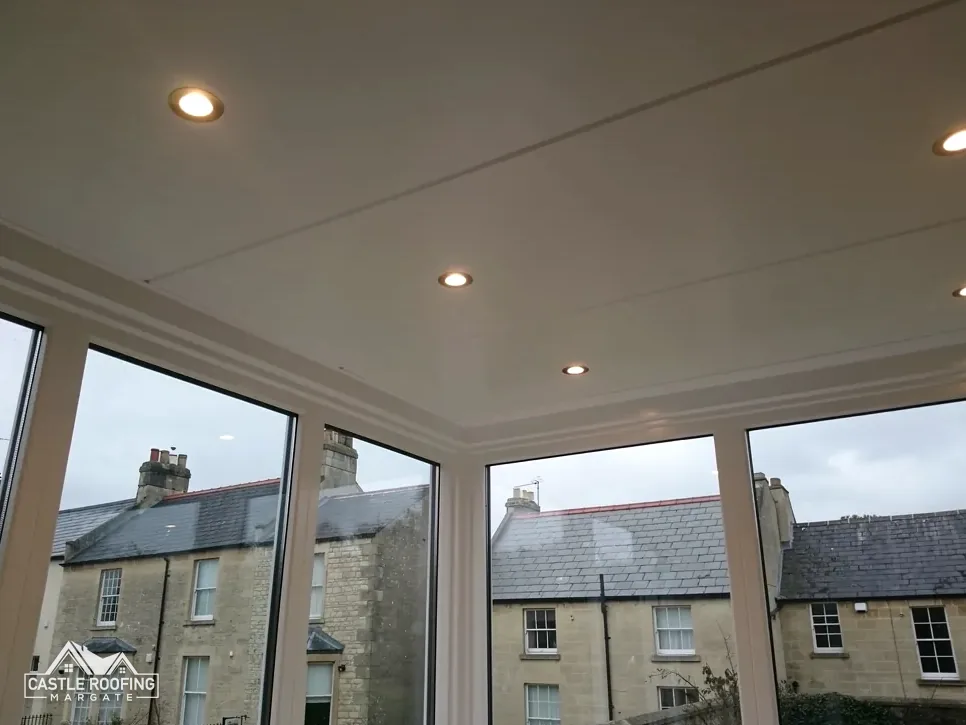
| Solid, insulated | Dull, with insulation above the ceiling | Less daylight, needs approval |
A new solid roof needs Building Regulations approval, and glass is heavier than sheet, so both options need the frame checked first. The solid against glass guide sets the two out side by side, and the page on replacing polycarbonate with glass covers the frame question. Whichever you pick, the sheet or glass is only part of the answer, since the bars, seals and fixings around it set how quiet the finished roof is.
For the cost of a full replacement, MyJobQuote gives a typical UK range of between £3,200 and £6,000 for a conservatory roof (page dated 20/10/26). The Eco Experts give between £2,300 and £6,000 (updated 29 April 2024).
Deciding whether to repair or replace
The choice turns on what you hear and how old the roof is. A rattle, a tick or a noisy gutter is a repair at the junctions, and a sound roof is worth keeping if it is otherwise watertight. A roof that drums only in heavy rain, and that is also cold in winter and hot in summer, is being asked to do more than polycarbonate can.
Before deciding, it helps to write down what bothers you most: the sound, the temperature, the leaks or the cost of keeping up with repairs. Each has a different answer. Sound points to mass, temperature points to insulation, and leaks point back to seals and flashings, which are covered in the guide to a leaking conservatory roof.
When we survey the roof we listen as well as look, so the quote matches the actual complaint. A clear photo of each bar from inside also helps, because staining shows where trouble has started. Part of the conservatory roofs service is saying plainly when a repair at the bars will settle the room, and when only a different roof will.