A plain route through the permissions around a conservatory roof swap in East Kent: what to put to the planning team, where Article 4 and listed status change the answer, and what Building Regulations add.
A conservatory sits at the back or side of a house, but its roof is still a roof, and in a conservation area the council cares how the outside of every building looks. Swapping tired polycarbonate for new polycarbonate is a small visual change. Swapping glazing for a tiled solid roof alters the profile of the building, and that is where the questions begin.
There are three separate gates, and each is answered by someone different. The planning team decides whether the new roof needs permission. A listed house adds listed building consent. Building control looks at the construction. People mix the three up, and an answer from one is no answer from another.
This guide covers the six councils across our patch, from the Thanet towns round to Folkestone & Hythe and the Ashford villages near Wye. Each publishes different things about its conservation areas, so we name the council wherever a rule belongs to one of them. It sits within our conservatory roofs work, and our roof survey records the frame, the glazing and the roof line before anything is ordered, so you have photos to send to the council.
Does the swap change how the building looks?
Planning law starts from one test. Under the Town and Country Planning Act 1990, section 55(2)(a) takes a piece of work out of the definition of development when it leaves the outside of the building looking much as it did. A new roof that matches the old one in shape, height, colour and material sits on the safe side of that line. One that changes any of them may not.
So the first question is about the look of the finished roof, not the age of the old one. Fitting new clear sheets into the same frame is a different proposition from adding a lantern, raising the ridge or covering the glazing with tiles. Thanet District Council's conservation area page puts it this way: a like for like job carries a lower chance of needing planning permission. "Less likely" is the council's own phrasing, and it leaves the final decision with the planning team.
A conservation area makes the appearance test matter more, because the area is designated for how it looks. A conservatory at the back of a terrace is often out of sight from the road, yet a side return, a gable end or a corner plot can put it in front of every passer-by.
Changes that tend to alter the outside look of a conservatory:
- a different roof material, such as solid tiles in place of glazing
- a higher ridge or a steeper pitch
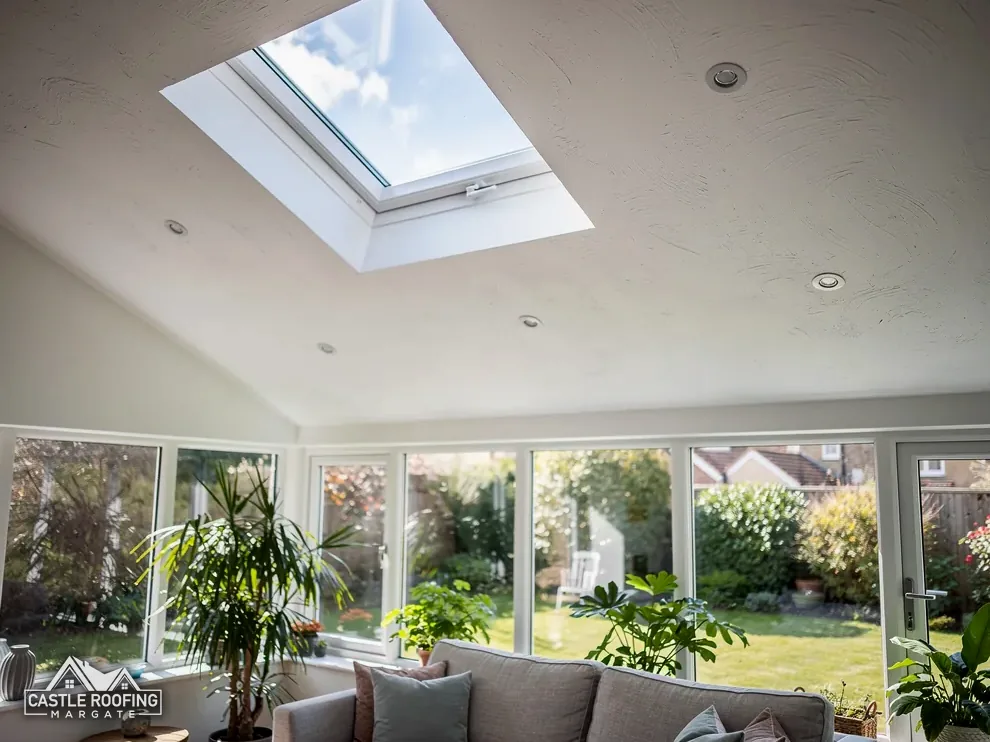
- a new roof lantern or roof window
- a different frame colour or glazing bar profile
- a moved gutter line or a deeper fascia board
Putting the question to the planning team
The council's planning team gives the answer that counts. A roofer's opinion, an installer's brochure and a neighbour's experience do not bind the council, and the neighbour's conservatory may have been built before the area was designated. Ask in writing so you hold the reply, and ask before any order is placed.
The question is easier to answer when it arrives with the right material. Send the planning team:
- your address, and which council area it falls in
- photos of the existing conservatory from the garden and from any public side
- a sentence saying what the new roof is made of, its colour, and whether the shape stays the same
- the make and profile of the frame, if the frame stays
- whether the house is listed
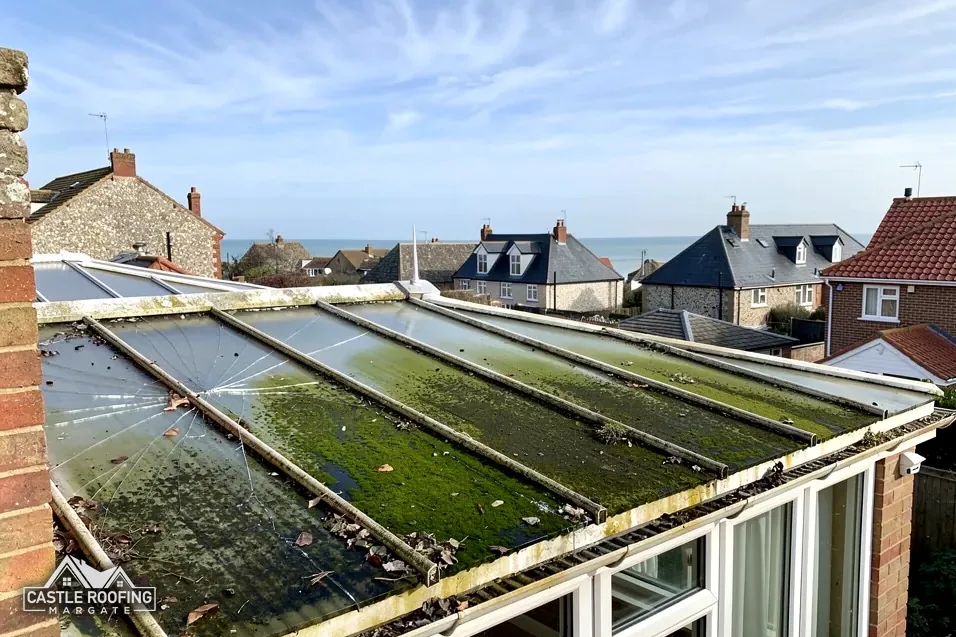
Our survey photos cover most of that list. We photograph the roof line, the frame and the abutment, which is the joint where the glazed roof butts up to the brickwork of the house, and you pass the pictures on as they are.
Two outcomes are possible. The council may reply that the work does not need permission, in which case keep the email somewhere safe with the survey photos. Or it may ask for an application, and then the choice of material is what the application turns on, so settle the roof type before anything is drawn.
Do not read silence as consent. A conservation area is exactly the place where a short written enquiry to the planning team is cheaper than a retrospective application, a delay while the application is decided, and a roof taken back off.
Which councils have Article 4 rules on roofs
An Article 4 direction is an order that lets a council withdraw permitted development rights across a named area. Where one applies, a job that would normally go ahead without an application can need one, so a neighbour's experience in another street tells you little, and the usual reading of the national rules stops being enough. The councils publish different amounts about theirs, so the table keeps to what each one says.
| Council | Conservation areas | Article 4 |
|---|---|---|
| Thanet | 27 in the district | Ramsgate, Ramsgate Marina extension and Pegwell |
| Canterbury | 97 in the district | Shown on the council's map |
| Dover | 57 in the district | Some reach roof alterations |
| Swale | 51 in the district | Faversham reaches roof coverings |
| Folkestone & Hythe | Council's interactive map | Ask the council |
| Ashford | Ask Ashford Borough Council | Its own interactive map |
Thanet does not list the classes of work for each address, so put your street to Thanet District Council and ask what its direction covers. Dover says some of its directions can reach roof alterations to a dwelling, on the sides of a home in view of a road, a waterway, or any open space the public uses. Swale's Faversham direction reaches replacement roof coverings on the main elevations that front a public highway.
In Canterbury, and in Folkestone & Hythe, ask the council directly whether a direction reaches your address, because neither district's wording is repeated here. Treat that as a reason to ask, not as a sign that nothing applies. A short email with a photo and your postcode gives the planning team what it needs to check.
Listed houses and listed building consent
If the house is listed, the conservatory roof sits inside a second system. Under section 7 of the Planning (Listed Buildings and Conservation Areas) Act 1990, works that alter a listed building's character come under a consent regime, and Canterbury City Council tells owners the same in its own words on its listed buildings page. A conservatory that is fixed to a listed wall touches the building at the abutment, and the council decides how far that matters.
Listed status and conservation area status are separate things. A house can be one without the other, and a house can be both, in which case the planning team and the conservation officer will both want to see the proposal.
Points to settle with the council before a listed house gets a new conservatory roof:
- how the new roof meets the house wall, since that joint touches the historic fabric
- whether the flashing is chased into the brickwork or fixed to its face
- the colour and finish of the frame and of any new roof covering
- whether the old conservatory was part of the original listing or a later addition
Our answer on a conservatory roof on a listed building goes through the consent route in more detail. The point to take from this guide is that consent comes from the council, never from the roofer, and the application goes in before work begins.
Building Regulations are a separate gate
Planning permission and Building Regulations approval answer different questions. The first is about how the building looks. The second is about how it is built. A conservatory roof can be cleared by the planning team and still need building control, or the other way round.
The exemption in Schedule 2 of the Building Regulations 2010 covers a conservatory added at ground level where the floor area does not exceed 30 m2. Approved Document L adds that the separating wall, door or window stays, and that the dwelling's heating is not extended into the conservatory. The Planning Portal states the other half: a new roof has to be safe in structure, efficient with energy and properly ventilated, and any new solid roof counts as work needing approval even where the original conservatory was exempt.
Which building control team answers depends on the address:
- Thanet runs its own team, on 01843 577522.
- Canterbury and Swale use STG Building Control, on 01634 331133.
- Dover and Folkestone & Hythe run their own teams; Folkestone & Hythe's number is 01303 853538.
- The Ashford villages, Wye among them, come under Ashford Borough Council's own Building Control team.
Dover District Council's building control page describes many conservatories and porches as exempt, provided they are divided from the house by doors and are not heated. The words are Dover's; the exemption itself comes from the national Building Regulations, which apply in every district.
The Building Regulations guide for conservatory roofs sets out the approval route in full, including what the building control team looks at on a solid roof: the frame, the fixings, the ventilation and the thermal performance of the new covering.
Choosing a roof the area will accept
Once the permissions are mapped, the roof choice narrows. In a conservation area the planning team looks at material, colour, pitch and the neatness of the join with the house. A roof that reads as part of the house raises fewer questions than one that stands out from it, and the council's appraisal for your street is public, so you can read what it values there.
Appraisals differ from one area to the next. A council can describe one area's roofs as a mixture and another's as uniform, and a conservatory roof is judged against that backdrop rather than against the county as a whole. If a Thanet address falls in Ramsgate, Pegwell or the marina extension, read the appraisal alongside the Article 4 wording above.
Matters worth raising with the council and with us at the survey:
- whether the colour of a new frame suits the windows on the house
- how a solid roof covering relates to the tiles or slates on the main roof
- whether a lantern is wanted for daylight, and how high it would stand
- how the gutters and downpipes read against the house's own
Daylight matters to the people who use the room. A solid roof lets less in than glazing, and our comparison of solid and glass conservatory roofs sets the trade-off out. Whichever way you go, get the planning answer before the order is placed, so the quote you accept describes a roof the council has already seen.