The repairs that come round again and again
Commercial roofs tend to fail in the same few places, and a landlord who knows them can plan for them instead of reacting to a call from a tenant. The list is short:
- Gutters and outlets blocked by leaves, moss and debris, so water stands or overflows.
- Flashings, the strips of metal or membrane that seal a junction between roof and wall or upstand, which lift, split or open at the joint.
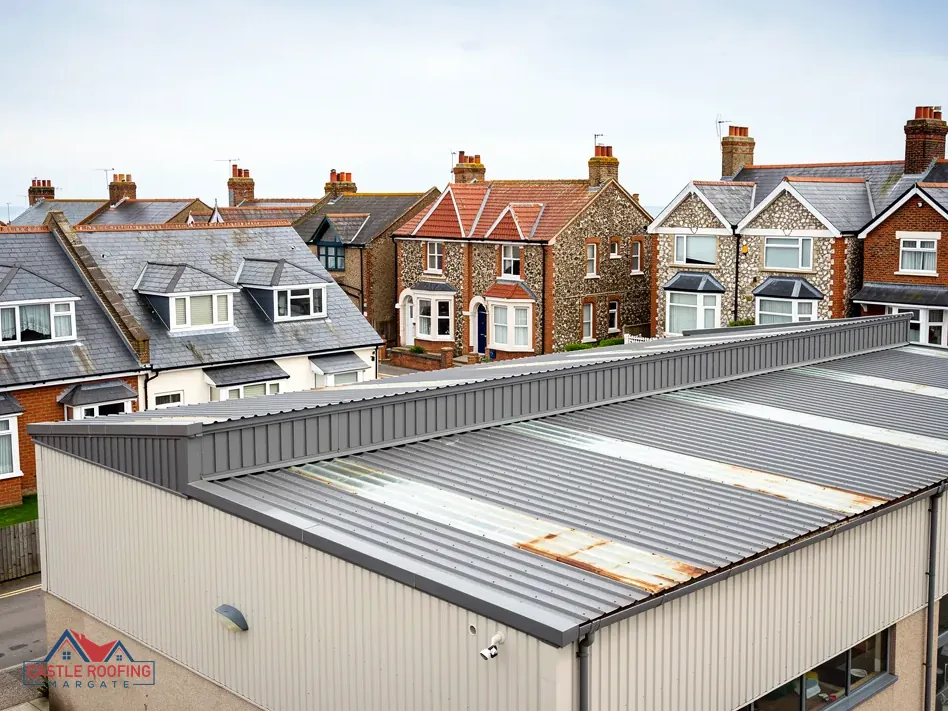
- Sheet laps and fixings on profiled roofs, where seals dry out and fixings loosen.
- Rooflights that crack, discolour or leak at the laps.
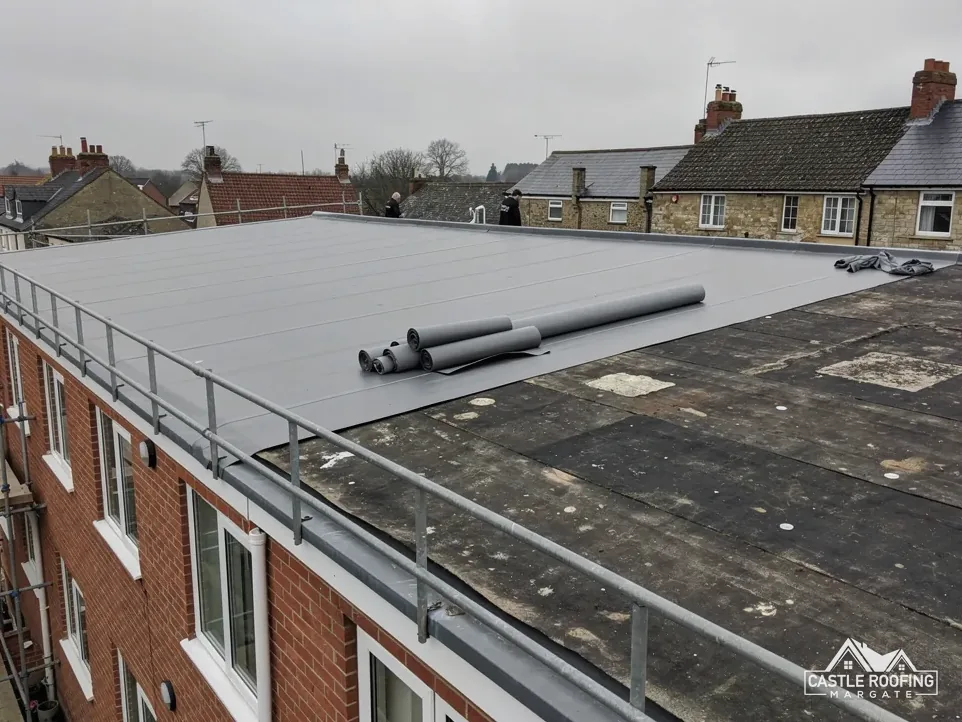
- Membrane seams and details around plant, pipes and vents on flat roofs.
Each of these is cheap to fix when found early and costly once water has reached insulation, stock or the ceiling below. A small repair done in good time rarely needs a scaffold, while a failed gutter left alone for several seasons can mean replacing it.
Not every fault is a candidate for repair. Where the whole covering is near the end of its working life, patching stops being good value, and a survey will say so plainly.
Inspections that catch faults early
A regular inspection is the most economical way to avoid an emergency. It does not need to be elaborate: a surveyor walks the roof, or views it from a safe position, checks the gutters, outlets, flashings, sheet laps and rooflights, and photographs what is found. A second look after a bout of severe weather is sensible too.
Roof access is a safety matter for a landlord as well as a convenience. Fragile surfaces, open edges and rooflights make an unplanned visit by a caretaker or maintenance contractor risky, so the roof should be entered only by someone who has planned how, with staging and edge protection where the roof needs them.
How often to look is set out in how often to inspect a commercial roof. The right interval depends on the building, its age and what the last inspection found, so build it into the property's maintenance plan rather than waiting for the next leak. Each visit should leave a dated record the next surveyor can compare against, kept in the same file as the last one.
Records, leases and who pays
Records settle arguments. A file for each roof, kept with the property papers and updated after every visit, should hold the inspection reports, the photos, the repair invoices and the specification of any covering that has been replaced. When a tenant reports a leak, the file shows where the fault was last seen and what was done about it.
The lease decides who is responsible for what, so read it before any repair is ordered. Some leases make the landlord responsible for the roof structure and covering, others pass repair duties to tenants through a service charge, and some split the duties. Check the wording, and ask your solicitor if a clause is unclear, before an invoice has to be shared with anyone.
If storm damage is behind a repair, tell the building's insurer first. Make the roof safe, keep photos and receipts, and use your policy's own storm definition when you read the cover. If a dispute follows, ask the Financial Ombudsman Service on 0800 023 4567 whether it can take a complaint from your business. Never assume a claim will be paid.
For leaks that cannot wait, see emergency commercial roof leak.
Budgeting a repair, one written price at a time
A repair to a commercial roof cannot be priced fairly from a distance: the cost depends on access, the size and type of roof, the extent of the fault and the weather window. No fair figure can be given in advance for a roof the surveyor has not seen.
What a landlord can do is plan around the pattern. Put routine items, such as gutter clearing and a regular look at the flashings, into the property budget as regular lines. Hold a separate reserve for the items that are not routine: a failed outlet, a split seam, a rooflight replacement, or a stretch of gutter that has given up. Keep the larger question, repair or replace, for a survey that looks at the whole covering.
Each job then arrives as a single written total after the survey, with the work described in plain words. Check that the quote covers the scaffold or access, the waste taken away and VAT, so the figure you sign is the whole cost. VAT on commercial work is covered in VAT on commercial roofing.
For the wider picture of what we do on commercial buildings, start at commercial roofing.