A spring and autumn rhythm
Two inspections a year fit the weather on this coast. The Met Office's Manston averages for 1991 to 2020 show about 613 mm of rain a year, 110.05 days with 1 mm or more of rain and 21.43 days of air frost. Winter works on a roof through wet, wind and frost, so one look in spring catches what the season did, and one in autumn gets the roof ready for the next.
The spring check is about damage: lifted laps, cracked sealant, split upstands and anything the frost opened up. The autumn check is about readiness. Outlets and gutters are cleared, fixings tightened, and the details that failed the previous winter are confirmed as fixed.
These are our suggested intervals, not a legal requirement for every building. An insurer, a landlord's lease or a maker's maintenance terms may require something different, and any of those documents can set the minimum for your building.
A roof that has been recently replaced still benefits from the first inspections, because early faults show in the first seasons.
After a storm, and what to look at
A severe gale, hail or heavy snow justifies an extra look straight away. The Met Office records Manston's mean wind at 9.86 knots, and the figure is an average that hides the gusts which lift laps and loosen fixings. A quick inspection after a storm finds a lifted sheet or a displaced flashing before the next rain does.
If the damage is real, the sequence in making a storm claim applies, and photographs taken at the inspection become useful evidence.
A routine inspection covers:
- Outlets, gutters and downpipes, for blockage and joint failure.
- Laps, seams and sealant, for opening or perishing.
- Flashings, upstands and parapet copings.
- Rooflights and the upstands round them.
- Fixings, for corrosion or backing out.
- Signs of ponding or standing water on flat roofs, and stains on the underside of the deck.
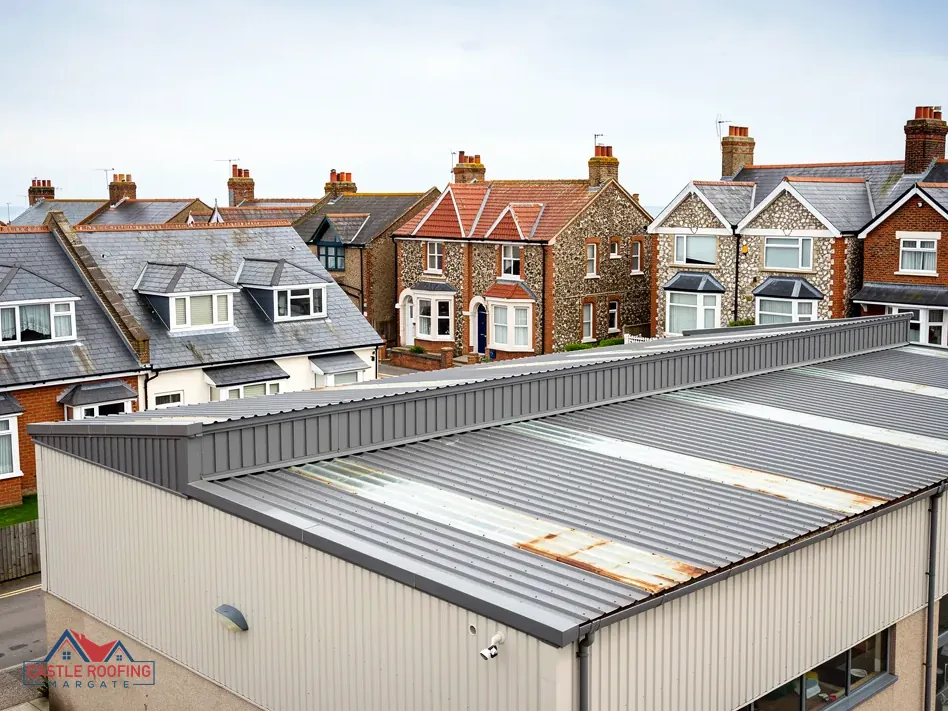
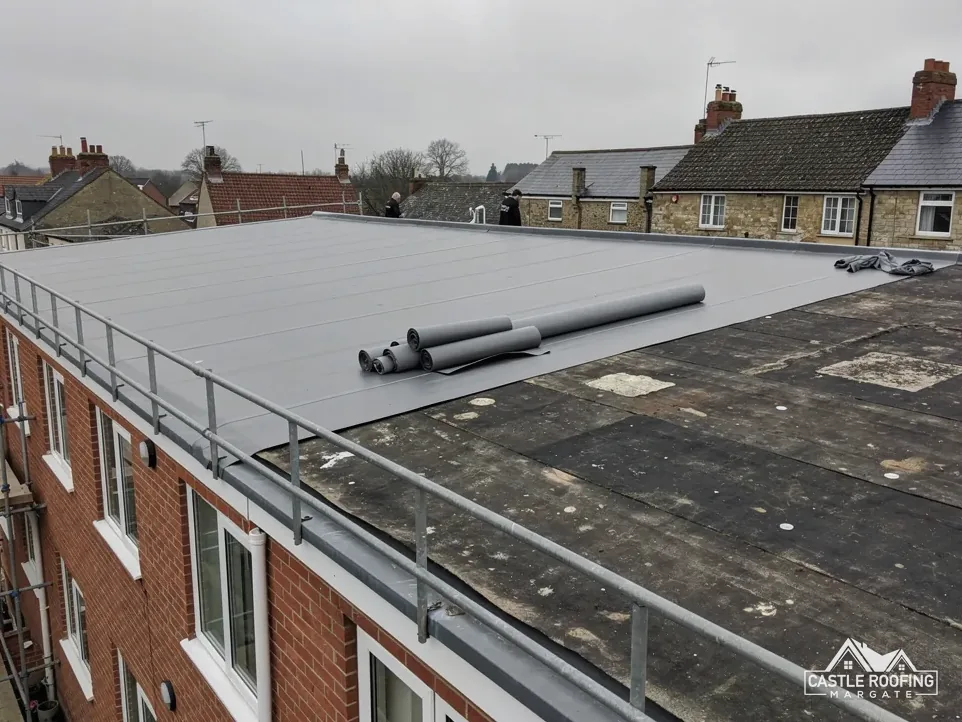
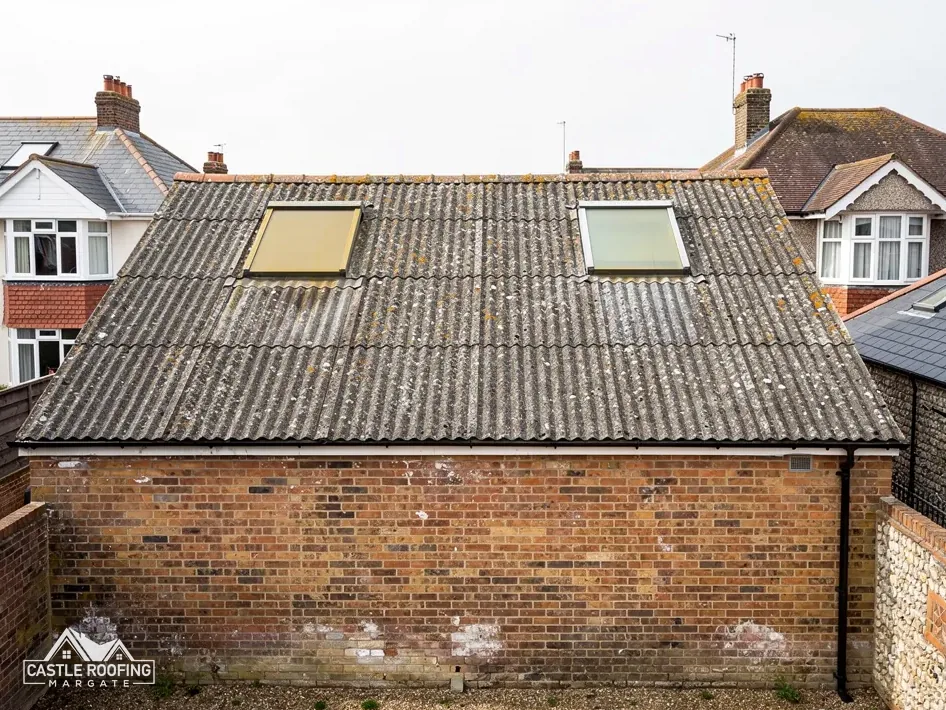
None of this needs the roof to be walked if it is fragile, and on a fragile roof it should not be. A drone, a mobile platform or a look from the edge can survey a surface safely, and each of those leaves a dated photograph for the report.
Outlets and gutters get the most attention
Blocked drainage is a simple fault with serious results, because the water has nowhere to go. On a flat roof, a blocked outlet lets the surface fill and pond. A box gutter with leaf and nest debris overflows into the building at the wall.
Checking outlets, hoppers and gutters is therefore the core of every inspection, and it is the part an owner can often arrange to have done more than twice a year if trees or nesting birds are close. Look for silt, plastic, nest material and moss, and confirm the water leaves freely. Pour a bucket in if the outlet looks clear but the roof has been ponding. Check overflows too, since an overflow that is blocked gives no warning when the main outlet fails.
Where birds nest on or near the roof, droppings and nest material can choke an outlet or a hopper. Our answer on bird-proofing a commercial roof covers the legal limits on clearing nests in use.
Regular clearing is a small job done early. Left, it becomes a leak into stock or an overloaded roof after heavy rain, and both cost far more than the inspection that would have caught it.
The written report
An inspection without a written record is hard to use. The report is what you pass to an insurer, a landlord or a purchaser, and what you compare against the next one to see if anything has changed.
A useful report states the date, the weather, how the roof was accessed, and what was seen. It carries dated photographs of each area, with the defects marked, and a list of recommendations in order of urgency, from the fault that is leaking today to the item to watch next year.
The average roof survey costs around £300, according to MyJobQuote's guide of October 2026. That is a national figure for a typical roof; a large commercial building will be priced after we have seen it.
Keep the reports together in one file with the roof's drawings and any maker's documents, so the history of repairs and findings can be read in order. The commercial roof survey page describes what a full survey adds, and the commercial roofing hub lists the rest. We send the report with photographs, then one written price for anything it recommends.