Six questions to settle before you exchange: what a roofer examines on slate, stacks and lead, who answers for a shared roof, how old a flat roof is, what spray foam hides, and what the written report should hold.
Buyers tend to fall for a kitchen, a bay window or a garden. The roof gets a glance from the pavement, if that. Yet it is the one part of the building that has to keep out every wet week for the next few decades, and on an older seaside house it can also hold a bill the asking price never allowed for.
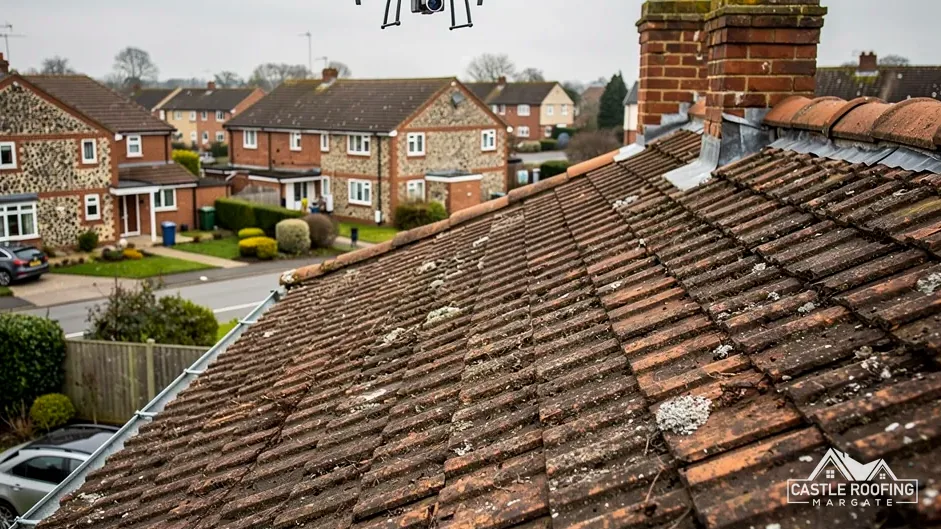
A pre-purchase roof check is a separate job from a mortgage valuation and from a general survey. A roofer goes up, or looks at close range from a ladder or the loft, and reports on the covering, the lead, the chimneys, the gutters and the timbers underneath. The point is to learn what the roof needs now and what it will need soon, before your offer turns into a contract.
This piece covers what that visit should include on the houses and flats you meet around Margate and Thanet. It takes in period slate and tall stacks, shared roofs on converted buildings, flat extensions, and loft timbers hidden under spray foam. For a wider look at the service, see our roof inspections page.
Why check the roof before you exchange
Once contracts are exchanged, a roof problem is yours. Before that point, it is information you can use: to ask for repairs, to agree a different price, or to decide the house is not for you. A roofer's findings give those conversations something solid to rest on, which a vague worry about the tiles never does.
MyJobQuote, in a cost guide updated in October 2026, gives a typical UK figure for a roof survey of around £300. That is a national average and no Castle price, and what a visit costs depends on access and on the size of the roof. Set against a repair bill or a re-roof, it is a small sum to spend on knowing where you stand.
A sensible visit answers four plain questions:
- What is the covering made of, and what state is it in?
- Are there faults today, such as slipped slates, failed flashings or blocked outlets?
- Which elements are close to being worn out and will want spending before long?
- Is anything hidden, in the loft or under the roof, that the visit could not see?
That last question matters more than people expect. A roofer who cannot see something should say so in the report and not guess. Our guide to what a roof survey report contains sets out how the findings should be laid out, with photographs of each fault and a plain note of what the visit could not reach.
Period slate, tall stacks and lead
An older Thanet house may carry slate or clay tile, with a chimney stack rising above the ridge. Thanet's own appraisal of the Cliftonville Clifftop conservation area calls the roof materials there "quite mixed" and names both slate and red clay tile. On an older house of that kind, a roofer's attention goes to a short list of places, and a good report names each of them.
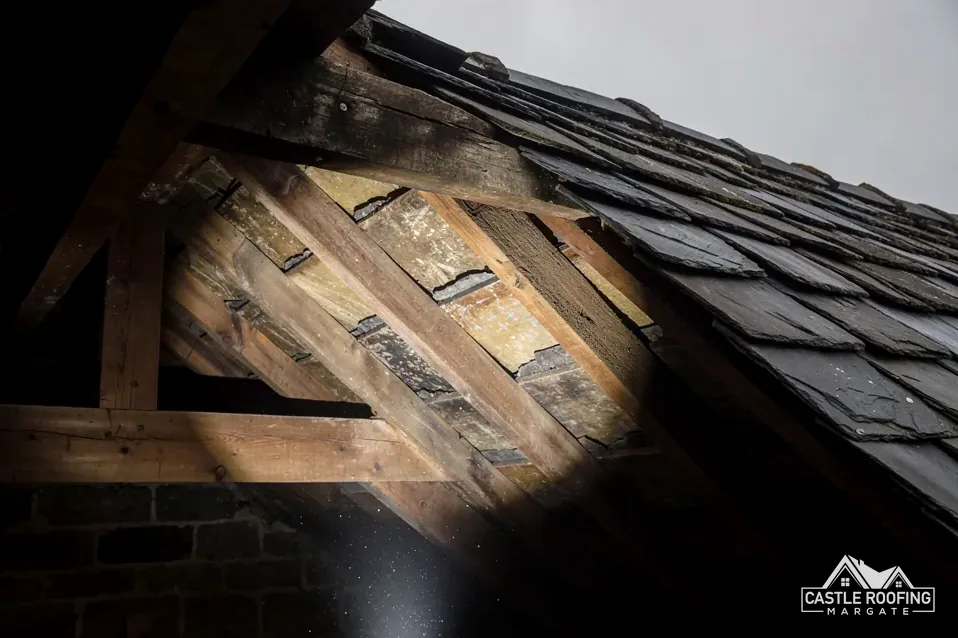
- Slates held by old nails. Iron nails rust, and a slate can slip when its fixing gives way, while the slate itself is perfectly good. A run of slipped slates on one slope tells you more than a single gap.
- Valleys, the channels where one slope meets another and shed their water down one gutter-like channel. They are lined with lead or another sheet metal, and they take heavier flows than a plain slope does.
- Lead flashings, which seal the junction where roof meets stack or wall, and soakers, small folded sheets of lead slipped beneath each course of slates at that joint. Cracked, lifted or patched lead belongs in the report.
- Flaunching, the mortar bed that slopes away from the pots on a stack. Once it cracks, rain reaches the brickwork below, and the damp shows up in a bedroom wall.
- Ridge and hip tiles, the capping that runs across the crest and down the angled edges, where the bedding mortar may have failed.
Lead sheet comes in codes by thickness. Code 3 is the thickness for soakers; at any other detail the lead code is fixed by the specification written for that job, so a repair quote should state which one it intends. Ask for the stack to be examined from a ladder, or for close-up photographs, and not only from the street. A roofer who can describe the flashing to you has looked at it.
Flat conversions and shared roofs
Some of the larger houses around Margate have been divided into flats. In a converted building the roof is rarely just one household's business, and a repair affects everyone below it. Before you commit, three questions about the roof belong on your solicitor's list, because a roofer cannot answer them from a ladder.
- Who is responsible for the roof under the lease or the title, and how are repair costs shared between the flats?
- Has any roof work been done or planned recently, and is there paperwork for it?
- Is there a sinking fund or a service charge history that shows what the building has spent?
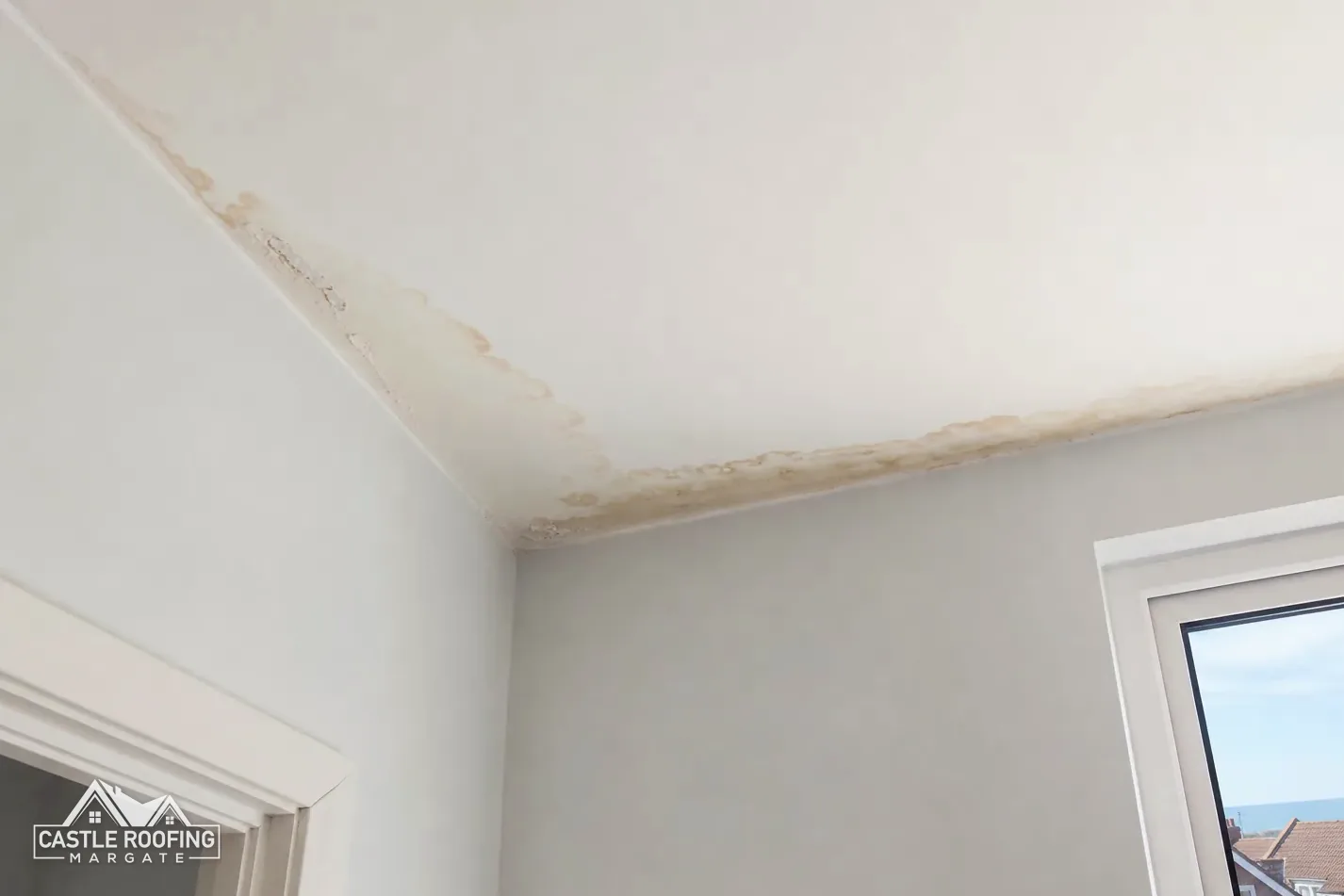
A roofer can add the physical side. Flats under the roof slope are often the ones that see a stain first, and a top-floor flat can sit directly under a flat-roofed dormer or a lead-lined gutter between two pitches. Ask for the report to name which parts of the roof sit over the flat you are buying and which are shared.
Planning is also different for flats. Flats have no permitted development rights, so alterations such as roof windows go through a planning application. If a seller mentions a roof window already in the flat, ask to see the approval paperwork, and ask your solicitor to confirm it matches what was built. Missing consent for a roof alteration can become the next owner's problem, and the next owner would be you. Our page on inspecting a period property roof explains how a visit to an older building is carried out.
Flat roofs on extensions and garages
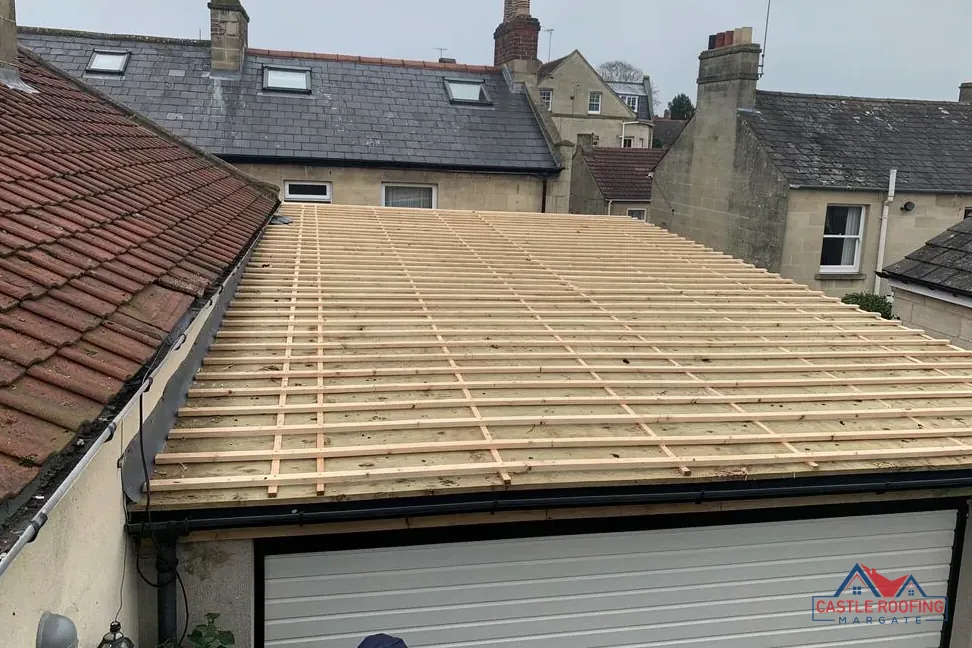
A house may have a flat-roofed rear extension, a garage or a dormer cheek built long after the main roof went on. These sections are quick to inspect and often the first to need money. The covering matters, and so does its age, which a seller may simply not know.
Published lifespans are ranges and carry no promise, and the guides differ from one another. HomeBuilding gives torch-on felt 10 to 15 years; Less gives 10 to 20 years. For EPDM (a single-layer rubber membrane), HomeBuilding says 25 to 30 years and Less says 30 to 50. For GRP, glass-reinforced plastic, HomeBuilding says 25 to 30 years and Less says 25 to 40. A roof near the bottom of its range is a cost to plan for, and one near the top may well have been recovered at some point, so ask the seller what is known about it and when.
| Look at | Sign of trouble |
|---|---|
| Surface | Blisters, splits, bare patches |
| Edges | Lifted trims, gaps at the wall |
| Outlets | Debris, standing water after rain |
| Ceiling below | Stains, sagging, damp smell |
Standing water that remains a day after rain points to a fall problem. The current flat-roof code, BS 6229:2025, is read as keeping a minimum 1:80 finished fall on general roof areas, and a roofer can tell you whether the roof you are buying looks short of that. Ponding on a roof that is new to you is worth a question to the seller and a line in the report.
Spray foam under the roof
Some roofs have been insulated by spraying foam on the underside of the tiles or slates. If you are buying such a house, the roof check has a limit, and the report should say so plainly. RICS, in its spray foam guide for consumers, warns that foam over the timber roof structure leaves those timbers impossible to see or inspect in full. A roofer can look at the outside of the roof, but the rafters and battens underneath may be hidden from view.
On lending, RICS said in March 2023 that parts of the mortgage market, equity release among them, had concerns about foam. Its guide tells buyers to ask their mortgage provider whether the lender's policy permits foam in the roof. That is a question for your broker or lender, and no roofer can answer it for them.
The Energy Saving Trust notes that if a leak lets water reach timbers under foam, the timbers can rot, and that open-cell foam carries a "much lower" risk, which does not mean none. Its advice is against spraying foam over a roof that already leaks.
- Ask the seller what was installed, when, and by whom.
- Ask for any paperwork that came with the work.
- Ask your roofer to look for stains on the ceilings below and to check the outside for the faults that would let water in.
Our answer on inspecting a roof with spray foam covers what can and cannot be seen.
What the written report should hold
A verbal "it looks fine" is no use to a buyer, a solicitor or a lender. Ask for something written that you can keep and pass on. A useful report from a roofer does these things:
- Describes each roof slope and each flat section separately, with the covering named.
- Shows photographs of every fault, labelled with where it is.
- Separates what needs doing now from what can wait, and says roughly when to look again.
- Lists what could not be seen, for instance timbers under foam, a loft stuffed with belongings or a roof too high for a ladder.
- Says which jobs a roofer can do and which need another trade, such as a chimney specialist.
On our jobs the written price arrives after the survey and not before it, and it comes as a single total. That also helps you in a negotiation, because a single figure for the recommended repairs is easy to put to a seller or to set against your offer.
Not every finding is a reason to walk away. A few slipped slates and a tired flashing are an afternoon's work. A roof that is failing across every slope is a different conversation, and the report should help you tell the two apart. If the house was built or refurbished before 2000 and has a garage or outbuilding with a sheet roof, HSE advises you to assume it contains asbestos until a test says otherwise. Nobody should drill, break or clean such a roof before that test.