Why a wet slate is a dangerous slate
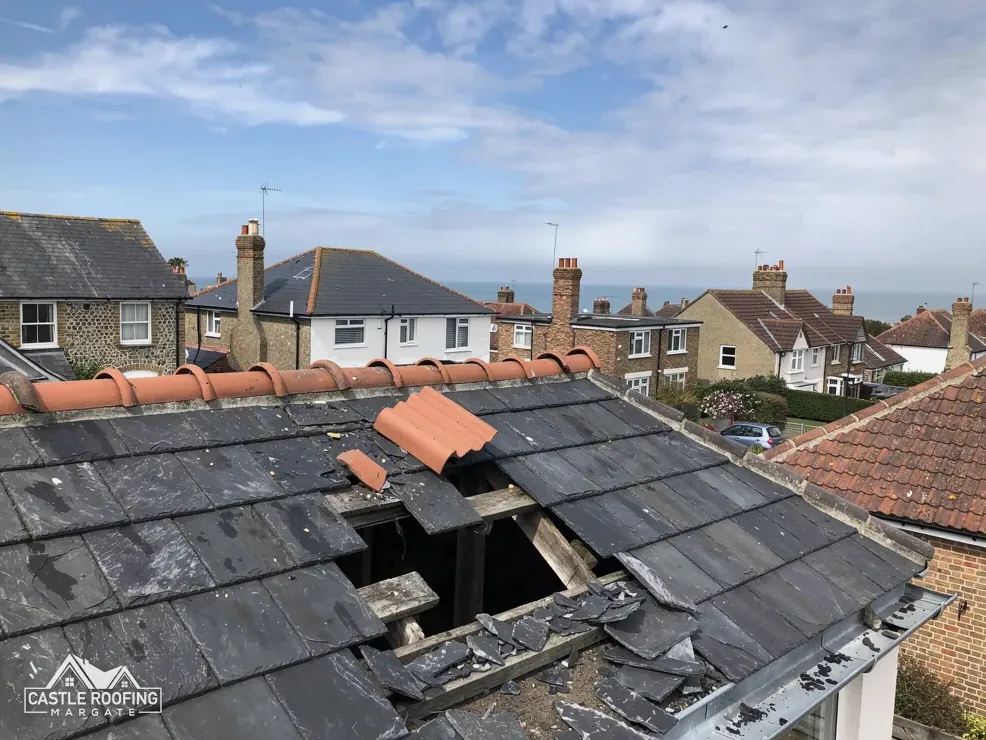
Natural slate is smooth and splits easily along its grain. Add a film of water, a patch of moss or a skin of frost, and a boot or a ladder foot can slide before anyone feels it going. A slate that gives way underfoot also drops the person standing on it straight onto the course below.
Regulation 6(3) of the Work at Height Regulations 2005 says an employer must guard against falls from height wherever that is reasonably practicable. Our team therefore works only on a slope it can reach safely, whatever the repair.
The Met Office climate station at Manston, averaged over 1991 to 2020, logs 21.43 air-frost days a year and 110.05 days with 1 mm or more of rain. Nobody can read a forecast from those, yet they show that the station logs plenty of days when slate would be wet or frosted, and that working days are picked on the morning, from the roof itself.
That is why a firm will not promise a winter date. It books a repair, then confirms the day when the weather and the slates allow.
Jobs that go ahead on a dry day
Cold on its own does not stop slate work. A dry, still, frost-free day in January can be a good one for a repair, and the slates are no different to the ones laid in July.
The list below shows how the work usually divides:
- Goes ahead: replacing a slipped or broken slate with a tingle or hook, refixing a loose run, patching a lead flashing, clearing a valley or gutter.
- Waits for a better day: a large run of re-slating, laying new battens across a whole slope, dry-ridge work in wind or relaying around a chimney.
- Waits for the thaw: anything on slates that are frosted, iced or soaking wet.
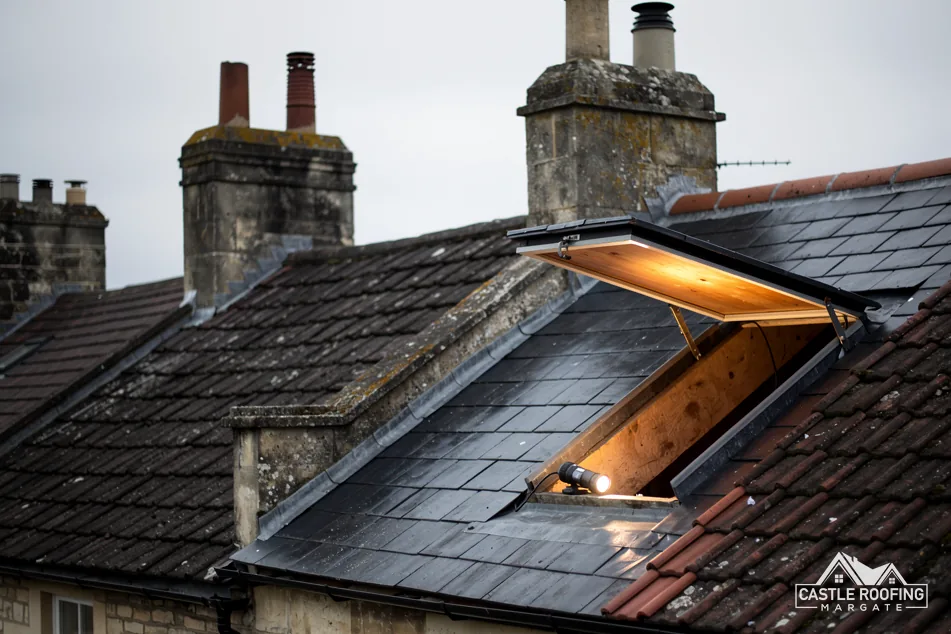
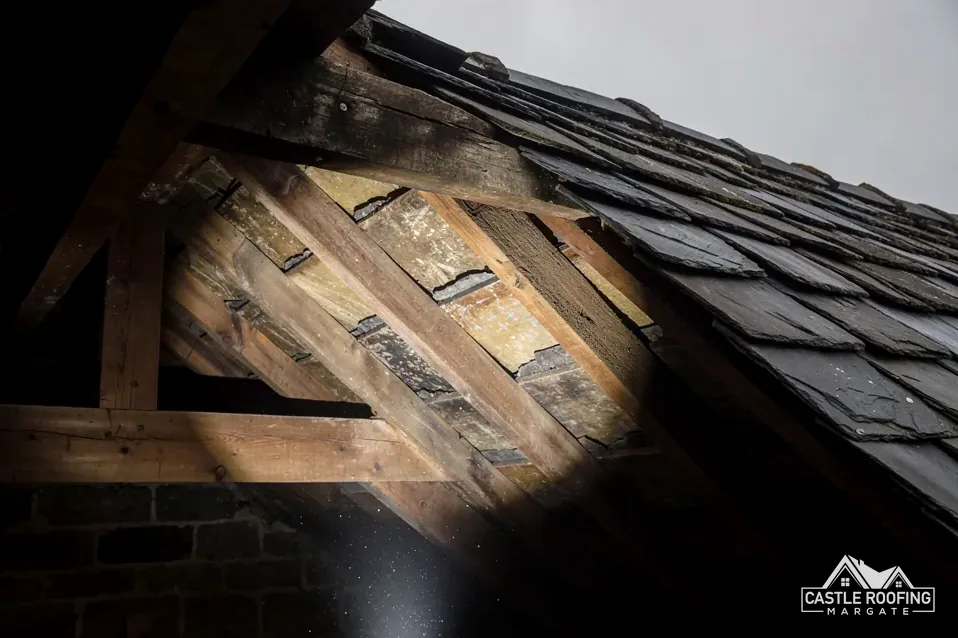
A roofer looks at the slope in daylight before deciding. An early check of the loft shows whether water is coming through, and how fast, which sets how urgent the visit is.
Frost also matters to slates themselves. Water trapped in a damaged slate can freeze and split it further, which our guide on frost-damaged slates explains. That is a reason to book a repair for a cracked slate before the cold months, and not a reason to rush onto an icy roof once they arrive.
Stopping the water until the repair day
When a leak will not wait, the first visit is a make-safe. It means stopping more damage and removing danger, and it does not mean finishing the job. For a slate roof that can be a temporary cover over the hole, or a loose slate secured so it cannot fall into the street.
If you suspect a leak:
- Move belongings and electrics away from the wet area, and put a bucket under any drip.
- Take dated photos of the slope from the pavement and of any stain indoors; IStructE calls photos vital to a claim, since they show the damage itself.
- Let your insurer know first.
- Keep any receipts for the make-safe.
- Ring a roofer, and say if the slates are iced.
Read the storm wording in your own policy before you call. Should you dispute the insurer's answer, the Financial Ombudsman Service is on 0800 023 4567. A roofer cannot speak for your insurer.
A make-safe also buys time to arrange access. If the repair needs scaffold on a pavement, Kent County Council wants 5 working days' notice for its licence, and the scaffolding company applies.
Booking a winter slate repair sensibly
The sensible way to book is by condition, not by date. Agree what the repair is, what the roofer will do on the first dry day and what will have to wait. That avoids the pressure to work on a roof that should not be climbed.
Questions that settle a winter booking:
- What will you do if the slates are wet or iced on the day?
- Is the first visit a make-safe, and what does it cover?
- Does the quote include scaffold and VAT, if the work needs either?
- Who confirms the date, and how soon before?
On cost, the Checkatrade repair guide of June 2026 puts natural slate repair at £150 to £220 per m², ex VAT, and applies that rate up to 3m². A guide like that is a typical UK range. Slate repairs on a house in Kent are priced after a survey, and a winter make-safe is a separate visit from the repair that follows it.
If the repair is part of a larger decision, our page on re-slating or repairing helps, and the main slate roofing page covers the rest of the work we do on slate.