Leak, condensation or plumbing
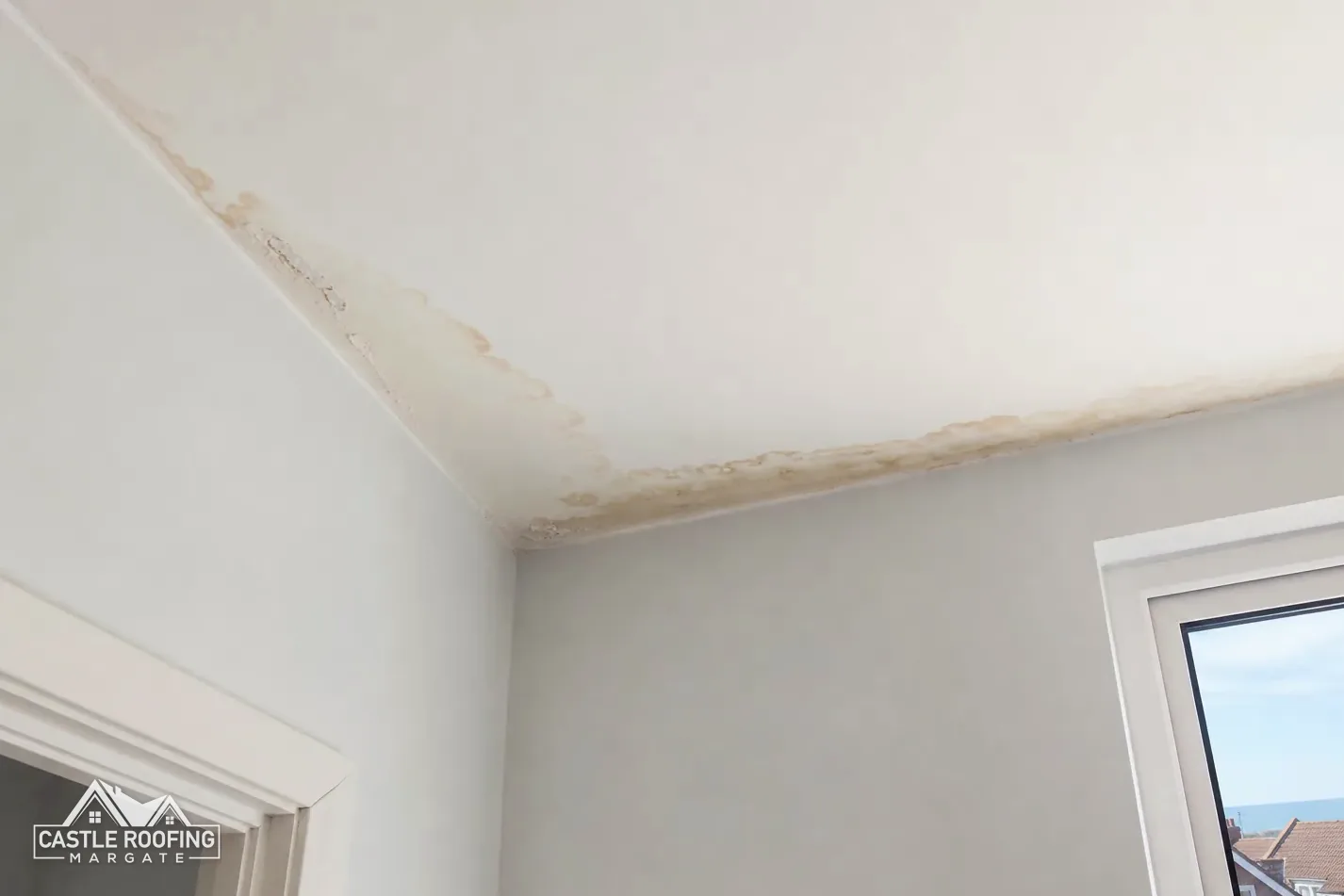
Three causes produce similar stains, and the fix is different for each. The pattern of when and where the mark appears usually separates them.
| Sign | Roof leak | Condensation |
|---|---|---|
| Timing | Follows rain or wind | Worse in cold, still weather |
| Shape | One patch with a tide mark | Spread out, often with mould |
| Feel | Wet or dripping after rain | Cold and slightly damp |
| Spot | Below a slope, chimney or valley | Corners, outside walls, behind furniture |
Condensation comes from warm, moist indoor air meeting a cold surface. BS 5250:2021 is the code of practice covering how moisture is managed in a building. A damp patch near an outside wall or in a corner often points to condensation, while one beneath a slope points to the roof. A stain that appears when the heating is on and the weather is dry points to condensation too.
Plumbing is the third suspect. A stain that appears whatever the weather, or sits directly under a bathroom or the water tank, may come from a pipe or tank and not the roof. Our page on condensation or roof leak goes deeper into that question.
The stain and the hole are seldom neighbours
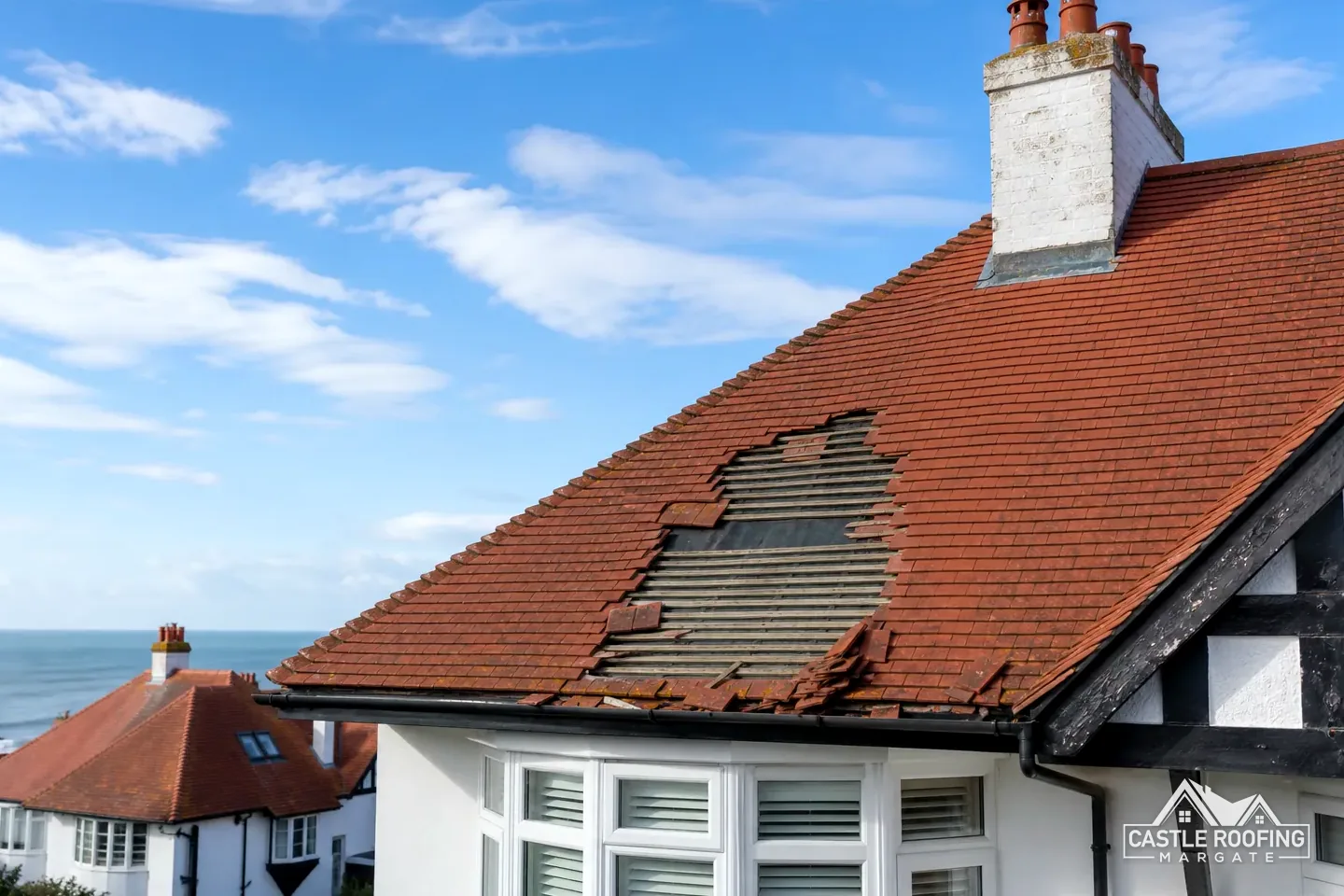
Water does not fall straight down through a roof. It enters at one point and then follows whatever is lowest and nearest: the top of a rafter, the surface of the underlay, a purlin or a pipe. It can run along a timber for some distance before it finds a place to drip.
That is why a stain in the middle of a ceiling can come from a defect near the ridge, or from a flashing at a chimney some way off. The patch you see marks where the water reached the ceiling. The gap in the roof can be somewhere else entirely.
Plasterboard adds to the confusion. It soaks up water and carries it sideways before any stain shows, so the mark can be bigger than the area that was wet, and can sit away from where the drip landed.
This matters for the repair. Patching the roof directly above the stain can leave the real entry point untouched. A proper search follows the water uphill. Our guide to finding the source of a roof leak explains how that is done from the roof side.
Checking the loft with a torch
If you can reach the hatch safely, a torch shows a good deal. Look from the hatch, and keep your weight on a proper floor or board, never on the plasterboard between the joists.
- Sweep the beam across the roof timbers above the stain, looking for dark, wet or tide-marked wood and underlay.
- Check the insulation. Damp, flattened or discoloured insulation marks a path for the water.
- Look for daylight. A bright line where there should be none is a gap in the covering.
- Follow any wet timber uphill towards the ridge or a chimney.
- Check pipes and the cold water tank for drips or a damp base.
Take photographs of anything you find, and hold the torch off to one side so the lens does not flare. They help a roofer, and they help an insurer if you claim. Look on a dry day, and again in rain if it is safe, because a fault that only shows in a downpour will not show on a dry afternoon.
Do not go out onto the roof. What you can see from the loft is enough to describe the problem.
What to do once you know which it is
If the signs point to a roof leak, a roofer needs to find and repair the entry point, and the ceiling can be treated afterwards. A stain usually needs stain-blocking paint, or in bad cases new plasterboard, once the source is dry.
If the signs point to condensation, mending the roof will not help. Ventilation, heating and keeping moist air away from cold surfaces are the usual levers, and a roofer can check the ventilation in the loft.
If neither fits, ring a plumber to look at the pipes and tank.
Two things to leave alone
Do not paint over a wet patch. The paint will blister, and the stain will come back. Wait until the cause is fixed and the plaster has dried through, then decorate.
A sagging or bulging ceiling is a different matter. Keep everyone clear of the area below it, and arrange a repair promptly, because the weight of trapped water can bring the plasterboard down. For help on the roof side, see roof repairs and emergency work.