Reading the pattern of the water
Start with a notebook rather than a ladder. Write down what the weather was doing each time you noticed wet, and which part of the house it was in. Within a fortnight the pattern is usually clear enough to point to one cause. Add the time of day, because condensation tends to be worst early, before the house has warmed up, while a leak keeps pace with the rain itself.
| Clue | Roof leak | Condensation |
|---|---|---|
| Timing | During or after rain | Cold mornings, even when dry |
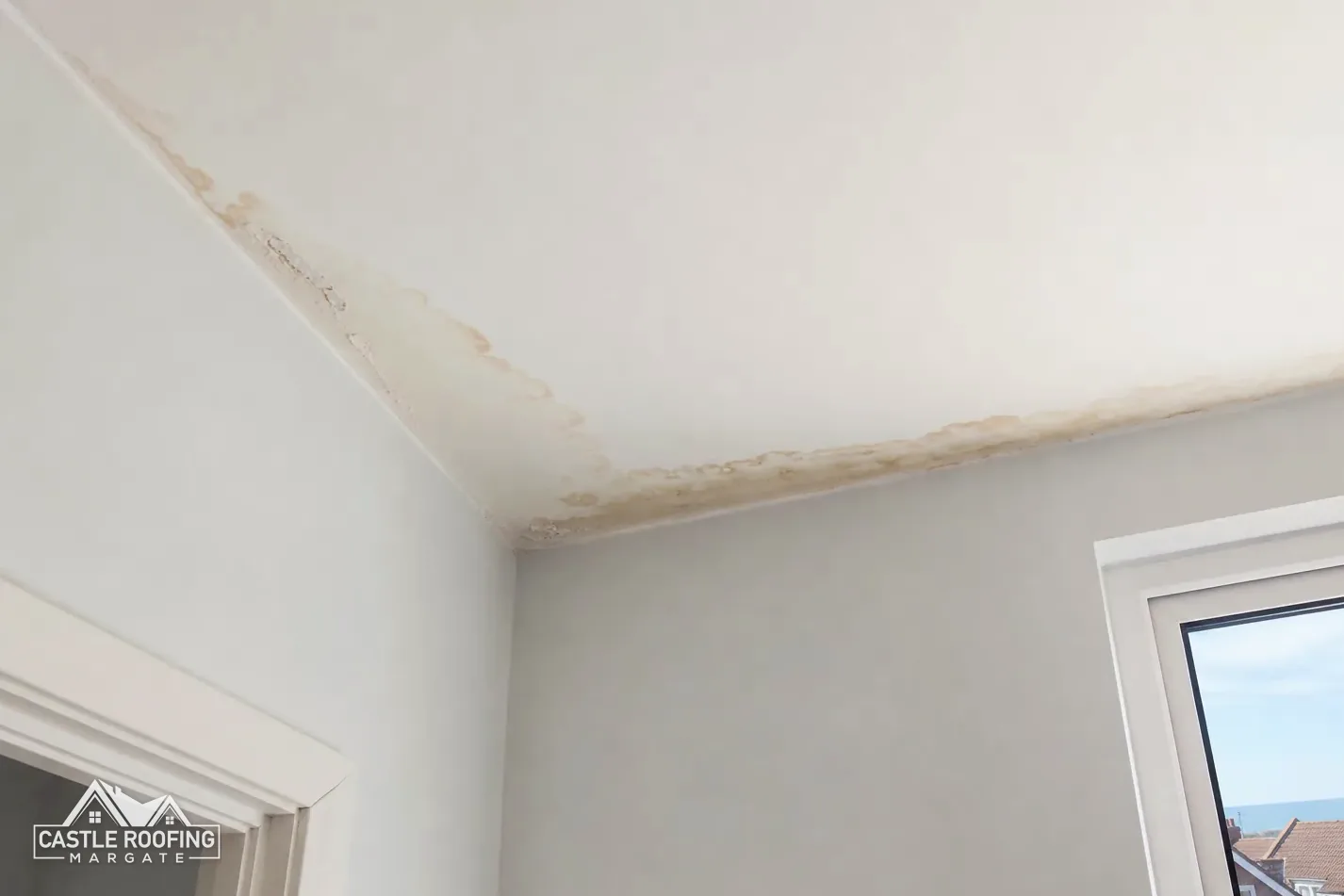
| Place | One spot, below a defect | Wide areas, cold corners |
| Surface | Brown ring or drip | Beads of water, black mould |
| Wind effect | Worse from one direction | No link to wind |
These are guides, not rules. A single drip that lands on a window sill from a failed seal can look like either, and a roof can have both problems at once, so treat the table as a way to decide what to check next, not as a verdict.
How a loft makes its own moisture problem
Warm air from cooking, washing and breathing carries water vapour, and some of it drifts up into the loft. Where it meets the cold underside of the roof it changes back to liquid, and that happens whether or not it has rained.
The roof is meant to cope with this through ventilation. BS 5250:2021 is the current British Standard on managing moisture in buildings. Marley's guidance for a cold roof built with HR underlay, which is a non-breathable type, asks for ventilation along the eaves: 25mm for pitches of 15° or less, and 10mm for pitches of more than 15°.
Things that cut that airflow down include:
- Insulation packed tight into the eaves, blocking the gap where air should enter.
- Eaves vents painted over or filled by debris.
- Extractor fans from kitchens and bathrooms that end in the loft rather than outside.
- Stored boxes packed against the roof slope.
None of these is a leak, yet each can leave rafters and felt dripping wet, and a householder who sees water in the loft can easily blame the tiles when the real fault is the airflow above the insulation.
Two loft visits, two sets of notes
To separate the two causes you need to look in two different kinds of weather, each time with a torch and your phone. Do not step between the joists; stay on the boards or the hatch edge.
- After rain, ideally a day or so after a heavy shower, look for wet wood or insulation directly below a tile, a chimney or a roof window. Follow any dark trail uphill: water often runs along a timber before it drips, so the point where it entered sits higher than the stain.
- On a cold dry morning, look again. Frost or beads of water on the nail points and the underside of the felt, spread along a whole slope, suggest condensation.
Photograph each visit with the date. If the first visit shows a wet patch in one place and the second shows a damp sheen everywhere, the loft is likely to have both. Reading the photos side by side is far easier than relying on memory, and a roofer can use them on arrival.
Sorting out which one to fix first
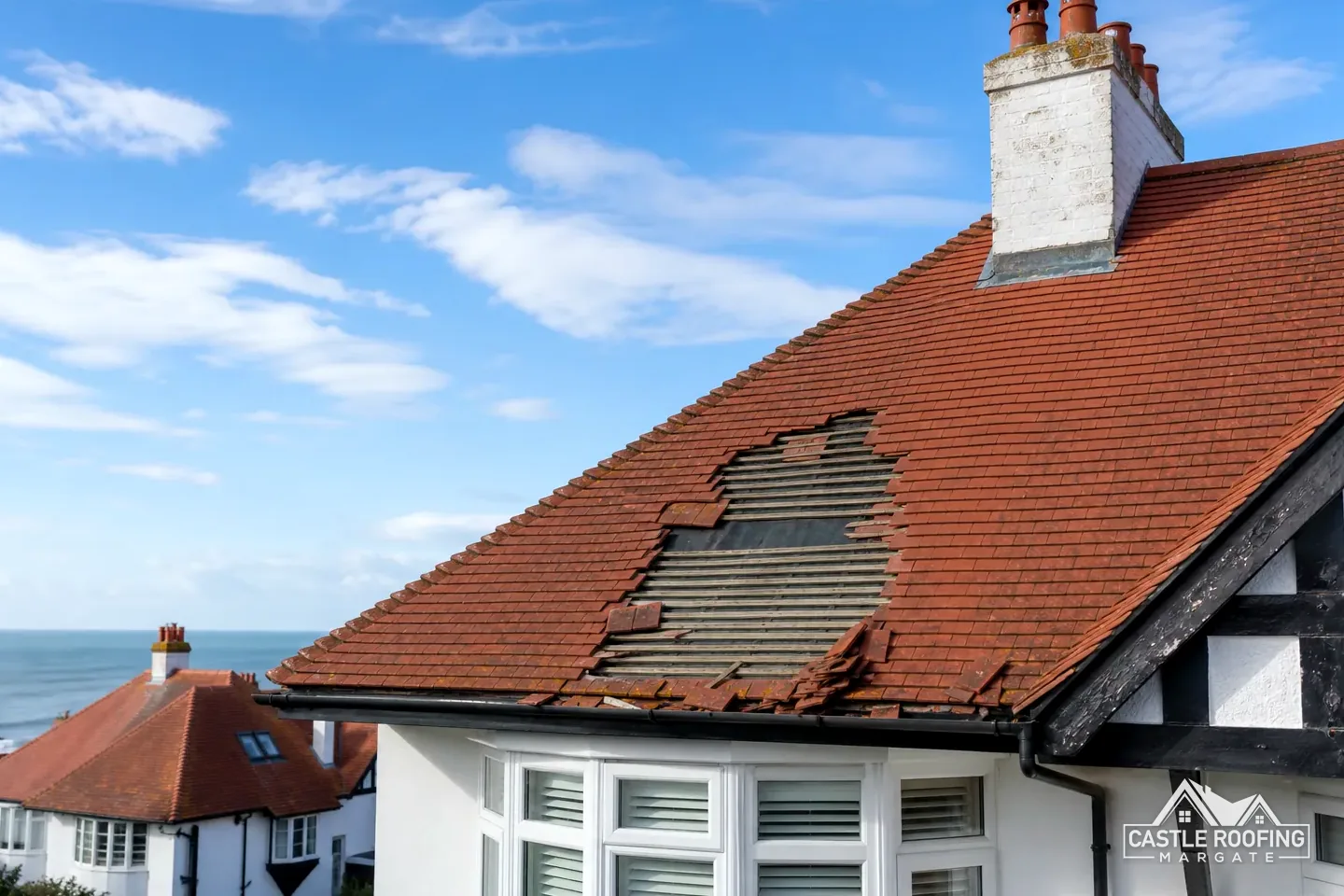
A leak needs a repair. A tile that has slipped, a failed flashing or a cracked piece at the chimney is dealt with at the roof, ideally before the next heavy shower. Our page on tracing the source of a roof leak explains how that is done, and the main roof repairs and emergency page covers the work itself.
Condensation is solved at the cause. That can mean clearing the eaves gap, ventilating the loft to the standard above, fitting an extractor that vents outside, or giving the household moisture somewhere better to go. Fixing the roof covering will not help it. New tiles over a loft whose eaves are still blocked, with a fan still venting into it, will drip just the same on the next cold morning.
If both problems are present, the leak comes first, since liquid water entering the structure does more harm than vapour. Once that is stopped, the ventilation can be checked while the rest of the roof is still dry. Take the dated photographs from both loft visits to whoever looks at the roof; the survey is far quicker with them.