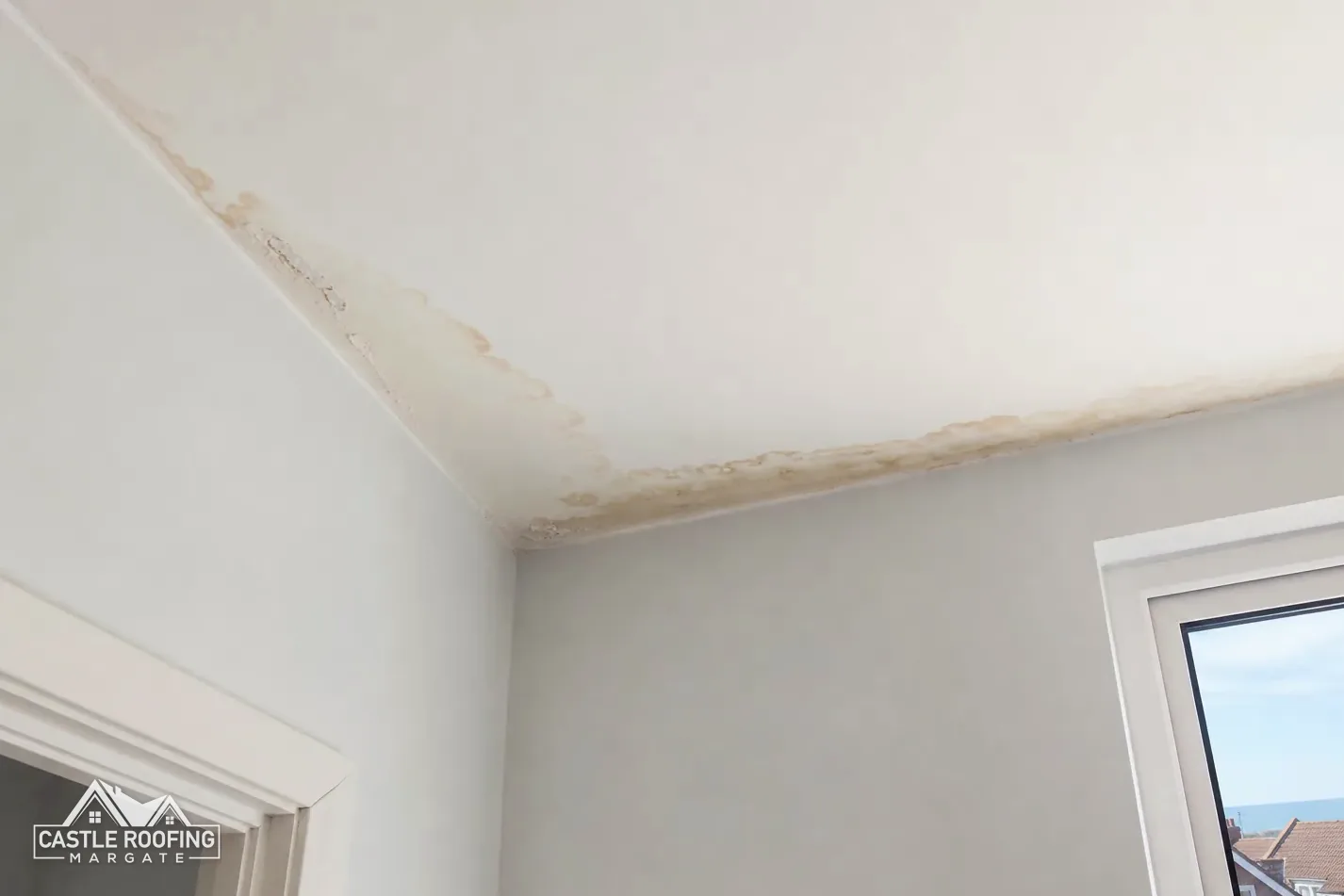
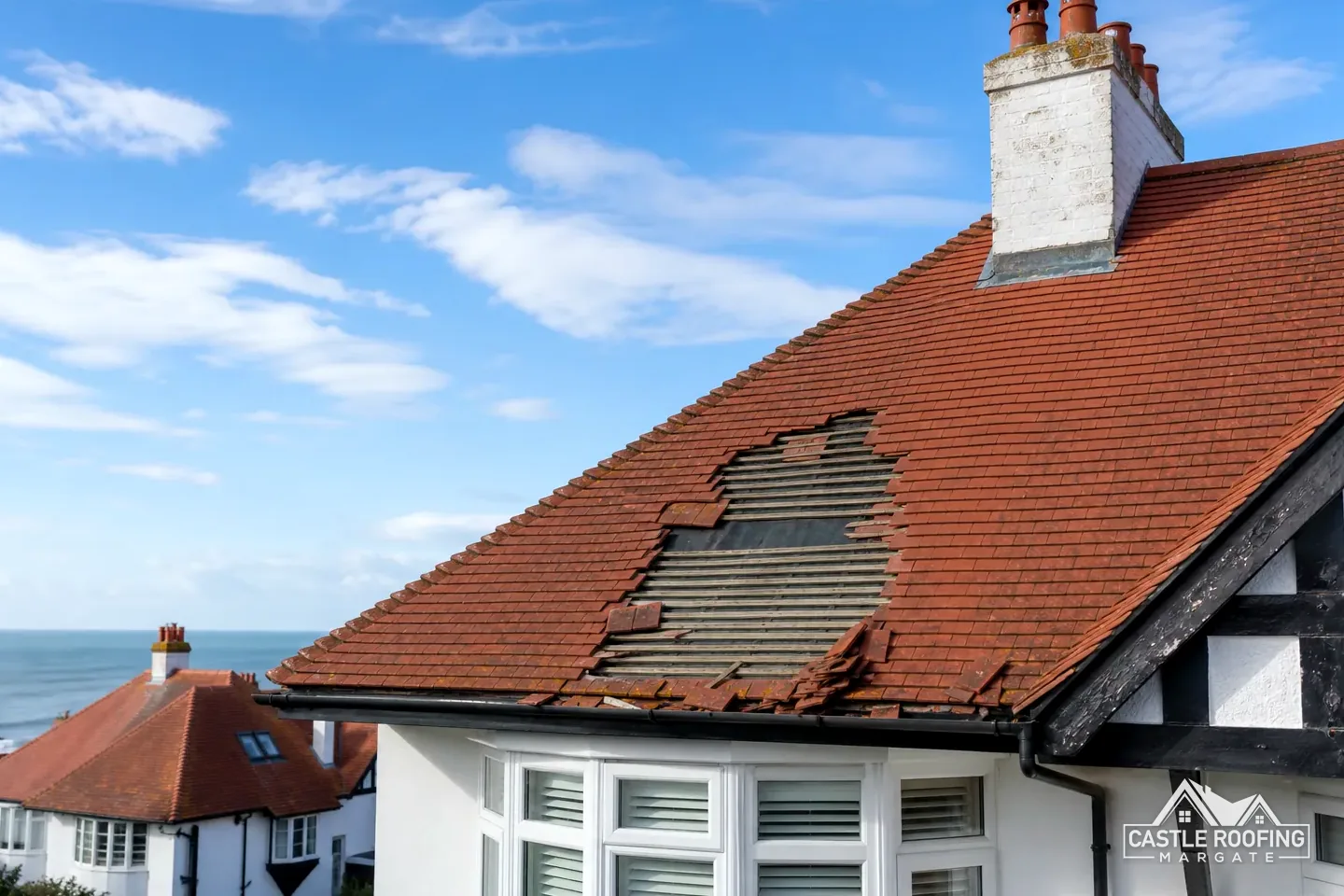
What happens to the structure under a leak
Water does not stay where it enters, and it rarely drops straight down from the hole. It runs along the underside of the covering, follows a rafter or batten downhill and drops off the lowest point it finds, which is often some way from the hole. When a stain finally appears on a ceiling, the water has usually crossed several layers already.
Each layer reacts in its own way, and the damage builds up in the order below:
- Roof timbers, meaning the rafters, battens and boards, soak up water and dry out slowly. Wood that stays damp for long periods can rot.
- Loft insulation that gets wet loses its value as insulation and can hold moisture against the timbers around it.
- The ceiling below takes on water until the plasterboard sags, stains or lets go.
- Fixings such as nails and clips are attacked by repeated wetting.
None of this happens to a timetable that anyone can set in advance. One shower that drips for an hour differs from a leak running through every wet week of the winter, but both are better stopped.
Why a small drip is a poor guide
The size of the ceiling stain is not the size of the problem, and a ceiling that looks fine can still hide a wet loft above it. A damp patch the size of a saucer can sit below a wide area of soaked loft, because insulation holds water and spreads it sideways.
Look for signs that a leak has been going on longer than it seems:
- A brown ring with a darker outer edge, which suggests repeated wetting and drying in the same place.
- Paint blistering or lifting in an area bigger than the visible drip.
- A musty smell in the bedroom below, or in the loft when the hatch is opened.
- Dark, soft or crumbling timber where a torch picks out the rafters.
If water is dripping near a light fitting or a ceiling rose, keep clear and switch off that circuit at the consumer unit until it has been checked. Do not poke a bulging ceiling to see what is behind it; the water behind can come down all at once. Set a bucket beneath the drip and shift the furniture clear.
How waiting can affect an insurance claim
Home policies commonly exclude "gradual damage" and "wear and tear", according to the Financial Ombudsman. A leak found, reported and made safe soon after a storm looks like a sudden event. A leak that was seen and left through several months of weather looks more like gradual damage.
That is not a rule that you will lose a claim by waiting. It does give you three reasons to act early.
- It limits how much damage there is to claim for or to repair.
- It gives you a clear date for when the problem was found and what you did about it.
- It keeps the evidence fresh, since photos and a receipt for a make-safe show you acted.
If your leak follows a storm, the Institution of Structural Engineers suggests calling the insurer, protecting the house and holding on to your photographs and receipts. Our page on whether a roof leak is covered by insurance goes through how storm cover is judged. Nothing in this page promises that a claim will be paid.
Making safe early, repairing properly later
You do not have to settle the whole repair on the first day. The first job is to stop water getting in. The permanent repair follows when the roof can be inspected in dry, safe conditions.
A make-safe can be a temporary patch on the covering or a tarpaulin fixed over the damaged slope. It is a stopgap, and a roofer should say plainly how long it can be expected to hold and what the permanent job will be. For the options, see temporary roof repairs and tarpaulin over a roof leak.
Meanwhile, you can limit the harm yourself by emptying buckets before they overflow, moving boxes in the loft out from under the drip, and photographing the leak with the date. Roofers differ on how quickly a stopgap becomes a proper repair, so ask for a date on the permanent job and for a single written figure after the visit. The roof repairs and emergency page explains how this kind of work runs, from the first call to the last tile.