Why no number fits every house
Anyone who gives you an exact interval for roof cleaning, such as every so many years, is giving a rule of thumb that does not account for your house. Neighbouring roofs in one road can behave quite differently, because what grows on a roof depends on its surroundings.
Three things do most of the deciding:
- Shade: a slope that the sun rarely reaches stays damp for longer after each shower.
- Trees: branches overhead drop leaves, seed and sap, and shed shade as well.
- Aspect: a slope facing north dries slowly, while one facing south dries fast.
A bungalow open to the sun may stay clean for a long time, while a terrace with a mature tree behind it may green again soon after cleaning. Neither is a failure of the work. Nobody can fairly promise how long a cleaned roof will stay clean, and any interval quoted without looking at the roof is a guess.
The better question is not how many years since the last clean but what the roof is doing now. If the tiles are bare and the gutters run clear, nothing needs doing, whatever the calendar says.
What to watch instead of the calendar
Keep an eye on a handful of signs, from the garden or the street. A pair of binoculars shows a good deal. The signs that a roof is due a look include:
- Moss thickening along the bottom rows beside the gutter.
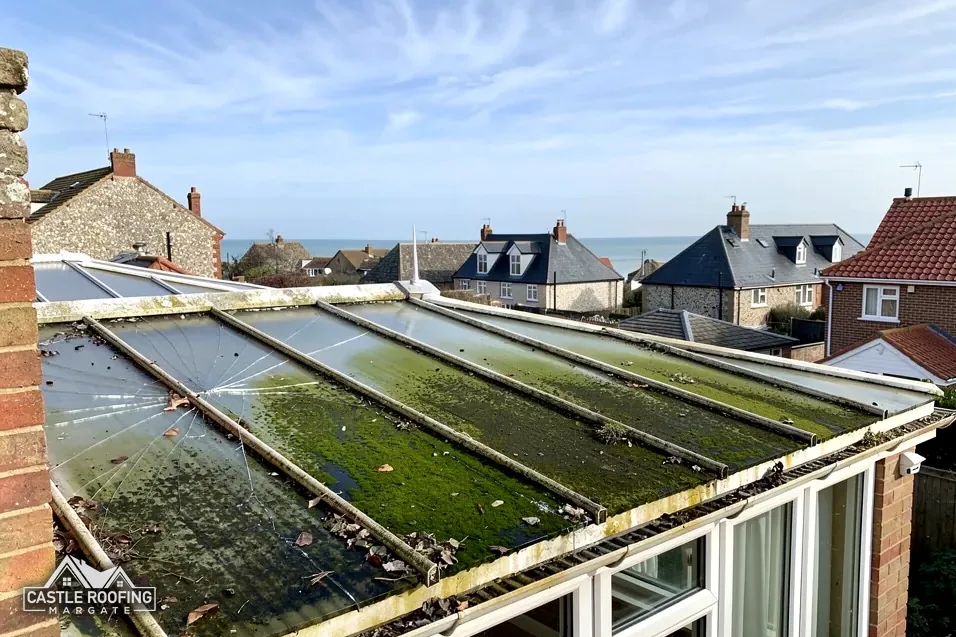
- Growth packing the gaps between tiles, where it holds water.
- Green or black patches spreading across a slope that used to be clear.
- Moss falling into the gutters after rain.
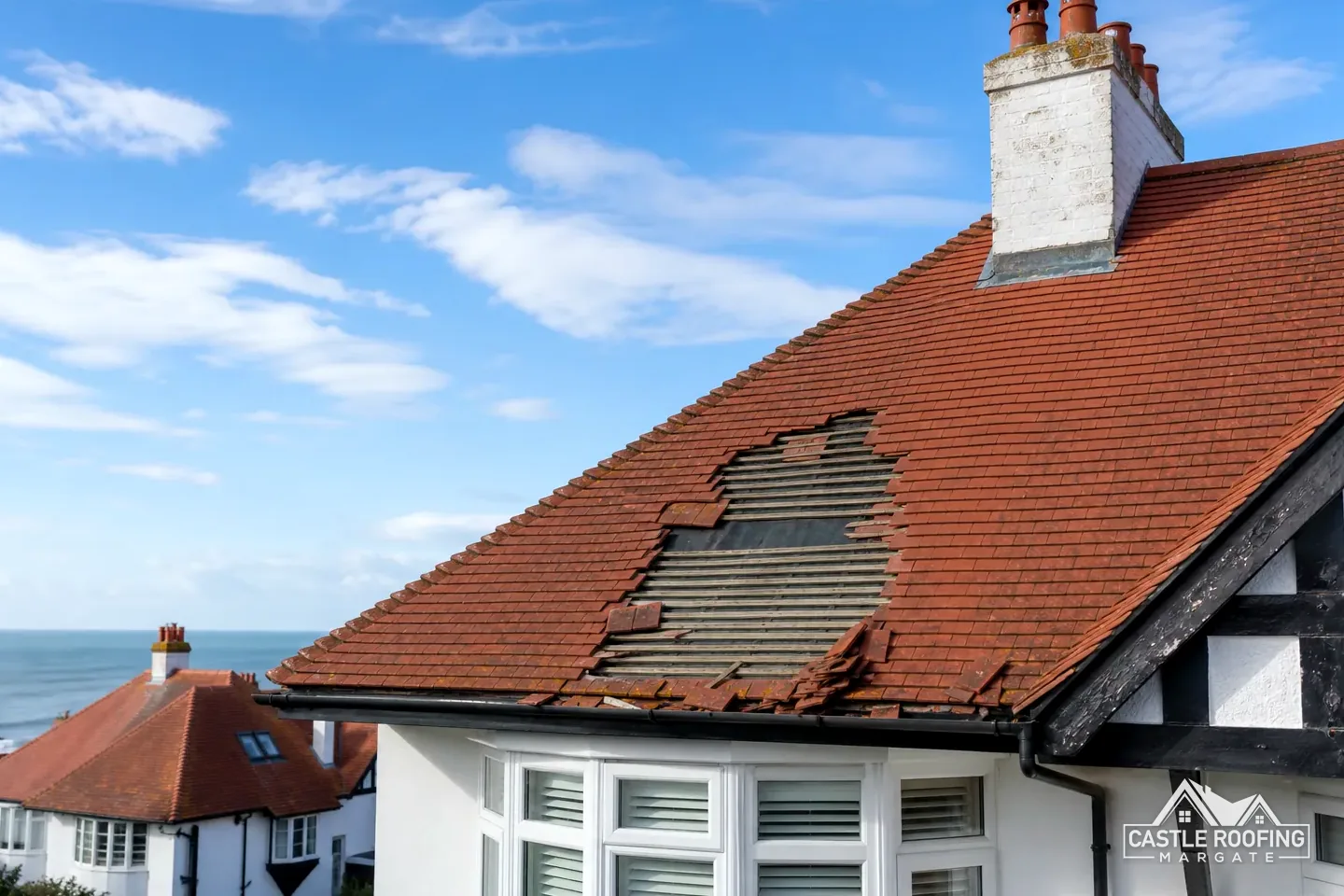
- Tiles that look raised at the edge, or that have slipped.
None of the first three means an emergency. They tell you the roof is staying damp, which is useful to know before it becomes a leak. The last two are the ones to act on.
Walk round the house after rain, too. Overflowing gutters, wet stains on the wall below the eaves or a downpipe that gushes at a joint are all signs that the roof edge needs attention.
You can learn how fast your own roof changes by taking the same photograph from the same place each spring. After a couple of years you will see the pace for your house, which is worth more than any general figure.
Gutters get their own schedule
Gutters fill whatever the roof does, because they catch leaves from the garden, moss from the tiles and seed from nearby trees. A blocked gutter overflows, and the overflow does more harm than the moss ever would.
That is why gutter checks deserve a regular place in the year, kept apart from roof cleaning. A look after the autumn leaf fall and another in spring is a sensible habit, and an extra look after a gale. If a tree overhangs the roof, expect to clear more often.
In November 2025, Which? Trusted Traders put emptying every gutter on a house at £75 to £350 ex VAT as a typical UK range. Set that beside the staining and damp an overflow can leave on a wall.
When the gutters are cleared, the roof edge can be checked at the same time. Moss on the lowest tiles shows clearly once someone stands at the eaves, and a roofer can then say if the roof needs more than a gutter clear. Our page on moss blocking gutters shows what to look for.
When a clean is only cosmetic
Plenty of cleaning is done for appearance, and that is a fair reason. A mossy roof can spoil the look of a house, and some owners want it cleaned before selling. What matters is knowing which kind of clean you are paying for.
A cosmetic clean is one where the tiles are sound, the gutters are running and the moss is simply unattractive. It can wait, be done on a convenient date or be skipped without damage.
A maintenance clean is different. It is needed when moss is thick enough to hold water against the tiles, to lift them or to block drainage. Leaving that for years has a cost, because the roof stays wet and small faults go unseen.
If you cannot tell which applies, a roofer can look at the roof and say. We give an opinion first and a written price second, and if cleaning is not worth doing yet, we tell you so. For the bigger picture, see whether moss grows back and the main page on roof cleaning and moss removal.