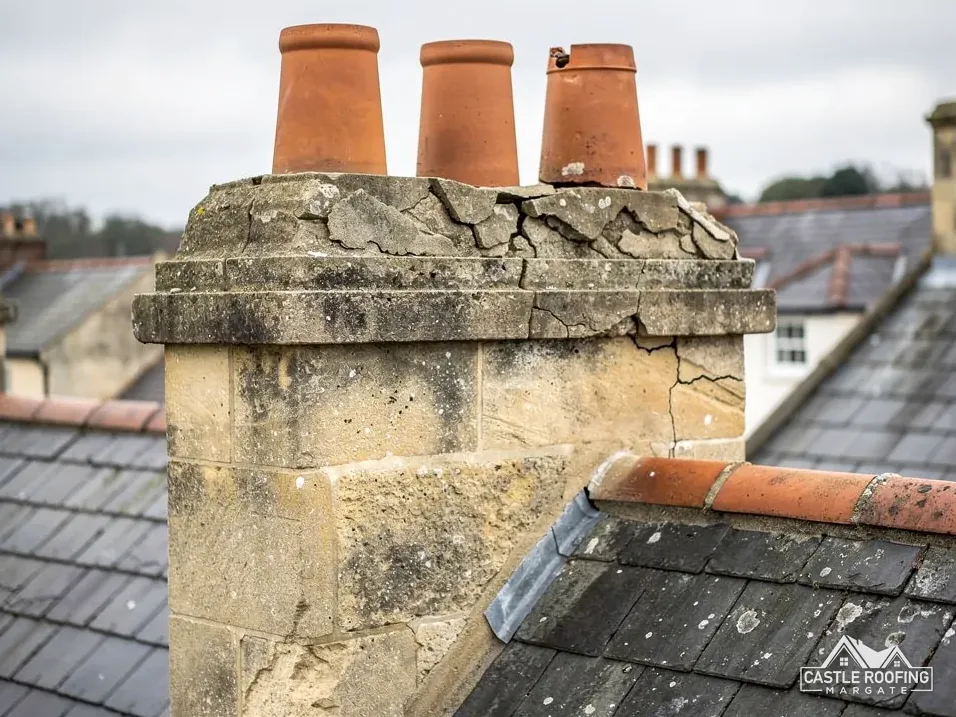
How lead changes colour on its own
Cut lead is bright and silvery. Left outside, it reacts with oxygen, moisture and carbon dioxide in the air, and over weeks and months a thin grey layer forms on the surface. Roofers call this patina. The layer is the lead's own finish. MyJobQuote's leadwork page reckons lead flashing can see out more than 80 years, a lower bound rather than a figure for any single roof.
The change does not happen evenly. Sheltered spots, the underside of a lap and the face that gets little rain can stay pale for longer, while a flashing on a wetter slope darkens sooner. Patchy colour on a new flashing is normal and evens out with time.
The same process explains the pale streaks some owners see in the first year, which is covered on our white staining on lead page.
Nothing about patination calls for a product or a visit. The flashing is working as it is, and the grey is what a finished lead roof is expected to look like once it has weathered.
Why paint is rarely needed
Paint is a surface treatment for a surface that does not need one. There are good reasons to leave lead alone:
- Lead does not rust, so there is no corrosion to protect against in the way there is with steel.
- Paint has to be prepared, applied in dry weather and renewed, so a coating adds a maintenance job that bare lead never needed.
- A coating that flakes or blisters looks worse than the weathered lead it covered.
- Paint can bridge a hairline split or a lifted edge and hide the fault until the damage shows up indoors.
Lead also moves a little with heat and cold. A hard paint film can crack where the metal flexes, and cracked paint holds water against the lead instead of shedding it.
If you are thinking of painting because the flashing looks tired, it is better to have it looked at. A dull grey surface is fine. A surface that is lifting, split or dented is a repair, and paint will not change that. Our cracked lead flashing page shows what to look for.
When a coating might still come up
There are a few cases where an owner or an architect asks about a finish on lead. One is a wish to match a colour on an older building, another is concern about streaking on a wall below a new flashing. Both are matters of appearance, not protection.
If you want to use any coating on lead, there are three things to settle before it goes on:
- Ask the roofer to name the exact product, and read its maker's instructions for use on lead.
- Ask who will recoat it, and how often, since a coating becomes a recurring job.
- Ask what happens to the lead underneath, and check the coating does not seal over the joints and laps.
Whether any product suits depends on the building, and the maker's instructions decide what is suitable. For most flashings the honest answer is to leave the lead to weather and spend the money on inspecting it.
If a coating has already been put on and is now flaking, the loose film should come off before anyone judges the lead beneath it, since a split or a lifted edge can sit hidden under old paint.
Painting on a listed or older house
On a listed building, a change to the finish of the lead can count as a change to the roof's appearance. Works that affect a listed building's character need listed building consent under section 7 of the Planning (Listed Buildings and Conservation Areas) Act 1990. Painting lead is the kind of change worth asking the council about before it is done, in writing, rather than after.
In a conservation area, the same thinking applies. The conservation officer at the council will know whether a finish on a visible flashing would be questioned, and a short email costs nothing. Thanet District Council lists its 27 conservation areas on its own page, and the other councils in our area publish theirs.
For an older house the simplest route is to keep the original treatment. Lead that weathers to grey matches what the building has always had. If the flashing has failed and needs replacing, the consent for replacing lead on a listed roof page explains the process.
Our lead roofing page covers the repairs we carry out, from flashings to valleys.