What a guard actually does
A gutter guard is a cover laid over, or pushed into, the top of the channel. Some are a mesh or grille, some are a brush that sits in the gutter, and some are a solid cover with a gap or slot at the front edge. All aim to do the same thing: stop larger material, such as leaves, from dropping in while still letting rain through.
The idea has a sound basis. A gutter that rarely collects leaves has less to clear, and a channel that stays open drains better. On a house under a tree that sheds heavily, a guard can cut down on the leaf matter you have to scoop out.
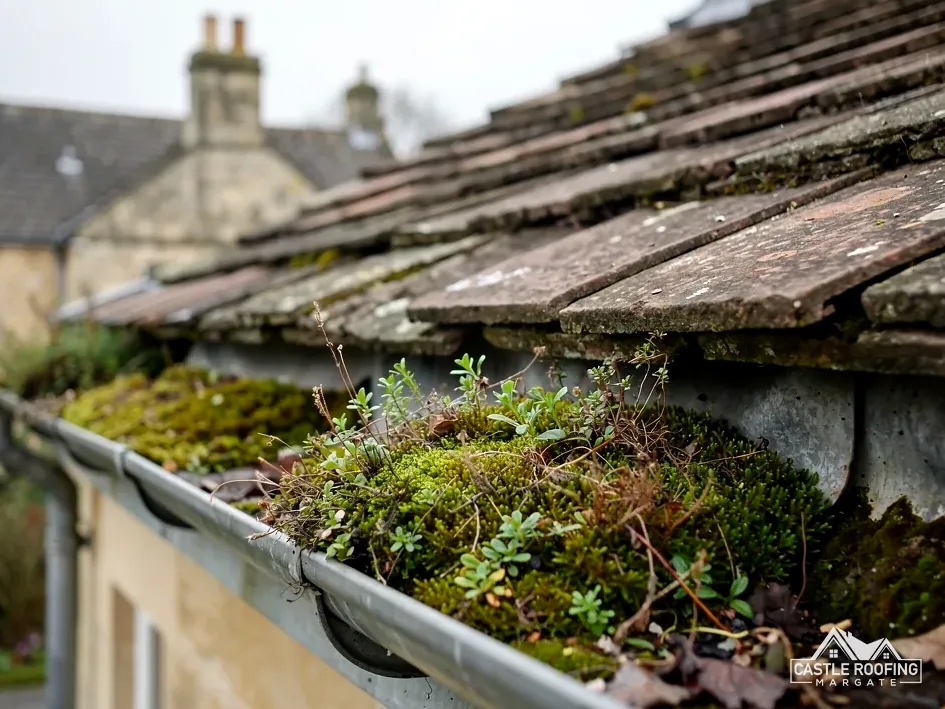
What a guard does not do is change anything below it. The joints, brackets, fall and outlets are the same as before, and any of them can still fail. A guard also does nothing about moss, silt and the grit washing off the roof covering, which reach the channel in water rather than falling in as leaves.
Products differ widely, and what suits one house may not suit the next.
Where a guard can help, and where it can trap debris
| Situation | Effect of a guard |
|---|---|
| Overhanging broadleaf trees | Keeps larger leaves out of the channel |
| Fine seeds, needles and moss | Can settle on top and bridge the mesh |
| Low roof, easy access | Little gained over an annual clear |
| Hard-to-reach high run | Fewer ladder visits, if the guard is sound |
The risk with any cover is that debris builds up on top of it rather than inside. A mat of fine material across the surface can shed rain over the front of the gutter instead of letting it in, and then the wall below gets wet. You may not see the problem from the ground, and a gutter that looks tidy from the lawn can be silted solid below the cover.
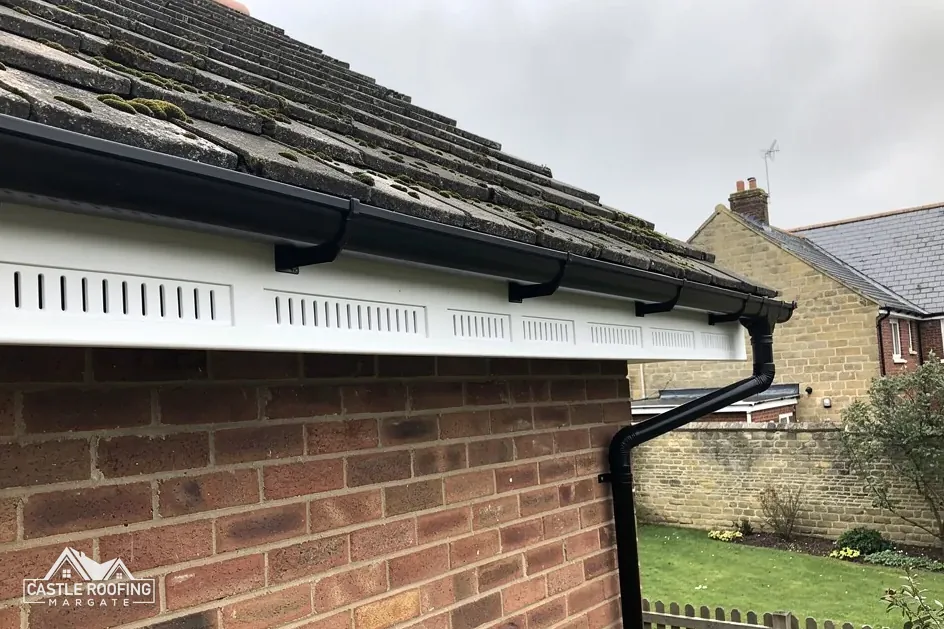
Fitting also matters a great deal. A guard that lifts the roof edge covering, or sits at the wrong angle, can send water down behind the channel when it should drop in. So the fit has to be checked against the roof edge, not just the gutter, and a sloppy installation will cause the very overflow the guard was bought to prevent.
Why the gutters still need looking at
Even with a guard on, the system below it needs an eye on it. It is sensible to look at these points:
- The outlet and the first stretch of downpipe, where silt and grit gather.
- The joints and stop ends, which can leak whether or not the channel is covered.
- The brackets and the fall, which settle over time.
- The guard itself, which can lift, warp or clog.
A guard also adds a job. To check the channel you may need to lift or unclip the cover, and that is harder for a householder than looking in an open gutter from a ladder, especially if the cover is fixed under the first row of tiles or slates.
For the timing, our note on how often to clean gutters applies with or without a guard, though the interval may stretch. If water is overflowing, look at the causes of overflowing gutters before blaming the guard. A Which? Trusted Traders survey from November 2025 gives £75 to £350, ex VAT, for a full clear, which is a useful figure to set beside what a guard costs and the upkeep it still needs.
Questions to ask before you pay for one
If you are thinking about a guard, put these to whoever is selling or fitting it:
- Which type is it, and how does it deal with fine debris, not just leaves?
- How is it fixed, and does it touch the roof edge covering or the underlay?
- How do I check and clear the channel underneath?
- What happens at the corners, the outlets and the joints?
- Is the gutter itself sound, with a good fall and firm brackets?
That last question matters most. A guard over a gutter that already sags or leaks only hides the faults, and the gutter will need replacing underneath it. Fix the system first, then decide whether a cover adds anything.
If you want a figure for your own house, it is one written total and it follows once the roof edge has been looked at. For the wider job, see guttering, soffits and fascias, or send pictures of the run and the nearest trees, and a roofer will weigh up the trees, the roof edge and the gutter together.