The year 2000 line and what it means for a garage
HSE's guidance on finding out whether asbestos could be present gives one simple test. A building constructed or refurbished before 2000 should be presumed to contain it. For a house with a garage alongside, that is a question about two dates, not one. The garage may have gone up with the house, or years later as a lean-to or a free-standing block, and its roof may have been re-sheeted since.
Start with what you know. A date on the deeds, a building control certificate, an old survey from when you bought, or a neighbour who watched it go up can all fix the age. A roof that looks recent can still sit on an older structure, and sheets can be reused or replaced piecemeal, so the age of the garage is a better guide than the look of the surface.
If the answer lands before 2000, or the date is unknown, handle the sheets as if they were asbestos cement until a survey rules it out. If the garage is clearly newer, HSE says asbestos is unlikely, though a survey is still the only thing that proves it either way.
Why looking at the sheets will not settle it
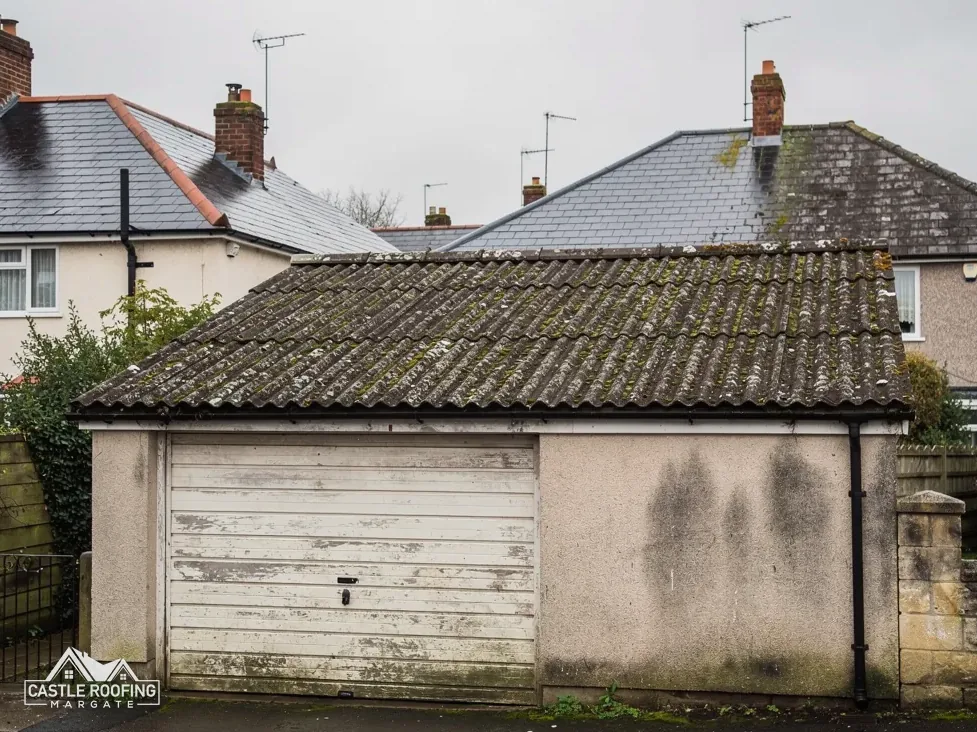
Asbestos cement is a cement sheet with asbestos fibres locked inside it. Once it has weathered, with moss, a pale surface and darkened edges, it looks like any other aged cement sheet. Newer sheets can look much the same as old ones, so a colour or a profile is a hint at best and a wrong guess at worst.
Everything you might do to get a closer look makes it worse. So here is what to leave alone:
- Do not snap, saw or drill a piece off to send away. Breaking the material is what releases fibres.
- Do not scrape or wire-brush the surface to read a stamp.
- Do not climb up. HSE's guidance sheet for removing asbestos cement states that the roofs are always fragile and cannot bear weight.
- Do not touch fallen fragments with a bare hand or sweep them up dry.
A cracked sheet, or one that has already come down, is a separate matter from a sound one. Photograph it from the ground, keep people and pets away, and go to the next section rather than clearing it up yourself.
What a survey does and what it costs
An asbestos survey is the step that turns a guess into an answer. A surveyor takes a small sample from the roof sheet and has it analysed. The report names the material, says where each sample came from and describes its condition. HSE also notes that installation or refurbishment work that disturbs the fabric of a building where asbestos could be hidden needs a more intrusive survey before work starts, so ask for that survey before a re-roof begins.
MyJobQuote's asbestos cost guide (September 2026) gives £325 as the typical cost of a survey, with the caveat that it varies with the size of the property. That is a national guide figure, not a quote for your garage. The surveyor sets the price once they know what is involved.
Keep the report. It saves repeating the work at the next repair, it goes in the folder for a future sale, and any roofer pricing the garage will want to read it first. Our guide to asbestos survey cost goes through what moves the price.
What happens once you have the result
The survey gives you one of two answers, and the next step follows from it.
- Not asbestos. The roof is repaired or replaced like any other garage roof, and no special waste route is needed.
- Asbestos cement. You now choose between leaving it undisturbed and watching it, covering it, or having it lifted off. The right one turns on the state of the sheets and on what you plan to do with the garage over the next few years, such as a conversion or a sale.
Should the result come back positive, the pages on whether an asbestos garage roof is dangerous and over-cladding instead of removal set out the options. For the wider job, see our garage and asbestos roofs page, which lists the coverings we work on and how a garage job is run from the first look.
Ask the person who books the survey to confirm in writing which parts of the garage were sampled, because the roof, the soffit boards and the gutters can each be a different material, and a good report names each one separately so that nothing is assumed.