What is happening under the sheets
Air always carries some water vapour. Warm air carries more than cold air. When damp air in a garage drifts up and touches a roof sheet that is cold, the air cools against it and the vapour turns back into liquid water. The sheet is the coldest surface in the building, so that is where the droplets form.
Thin metal sheets are especially prone to it, because they follow the outside temperature quickly and have nothing behind them to slow the change. A sheet that is cold to the touch on a clear morning and dripping by mid-day is behaving exactly as physics predicts.
Weather plays a part. Met Office averages for Manston (1991 to 2020) show air frost on 21.43 days a year on average, and each cold night chills a roof from the outside. The garage then warms in the day, fills with moisture from the car, a drying line or a damp floor, and the cycle repeats.
Condensation is a moisture problem long before it is a roofing problem. BS 5250:2021 is the standard that deals with moisture in buildings, and its approach is the place to start: reduce the moisture, keep surfaces warmer and let damp air leave.
Condensation or a leak: how to tell
The two look alike from underneath, so checks matter before anyone spends money. Condensation tends to show these signs:
- It drips on dry days, often after a cold night or when the garage warms up.
- It is spread across much of the underside, not from one point.
- It runs along the whole sheet in a film of small beads.
- Stains are on the underside only, with no track from a seam or fixing.
A leak looks different:
- It starts or worsens during and after rain.
- It enters at a point such as a lap, a fixing, a crack or a wall junction.
- The stain follows a clear path from that point.
A simple test is to note when it drips. If water falls on a bright, dry afternoon and stops on a windy, dry day, the cause is not rain. If it only drips in wet weather, treat it as a leak and look at our page on a leaking garage roof.
Both can happen together. A sheet that leaks at a lap may also be condensing in the middle, so the roof is checked from above and below before the cause is named.
Ventilation, linings and what goes under the sheet
Cures run in a sensible order, from cheap to costly:
- Cut the moisture. Move wet items out, mop damp floors and keep the car dry where possible.
- Ventilate. Air bricks, vents or a gap at the eaves let damp air leave, and the air that replaces it carries less vapour.
- Warm the underside of the roof. Insulation under the sheet keeps its inner face above the temperature at which vapour condenses.
- Add a backing. Some sheet makers supply a condensation-control layer fixed to the underside of steel, which takes up the moisture and gives it back gradually as the air dries.
The right mix depends on how the garage is used. A store for tools has different moisture to a workshop with a heater, and a conversion with a heated room is a different matter again.
Moisture-managing ventilation is covered in BS 5250:2021, and Approved Document C says cold deck roofs should be ventilated. Ventilation works by moving air, so never block the gaps that exist. Check what a product's data sheet says about ventilation space before it is fixed.
Our page on insulating a garage roof goes further on the warm side.
When the answer is a new roof
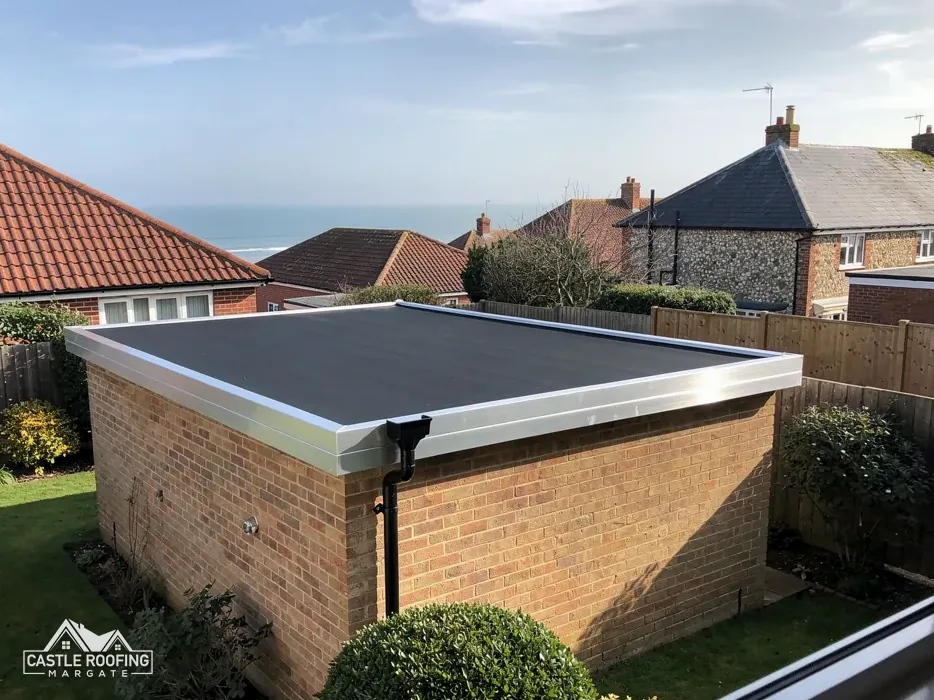
Sometimes the sheet itself is the limit. A single skin of thin steel over an open garage can keep condensing in cold weather even after the inside is dried out, and the lasting fix is a roof built with insulation or a backing included. If the sheets are old and also leaking, replacement can solve both problems at once.
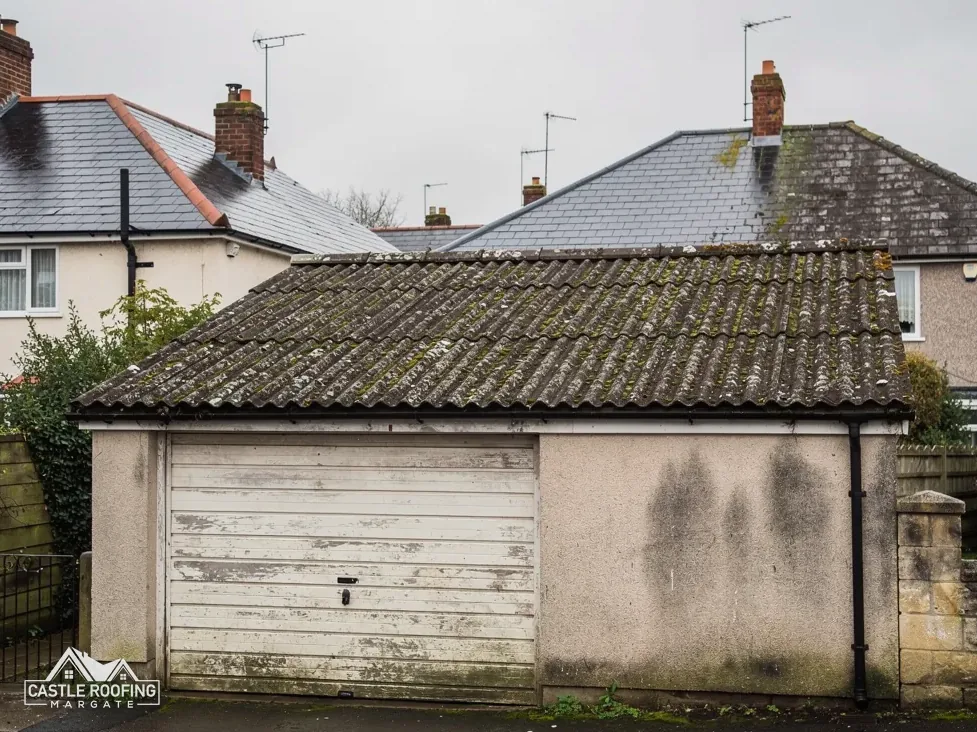
If the sheets are grey corrugated cement from before 2000, HSE says to assume asbestos until identified, and the roof is not touched until that is settled. Our page on steel sheet garage roofs covers a replacement route.
MyJobQuote (October 2026) gives a typical UK range of £750 to £3,500 for replacing a garage roof. That figure is a national guide, not our price. How big the roof is, what covers it and how the frame has held up set the total. When condensation is the only trouble, a vent or a lining is the cheaper answer, and the survey will point to it. Photos of the underside, any stains and the vents tell us a great deal.
Our garage and asbestos roofs hub shows the full range.