
What the Financial Ombudsman Service says a storm is, why wear and tear and gradual damage cause disputes, and how photos, dates and the broken pieces themselves build a clear record.
The wind drops, you step outside and a slate is lying on the path. Or a brown ring has appeared on the landing ceiling that was not there last week. Before anyone talks about repairs, the next question is usually whether the house insurance will help, and the answer depends on a handful of things you can still influence in the first day or two.
This piece covers how the Financial Ombudsman Service describes a storm, why some insurers set a wind threshold, and how wear and tear, or damage that builds up slowly, appears among the usual exclusions. It then sets out what a good record of the damage looks like, why the broken pieces are worth keeping and when it is worth weighing a repair price against your excess. It cannot tell you whether a particular claim will be paid. That decision sits with your insurer and your policy wording, and no roofer can promise it. What a roofer can do is explain what a suddenly damaged roof looks like up close. If rain is getting in at this moment, start with our page on roof repairs and emergency work.
What the Ombudsman means by a storm
Policies differ, so the first place to look is the storm wording in your own policy document. When a claim is disputed, the Financial Ombudsman Service (FOS) decides what is fair, and it publishes how it approaches storms. Its description is of violent winds that normally bring rain, hail or snow with them. In its view rain, hail or snow can make a storm even without the wind. A storm, then, is not only wind, and a gale with nothing wet in it is not the only kind that counts.
The FOS says the Beaufort Scale is part of its thinking. That is the standard scale for describing wind by what it does, from calm up to hurricane force. It also notes that some insurers say only winds above a certain point on that scale count as storm-force. Any threshold belongs to the insurer, not to a national rule. What governs is your policy's own storm definition, and whether it names a point on the scale at all. The Ombudsman's page on storm damage sets out its approach in full.
If the insurer does set a point on the scale, the date is how it checks the weather against it. Write down the day and the time the damage happened or came to light, and what the weather was doing. When you open the policy, look for:
- the storm definition itself, and any wind force it names;
- the excess that applies to storm claims;
- the exclusions for gradual damage and for wear and tear;
- any wording on reporting a claim, and on protecting the property from further harm.
Wear and tear versus sudden damage
Home policies commonly exclude slow, gradual damage and ordinary ageing, and the Ombudsman recognises both as usual exclusions. Neither is a storm. For a roof this can be hard to call, because the same symptom, a missing slate or a damp patch, can follow a storm or can follow years of slow decline. An insurer will want to know which, and a roofer's eye can often tell the difference up close.
| What you see | Suggests a sudden event | Suggests slow wear |
|---|---|---|
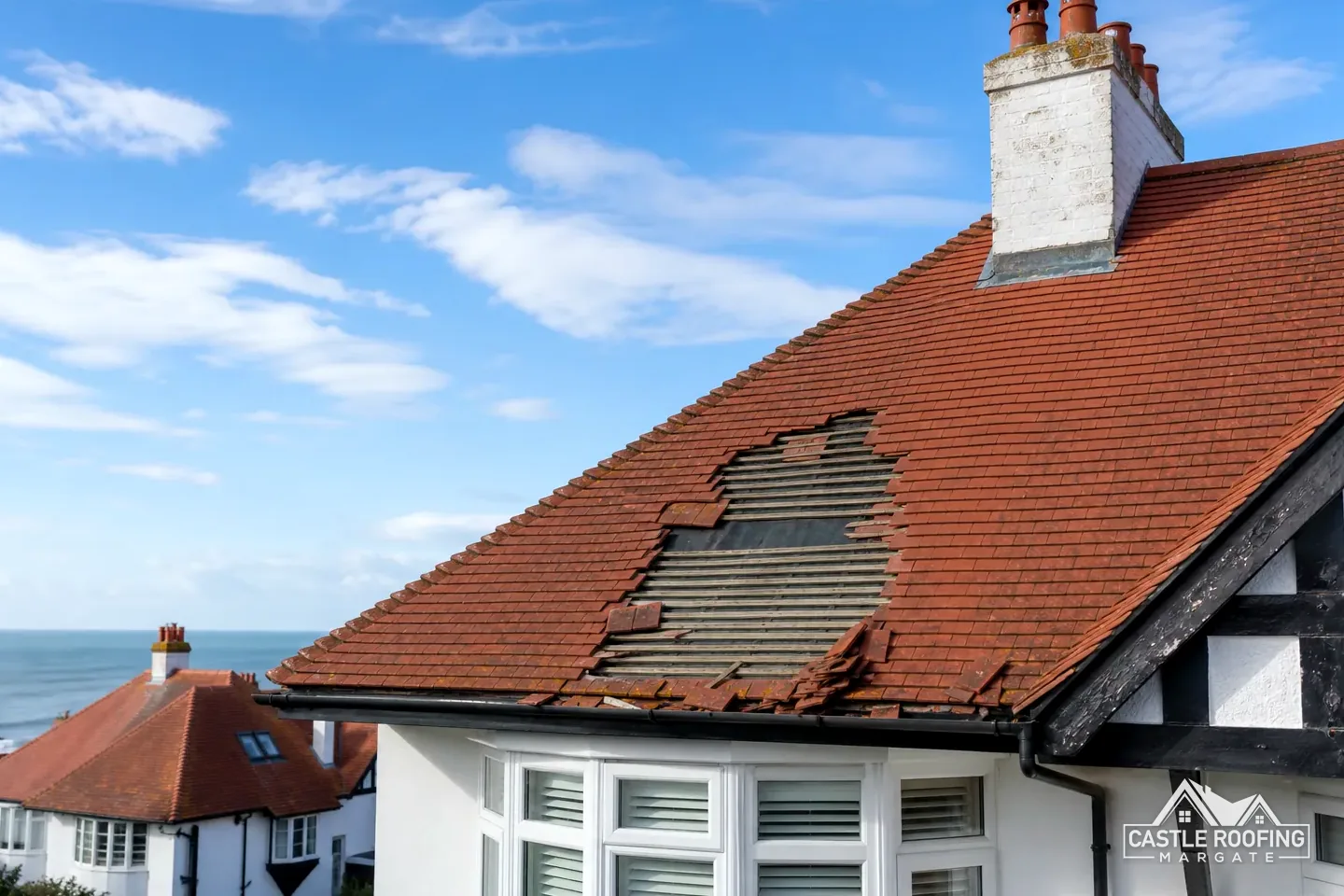
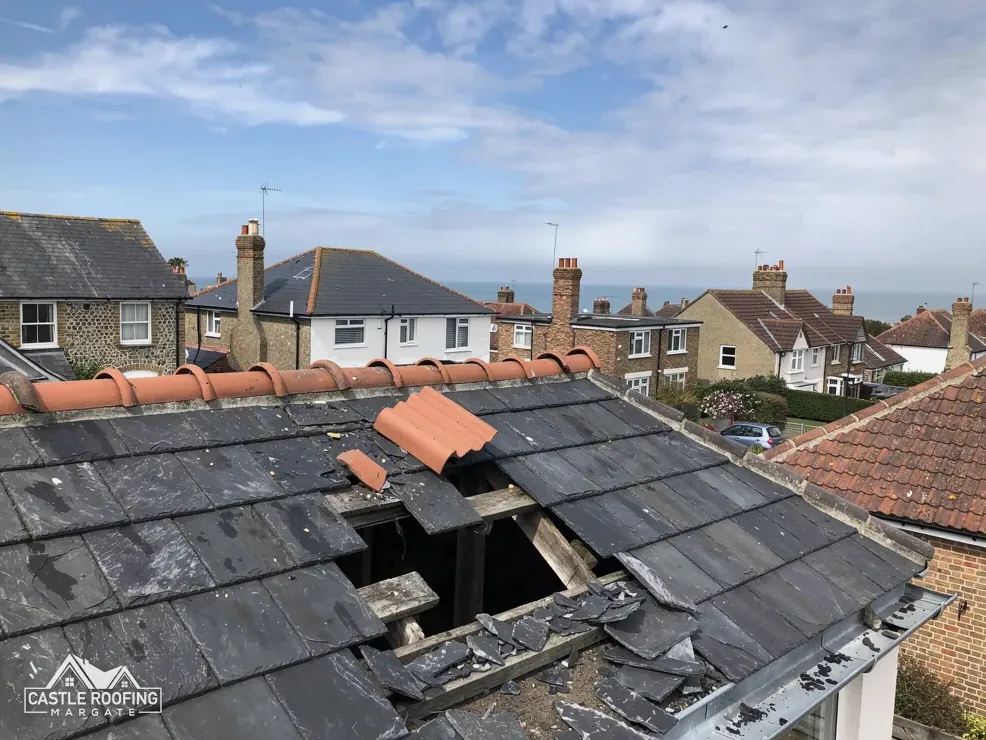
| Broken slate | Fresh, clean break; pieces on the ground nearby | Old nail rusted through; moss growing over the edge |
| Ridge tiles | A few displaced after the wind | Mortar crumbled along the whole run |
| Lead flashing | Lifted or peeled back from the wall | Split along old fold lines |
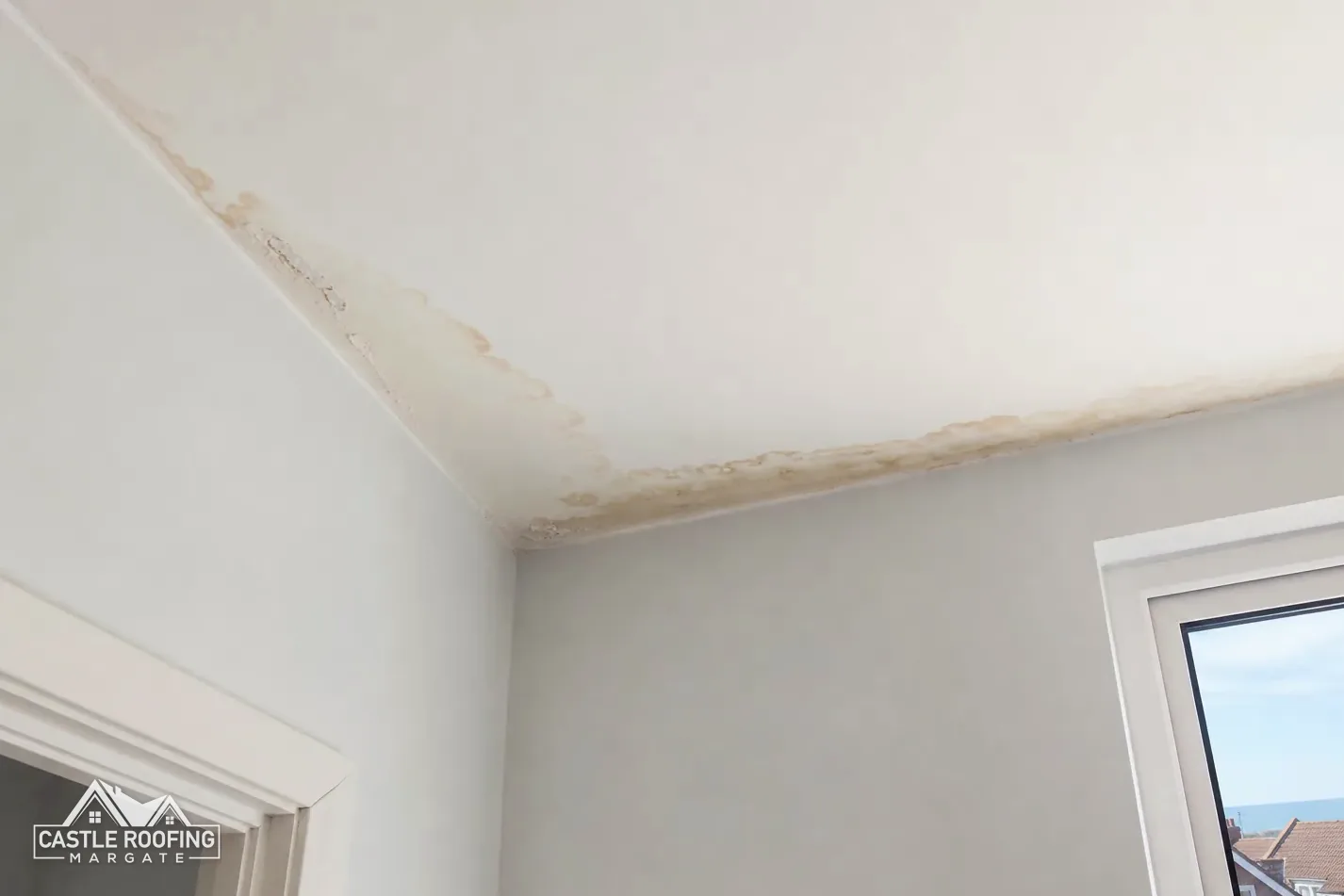
| Ceiling stain | One fresh patch, ceiling dry before | Several tide-mark rings from older leaks |
These are the signs a roofer reads. They are not a ruling, and the insurer, or the FOS if it comes to that, makes the decision. Their value is that you know which evidence to protect while it is still fresh.
Older records help too. Any earlier photo of the roof, even one taken for another reason such as a family picture in the garden, shows what it looked like before the weather arrived. So do invoices from past repairs, because they show the roof was looked after. If a roofer inspected it in the last few years, ask for a copy of what they wrote down. A neighbour's photo of the same street, taken before the storm, can also settle an argument about whether a slate was already missing.
Photos, dates and notes that help
IStructE describes photographs as vital for an insurance claim, since they record what the damage looked like. You are building a record that a stranger at a desk can follow, so make it easy to follow. Never climb up to take a picture. A phone zoom from the garden, the pavement opposite or an upstairs window shows plenty, and a ladder in a wind helps nobody.
- Take a wide shot of each affected room, then a close one of the stain, drip or bulge.
- Photograph wet carpets, furniture and stored items before you move or bin them.
- From the ground, shoot each roof slope, the ridge, the chimney and the gutters.
- Photograph anything that fell, where it landed, with something in frame for scale.
- Check that your phone is saving the date, or write the date on paper in the shot.
- Note in writing when the storm hit, what the weather did, and when you first noticed the damage.
Keep going after the first day. If water keeps coming in, photograph it again, because a record of the damage getting worse while you waited tells its own story. Back everything up to a second place, so a lost phone does not lose the evidence. Put the photos in one folder named with the date of the storm, and send the insurer the clearest few rather than a hundred near-identical frames.
Why you keep the broken pieces
Fallen slates, tile fragments, a bent length of lead or a cracked ridge piece are evidence in their own right. A fresh, sharp break looks very different from an edge that has been weathering for years, and an assessor may want to see the piece itself. Put the pieces in a dry spot, label them with the date and what they came from, and hold on to them until the claim is settled. A roofer who is asked to replace them can then show the insurer exactly what was taken off. If tiles or slates are still hanging over a path or a neighbour's garden, tell the roofer on the first call, because that part of the job is made safe first.
Safety comes first. If pieces have landed on the pavement or a neighbour's drive, photograph them quickly and clear them so nobody trips, because loose material that stays on the footway is a risk to passers-by. Wear gloves, because broken slate and tile edges are sharp.
One exception matters. On a house that dates from before 2000, HSE's starting assumption is that asbestos is somewhere in it, and asbestos cement roofs are always fragile. If your roof is corrugated cement sheet, or the covering is unknown on a building of that age, leave broken sheet pieces where they are, keep people away and ask for advice before anyone moves them. Photograph them without touching, and do not put them in a household bin or a skip.
The order that protects a claim
IStructE sets out an order that is easy to remember. Ring the insurer first, make the property safe next, and keep photos and receipts all the way through. Which? says most insurers run a 24-hour emergency helpline, so that first call does not have to wait for the morning.
- Ring the insurer and ask what it needs, including whether it wants to inspect before temporary work begins.
- Make the roof safe. A sheet over the opening, a refixed slate or a secured ridge keeps the weather out and limits further damage.
- Keep every receipt, whether for the temporary work or for hiring drying equipment.
- Agree the permanent repair with the insurer before it starts, so you know what it will accept.
- Ask the roofer to write down what they found and what they did, in plain words, with photos of each repaired spot.
A make-safe is temporary, and it should be described to you that way. Our page on temporary roof repairs covers what a sound one involves.
Costs deserve a sense of scale. MyJobQuote (October 2026) gives a typical UK range in which storm repairs start at around £300, while extensive storm damage can cost £1,200 or more. Where the repair is close to your policy excess, a claim may not pay much, and paying directly can be simpler. We look at that in roof repair under the insurance excess.
If the insurer says it is wear and tear
A refusal is not rare, and it is not always the last word. Which? reported that only 32% of storm-related claims made in 2024 ended in a payout, so a well-kept record is worth the effort. If the insurer decides the damage is gradual or worn, do not give up on the first letter.
- Ask for the decision and its reasons in writing.
- Reread the policy wording on storms, and set your photos and dates beside the reason given.
- Send any extra evidence, such as a roofer's description of a fresh break, earlier photos or maintenance invoices.
- Use the insurer's complaints procedure, and keep copies of every letter and email you send or receive.
- Do not let the temporary cover come off or the leak go on unrecorded while the argument runs; a roof left open makes the next claim harder.
If you still disagree, the Financial Ombudsman Service is on 0800 023 4567. It looks at whether the insurer has treated you fairly, and it takes its own storm approach into account, including the Beaufort Scale point above. The evidence you gathered in the first days is what the case rests on.
Whatever happens with the claim, a roof with real storm damage still has to be repaired properly. Pricing should be one written total, given once someone has seen the roof.
Our guide to what counts as a storm for insurance covers the definition in a shorter form if you want a second read before you phone.