Repairs, flat roofs and full replacements set against national guides, why South East jobs sit towards the top of a range, and what to look for in one written total price once your own roof has been surveyed.
Asking how much a roofer should cost is like asking how long a piece of string is. A new ridge tile and a new roof are both roofing, and they sit a long way apart. What you can do is hold a quote against published ranges, understand what moves a price, and know what a sound quote looks like.
The figures below come from national cost guides, each named with its date, and every one is a general UK range rather than a Castle Roofing Margate price. They are a yardstick, not an offer. Where two guides disagree, as often happens with whole roofs, both are given. Kent falls in the South East, where Which? and HomeBuilding both report prices tending above the national picture, so read the top half of a range as the likelier one.
One more point before the numbers. A price on a web page cannot know your pitch, your access, your chimneys or how many slates have slipped. The price that matters is the one put in writing once someone has inspected your roof. If you have a quote and want to test it, read our guide to spotting a dodgy roofer alongside this one, and the main page at Castle Roofing Margate shows how a survey leads to a quote.
What moves a roofing price up or down
Two jobs that sound the same can be priced very differently because of what surrounds the work. These are the usual drivers.
- Access. A low bungalow can be reached by ladder. A tall terrace, a roof behind other roofs or a house with a narrow side passage may need scaffold, and a scaffold on the pavement is licensed by Kent County Council.
- Covering. Natural slate, clay tile, concrete tile, felt, rubber and lead all cost different amounts to supply and take different times to lay.
- Size and shape. A simple gable is quicker than a roof with valleys, hips, dormers and several chimneys.
- Condition underneath. Rotten battens, failed underlay or damaged timbers found once the covering is off add work that could not be seen from outside.
- Waste. Old coverings must be taken away, and some, such as asbestos cement, need special handling.
- Weather and timing. Roof work needs dry spells, and emergency make-safes cost differently from planned jobs.
On top of those sits labour. HomeBuilding adds that labour costs more in and around London and the South East. What sets the labour cost on a roofing job is the number of people needed, how long the roof will be open to the weather, how difficult the access is and what skill the detail demands. Lead work and fishscale slates ask for more time and skill than plain tile.
Roof cleaning, chimney repointing and scaffolding get priced once the roof is surveyed, because each one turns on the house and how it is reached. The next sections cover what the guides do publish, job by job, so you can see where your own quote sits.
Repairs and call-outs: typical UK ranges
Repairs sit at the smaller end of roofing prices. The figures below are from the guides named in the table. Which? figures exclude VAT, and that guide rests on a survey of 11 Which? Trusted Traders gathered in November 2025, with labour and materials both included in its prices. Ranges like these open a conversation, and no one should be held to them.
| Job | Typical UK range | Guide |
|---|---|---|
| Replace 1 to 6 broken or missing tiles | £75 to £400 | Which?, Nov 2025 |
| Put in a new ridge tile | £80 to £300 | Which?, Nov 2025 |
| Clear all gutters, front and back | £75 to £350 | Which?, Nov 2025 |
| Emergency roofer call-out | £150 to £300 | MyJobQuote, Oct 2026 |
MyJobQuote (October 2026) gives around £215 for replacing roof tiles, and around £650 for an average repair in 2026. It puts emergency call-outs at £150 to £300. Storm repairs start at around £300, and it says extensive storm damage can cost £1,200 or more. That last figure is for extensive damage, not a typical storm repair.
Checkatrade (June 2026) publishes per-square-metre repair rates excluding VAT, for repairs of up to 3 m² only: concrete tiles £90 to £120, clay tiles £110 to £160 and natural slate £150 to £220. Those rates do not scale up to a whole roof and should never be multiplied into a total.
Our pages on pitched roof repair costs and ridge tile repair cost go into each job.
Flat roofs and leadwork
Flat roofs are priced by size and by material. The guides agree on the general shape and disagree on the detail, which is why two ranges are given.
Which? gives £1,400 to £3,500 for a single garage roof, 6 m by 3 m, in felt, and £1,950 to £4,000 if the roof is finished in PVC or EPDM on new boards, excluding VAT. MyJobQuote (20 October 2026) says a flat roof replacement runs between £1,500 and £6,000, and (9 October 2026) gives around £60 per square metre for EPDM. That last figure is a fully installed average per square metre, not a total, and it should not be multiplied by the area of your roof to produce a price.
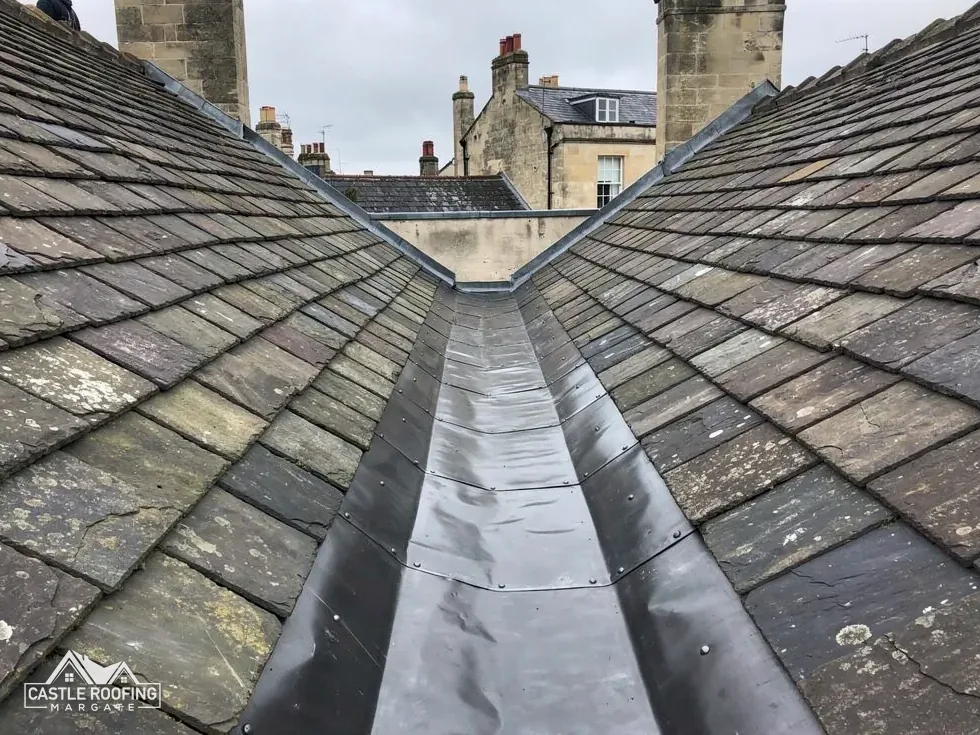
Lead has its own rates. MyJobQuote gives between £350 and £920 for chimney leadwork (22 September 2026) and around £540 for a valley (7 September 2026). Sheet lead is sold by thickness code, and the specification gives a code for every detail, so ask which code the quote proposes.
- Ask what the existing covering is and whether the new one goes over or replaces it.
- Ask about the finished fall, and how anyone will check it. Trade guidance on BS 6229:2025 keeps a minimum finished fall of 1:80, and IKO advises designing single-ply roofs for 1:40.
- Ask how edges, outlets and wall junctions will be finished.
Our guides to flat roof replacement cost and chimney leadwork cost lay the figures out further.
A whole new roof: why the guides disagree
Replacing a roof is the largest figure an owner is likely to meet, and the published ranges are wide. That is a fair reflection of the work. A re-roof can mean new tiles on sound battens or a full strip with new timber, underlay and lead.
| Guide | Roof | Figure |
|---|---|---|
| Which?, Nov 2025 | Average three-bedroom house | £7,000 to £21,000 |
| HomeBuilding, Sep 2025 | 3-bed semi, 65 m², plain concrete tiles | between £10,000 and £15,000 |
| HomeBuilding, Sep 2025 | Same house, Welsh slate | might reach £18,000 |
| MyJobQuote, Oct 2026 | New roof | around £5,250 |
Which? figures exclude VAT. MyJobQuote also gives around £7,800 for a slate roof. The gap between £5,250 and £21,000 is large. No figure here is a quote for your house, and none of them can look at your battens.
HomeBuilding also gives typical lives to weigh against the outlay: Welsh slate 100+ years, clay tile 60 to 80, plain concrete 40 to 50. Those are typical ranges as published and not promises, but they explain why slate costs more at the start.
On repair or replace, the plain answer is that a repair makes sense when the covering is in good condition and the fault stays in one place. Replacing makes sense once slates or tiles are failing across a whole slope. Our repair or replace a flat roof guide gives the test for flat roofs.
Hourly and day rates, and why they mislead
Asking what roofers charge per hour seems a natural place to start. It is the wrong question for a job of any size, and the reason tells you something about quotes.
A roofer working on one roof needs ladders or scaffold, materials delivered, a skip or collection for waste, and often more than one pair of hands. The hours on the slope are only one part of the bill. An hourly figure leaves out all of that, and a low hourly rate can sit beside a long job and a large final bill.
What sets the labour cost on a roof is more useful to know:
- How many people the job needs, and for how many days.
- How awkward the roof is to get to and work on, with steep pitches and parapets included.
- How much skill the detail demands, such as lead, valleys, fishscale slates or listed buildings.
- How much the weather is likely to interrupt the work.
- The distance from the yard to the site.
Compare quotes by what they cover. Citizens Advice recommends gathering written quotes from 3 traders or more before choosing. When you do, check that each one names the area being worked on, what goes on it, whether scaffold and rubbish removal are covered, and whether VAT is added. The standard VAT rate is 20%.
If a trader offers only a day rate and will not describe the job, you are being asked to carry the risk of how long it takes. Request a written scope and one total instead.
A price on paper once the survey is done
The sound way to price a roof is to look at it first. Someone goes up and photographs what is found. You see pictures of your own roof, and only then do you get a price.
That price should be one total, in writing, covering the whole job. It should state what is included, whether scaffold is part of it, and what happens to the old material. MyJobQuote (12 October 2026) gives around £300 for a roof survey, which shows that looking properly is itself work, and the reason a survey comes first.
Scaffold on the pavement has a Kent County Council licence fee of £52 per week for 2026 to 2027, with 5 working days' notice, and the scaffolding company applies. That is the council's fee, not the scaffolder's own price, which is set after the survey.
If the quote changes once work starts, you should hear before anything is done. A found rotten batten is a fair reason to revise a figure. A price that grows without an explanation is not.
A fair roofing price is one you can check against a scope, a set of photographs and a published range.
If you would like a figure for your own roof, send us photographs and the address. The roof gets looked at before a number is mentioned, and the total then arrives in writing, priced fairly for what is actually there.