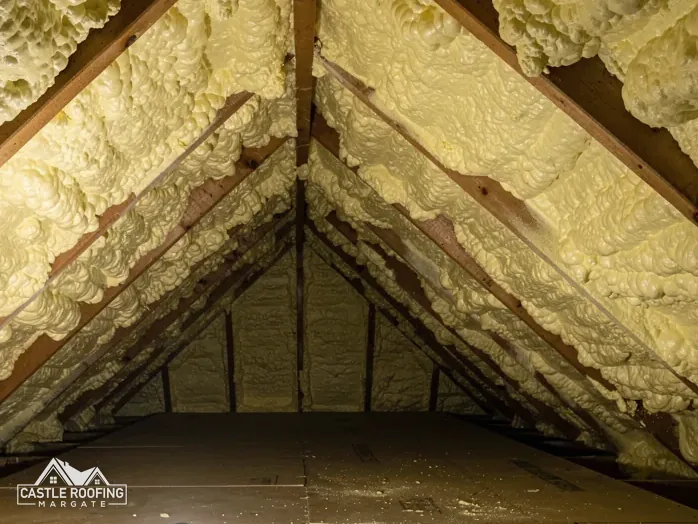
Where the dust goes and why it matters
Cutting and scraping foam from rafters sends fine particles and crumbs into the air of the loft. In general terms, that air does not stay put. It moves down through the hatch, around pipe penetrations and along gaps at the top of walls, so a house is never entirely closed off from a loft being cleared.
For many households that means a dusty film on surfaces nearby rather than anything dramatic, but it is worth knowing before you decide to stay. If someone in the house has a breathing condition, a baby or a pet that cannot easily be moved, ask your doctor or vet what they advise and tell the roofer, so the plan can allow for it.
The roofer's tools and habits are the best defence: a clear route in, dust sheets laid before anything is disturbed, and waste bagged at the point it is made.
You can also keep doors to the landing closed and windows shut on the days the loft is being worked. A closed door between the loft hatch and the rooms you use makes a real difference, and so does a damp cloth along the gap under it. Vacuuming the landing at the end of each day keeps whatever does arrive from spreading further through the house.
Sealing off the loft hatch
The hatch is the weak point in the ceiling. Before any foam is cut, it is covered from the landing side with plastic sheeting and tape so that dust has to pass a barrier to reach the living space. A short length of protective floor covering goes down along the route from the front door to the stairs.
Things to do the day before:
- clear the landing and the area under the hatch
- move anything stored in the loft that you want to keep clean, or ask for it to be wrapped
- cover wardrobes or furniture on the top floor
- make sure the roofer can reach the loft without carrying tools through bedrooms
If the loft ladder is a pull-down type, its fixing is checked first, since it will carry people and bags of waste repeatedly.
The sheeting stays up until the clear-out is finished, so the hatch is not used by the household in the meantime.
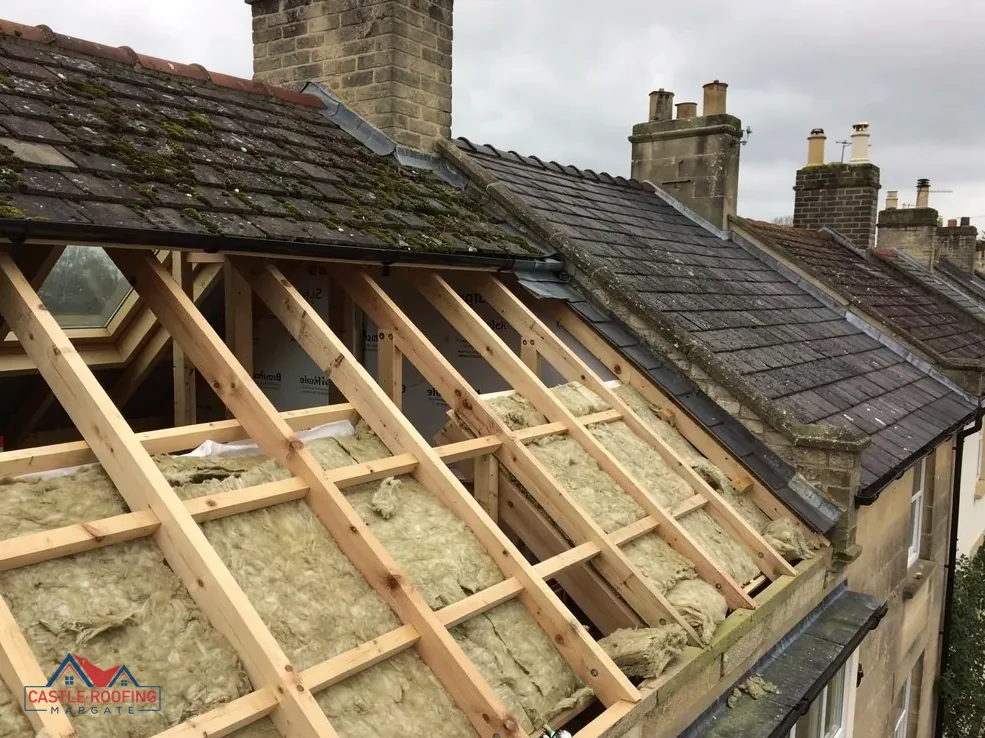
Roof windows are affected too. A roof window in the area being cleared is covered from inside where it can be, so that foam crumbs do not get under the frame, and its blind is raised or removed beforehand.
What happens each day
On the first day the roofer brings in sheeting, protective flooring and bags, seals the hatch and starts at the end nearest the access. Foam is removed in stages, bagged and carried out to the van or skip.
The days after follow the plan you were given. Depending on the roof, some will be spent entirely in the loft, others partly on the roof or from a scaffold, and one may be set aside for checking the felt and timbers and noting repairs.
You hear what is planned each morning and what was found each evening, including anything that changes the next day. Photographs show what is under the foam as it is exposed.
Tidy-up is part of every day, not saved for the end, so the landing is vacuumed and the route to the front door is left clear. Noise is real: scraping, footsteps overhead and bags dropping. Working from home is possible but not comfortable. Outside, the scaffold or ladders and the skip may block a drive or a front path for the duration, so tell the roofer about parking and deliveries.
When it is better to be elsewhere
Some households decide to go out for the day, and some arrange to be away for the noisiest stage. That is a personal choice and you make it with the plan in front of you.
Consider it if the loft is directly over a nursery or a bedroom in use, if anyone is unwell, or if the access runs through a room that cannot be shut off. A short stay elsewhere may also suit people who work from home and need quiet.
If the covering is opened for re-felting, the house is open to weather for part of the work, and you will be told in advance which days those are.
For the whole sequence, see the removal process guide. The service itself is set out under spray foam removal.
Pets and children
Pets need thought. Cats and dogs are best kept in a room well away from the hatch, because foam dust and sharp offcuts on the floor are not good for paws or lungs, and a frightened animal can bolt through an open door. Children should be kept clear of the landing and the stairs on work days.