How the words are used in the trade
Skylight is a word everyone knows, and it covers a lot. A homeowner might use it for a window in a loft slope, a glazed hatch on a flat extension roof or a big glass lantern over a kitchen. Roofers and window makers are more exact, because the products are fitted differently and are measured against different rules.
The terms break down like this:
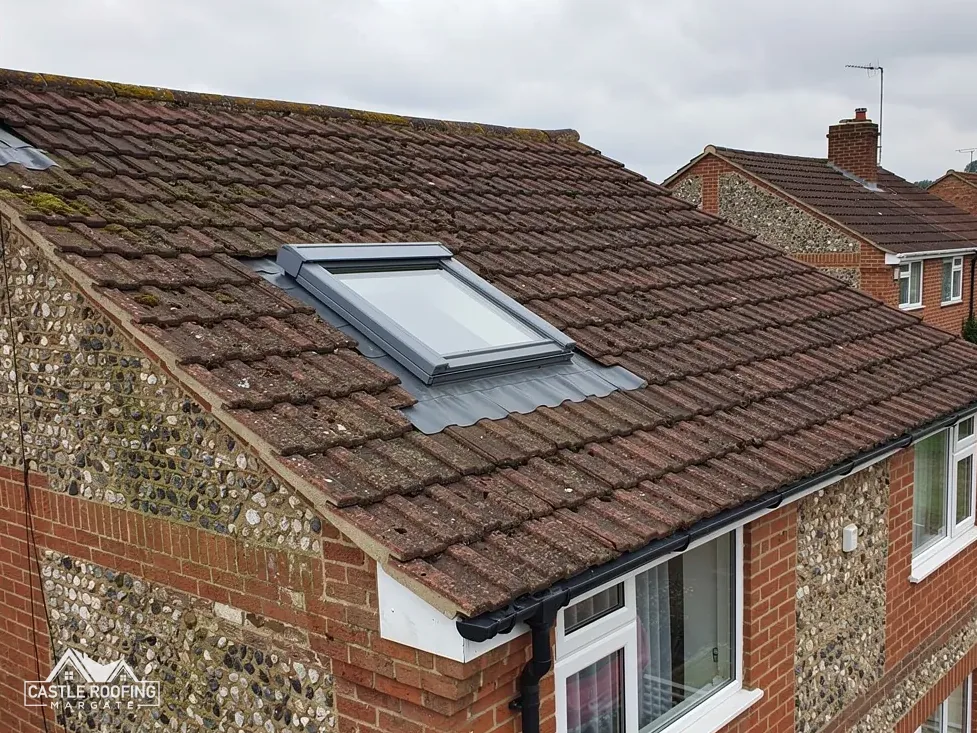
- Roof window: a window built into a pitched roof, usually with a hinged or pivoting sash, set between the rafters and sealed into the covering with flashings.
- Rooflight: a general word for glazing in a roof. Approved Document L uses it for the line with the 2.2 figure, and in the trade it usually means a fixed unit or one in a flat roof.
- Roof lantern: a raised glazed structure, usually on a flat roof, with its own roof of glass.
Skylight and rooflight overlap in daily speech. If you ask a supplier for either, expect them to ask whether the roof slopes or is flat, and whether you want the glass to open. That answer sorts the product out faster than the name does, and it saves a wrong order.
The two Part L figures
The difference matters most when the paperwork is read, because Approved Document L sets a separate figure for each. Its Table 4.2 covers new elements in an existing home. The line for a window, which the note says includes roof windows and curtain walling, gives 1.4 as the U-value, with Window Energy Rating Band B accepted instead. The rooflight line gives 2.2, in W/(m²K).
| Product | Figure |
|---|---|
| Roof window | 1.4, or Band B |
| Rooflight | 2.2 |
Less heat escapes through a lower U-value, so on paper a roof window has to do better than a rooflight. That is the reason a quote should say which product it is pricing, and why the data sheet should show the matching figure for it.
These figures come from AD L 2021 with its 2023 amendments. A new edition, AD L 2026, takes effect on 24 March 2027, so confirm which edition covers your job. Our roof window U-values page goes into the numbers, with the figures set side by side.
Where each one goes
A roof window needs a slope. It is fixed to the rafters, and the covering around it is cut and flashed to suit. It suits a loft with headroom, because you can open it, look out and clean it from inside.
A rooflight in a flat roof needs an upstand, often called a kerb, which is a short raised frame that holds the glass above the water line. Some are fixed, and some open for ventilation. A flat-roof unit sits in a different set of details, with a waterproof membrane taken up the kerb, which is why a roofer asks about the roof first. Our page on flat-roof rooflights describes the fitting.
On a low pitch, the choice is less clear and the maker's data sheet decides whether a roof window suits the slope. The same goes for heavy coverings such as natural slate, where the flashing is cut to the product and the covering around it is lapped to suit.
Planning differs as well. Class C's 0.15 metre projection limit is measured from the original roof plane, and a raised lantern stands up from the roof by design, so it can fall outside Class C and need a planning application.
Asking for the right one
When you collect quotes, put the same description in front of every firm, so the prices can be compared:
- Pitched roof or flat roof, and the approximate pitch.
- Fixed or opening, and whether it is wanted for escape.
- The room it lights, since a bathroom and a bedroom have different needs.
- The glazing: the U-value, any laminated pane, the blind.
If the quote says only "skylight", ask which product and which figure it meets. A window in a slope should show 1.4 or Band B, and a rooflight 2.2.
Both words appear on our roof windows and skylights page, because people search with either and mean different things by each. We settle which product you need at the survey, looking at the roof structure and the covering, and the written total comes afterwards. Mention any plans for the room at the same time, such as a bed, a bath or a desk, because the answer can change what the glazing has to do, and how many units the room needs.