Make-safe work and permanent work are different jobs
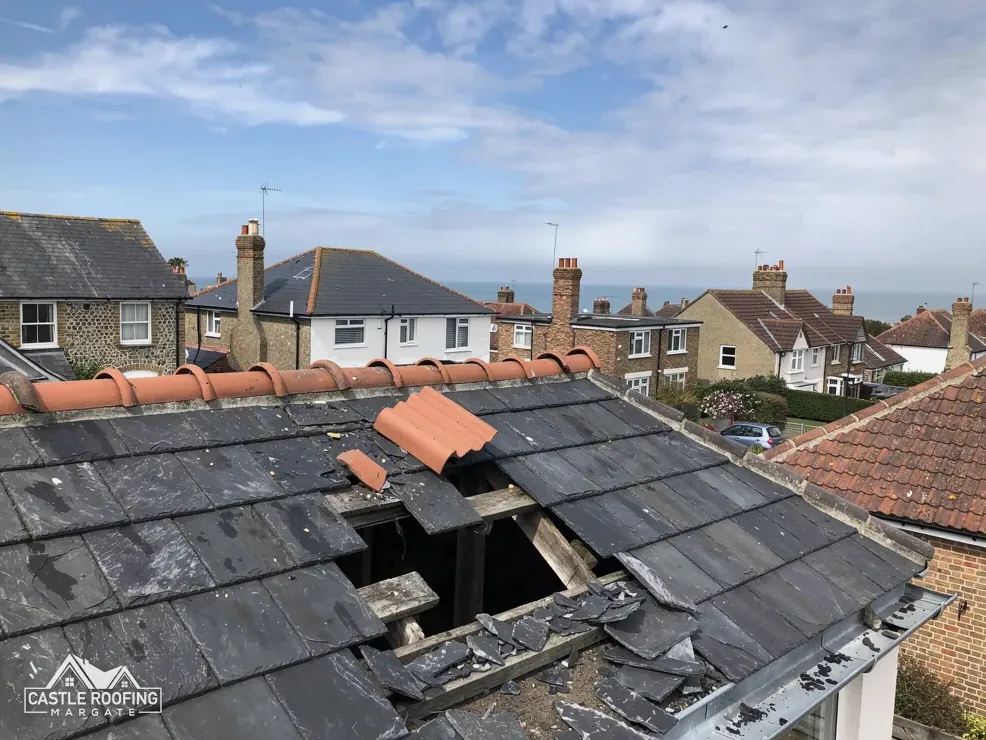
While water is pouring in during a storm, the aim is to stop it getting worse, not to finish the job. That separates the work into two stages with different needs.
| Job | In the rain? |
|---|---|
| Cover the opening with a tarpaulin | Sometimes, if it is safe |
| Work indoors to catch and divert water | Yes |
| Replace tiles, slates or flashings | Better on a dry day |
| Rebuild leadwork or ridge beds | Better on a dry day |
The reason is as much about seeing as about safety, and the two go together. A roofer repairing a covering wants to see the batten, the underlay and the fixings clearly, and wet surfaces hide faults and make it hard to judge whether a joint is truly sound. A neat-looking job done in rain can fail at the next shower.
If the leak is active, you can help from inside the house by moving belongings and catching drips, while a roofer decides what can be done on the roof.
The Work at Height duty on a wet roof
Roofs are a place where falls happen, and wet tiles, slates and metal give little grip. Regulation 6(3) of the Work at Height Regulations 2005 puts the burden on the employer: suitable precautions, within what is reasonably practicable, so that nobody takes a drop that could injure them.
In practice that means a roofer weighs the weather against the job. The questions are about the footing and the means of getting there:
- Is the surface slippery, and is there a safe way up and a stable place to stand?
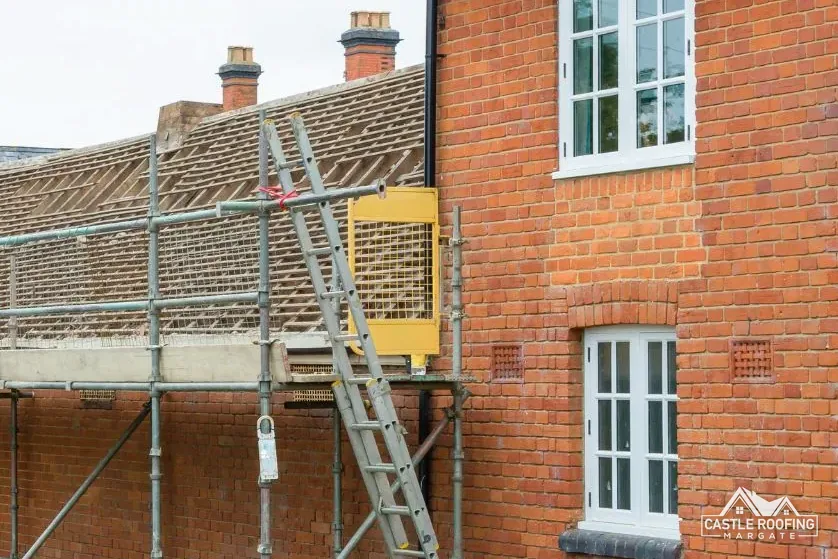
- Are edge protection, a scaffold, a tower or a harness available for this slope?
- Are gusts making it unsafe to handle sheets, ladders or tarpaulins?
- Would a delay cause more harm than the risk of going up?
Sometimes the answer to the last question is yes, and a quick temporary measure goes ahead with the proper equipment. At other times the right call is to wait out the worst of the weather and come back. A firm that says it is not safe to go up is following the duty, not avoiding the job.
Stopping water in the meantime
There is plenty you can do from the ground and from inside while you wait for dry weather.
- Contain the water. Put a bucket or tub under a drip, with a towel in it to stop splashing, and move rugs and furniture out of the way.
- Stay clear of a bulging ceiling. Water held in the plasterboard can come down all at once, so move people and belongings out from under it.
- Keep clear of electrics. Switch off the circuit where water is near light fittings, and have it checked before the lights come back on, because wet plasterboard and wiring are a poor mix.
- Photograph the stain and the drip with today's date, so the roofer sees what you saw.
Then ring a roofer and describe the water. Pictures of the stain and the loft help them decide how to proceed, and how urgently. A tarpaulin over a damaged slope may be the answer when conditions allow; see tarpaulin over a roof leak for how that works.
If a storm caused it, your insurer should hear before permanent work starts, and the make-safe receipts belong in the same folder as the photographs.
Finishing the job once the slope is dry
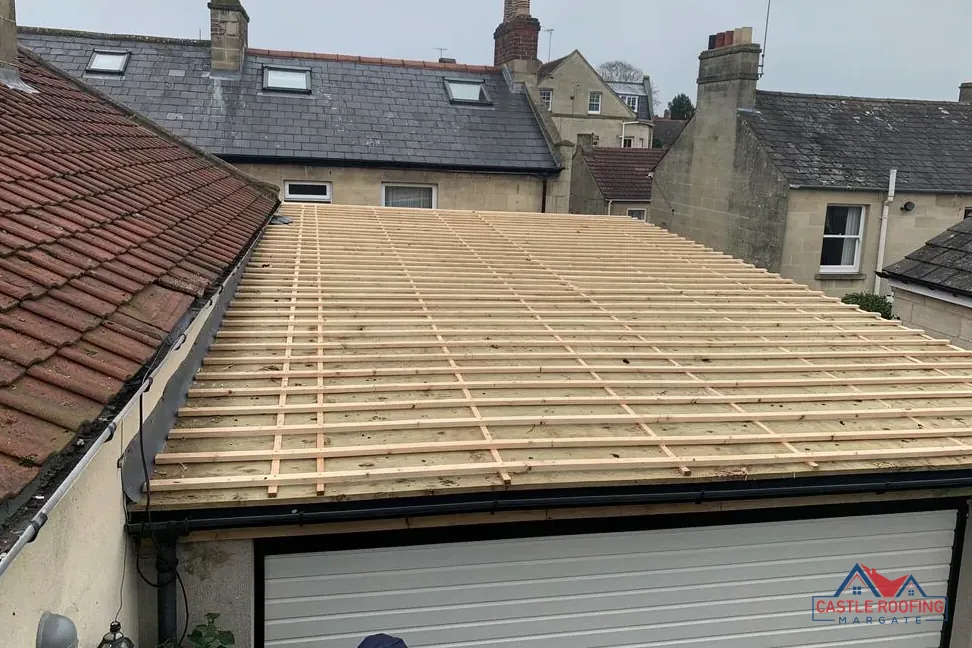
When the slope has dried, the proper repair can be done with the damage in plain view. Materials sit and bed correctly on a dry surface, and the roofer can check the fixing of each tile or flashing instead of guessing.
A dry-day job usually follows this order:
- Lift the temporary cover and photograph what lies beneath it.
- Strip back to sound battens and underlay, and replace what is wet or damaged.
- Renew the tiles, slates or flashings, and fix them for the exposure of the site, following the BS 5534 code for slating and tiling.
- Check the line of the slope and clear the gutters of debris.
The permanent work is priced as a single written total once the survey is complete, and a cover already in place does not alter that. Repeat the wet-weather check indoors after the first real rain, and look at temporary roof repairs if you want to know what a stopgap can and cannot do. The overall service is on the roof repairs and emergency page.