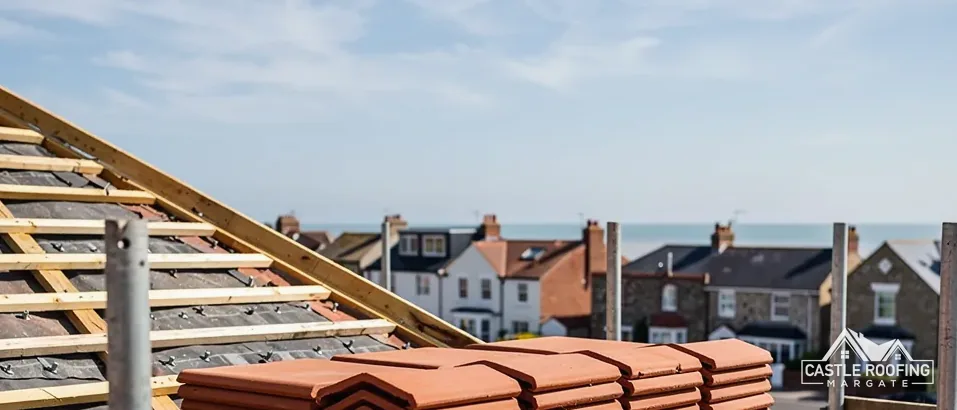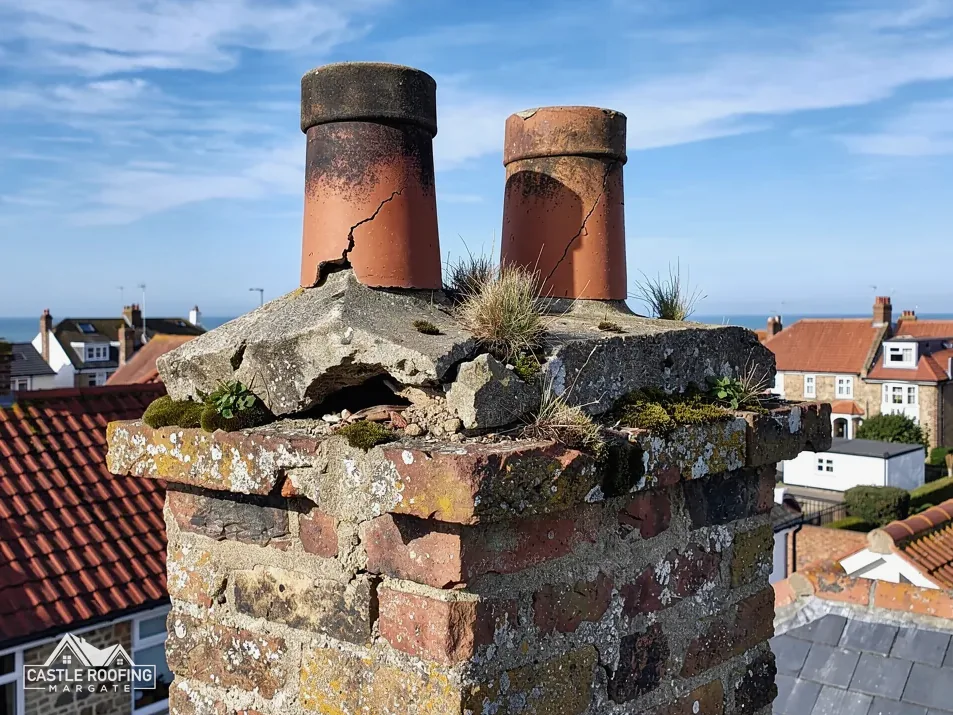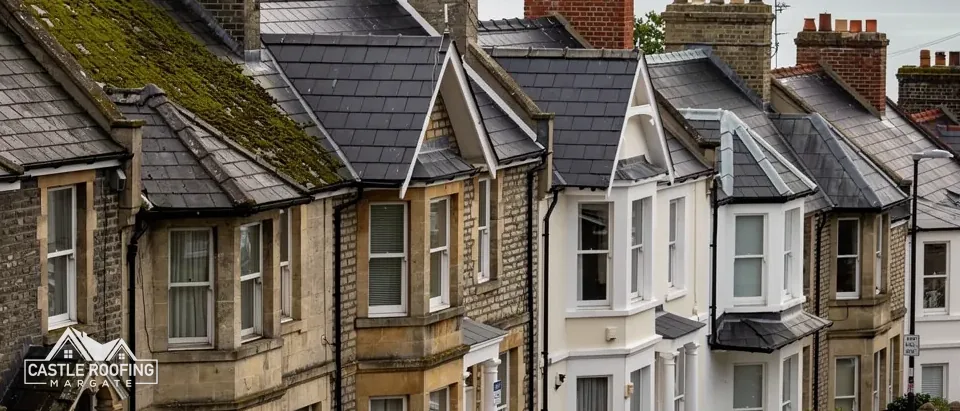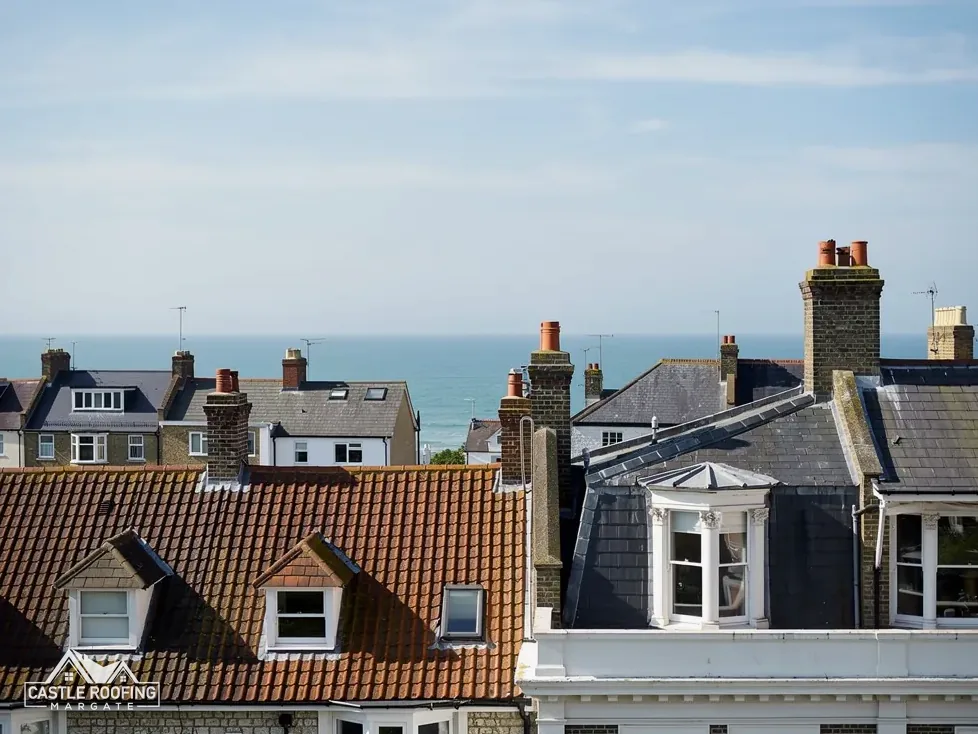
Check which planning questions apply to your roof before you accept a quote. It runs from like-for-like repairs and Class C through flats, protected land and each council's Article 4 position.
Planning permission is the council's say over what a building looks like and what may be added to it. For roofs, owners meet it in two ways. Either they want to change something visible, such as a dormer, a roof window or a new covering, or they live somewhere the council has tightened the usual rules. Everyone else simply wonders whether it applies at all.
For a house, the starting point is kind. National rules grant permitted development rights, which let certain alterations go ahead without an application, and one of those rights covers roof alterations in general. A change of covering on a house normally sits inside it. The exceptions are what this guide is about: the building is a flat, the land is protected, or the council has taken the right away with an Article 4 direction.
Planning is only half the picture. Building Regulations are a separate system with separate tests, covered in our guide on that subject. A roof job can need either system, both, or neither. The sections here follow the order in which the planning questions usually arise, so you can check them off one by one before a scaffold is booked.
Repairs that change nothing you can see
The first question is whether the work is development in the planning sense at all. Section 55(2)(a) of the 1990 Act, the Town and Country Planning Act, excludes from development any work that leaves a building's exterior materially unaltered, so it is the first test to run, before any of the questions in the list below. A repair that puts back what was there, in a material that looks the same, may therefore never reach a planning question.
The word to watch is "materially". Swapping a handful of failed slates for matching ones leaves the roof looking as it did. Replacing a whole covering with a different material, colour or profile changes the view from the road, and that is where the next sections come in.
Thanet District Council's conservation area page links a like-for-like job to a lower chance of needing planning permission. That tells you how likely a permission is, not what is certain, and it is a remark about conservation areas, so it never works as a promise for a particular house.
A short list helps when you describe the job to the council:
- what the roof is covered with now, and what it will be covered with
- whether the ridge, hips, verges and chimneys keep their present height and shape
- whether anything new is being added, such as a dormer window or a roof light
- whether the house is a single dwelling or contains flats
If every answer is "as before", the planning question is usually short. If one answer is "new", read on.
Class C and the rest of permitted development for roofs
Permitted development for houses comes from the General Permitted Development Order 2015. Class C of Part 1 is the catch-all roof right: it covers roof alterations that no other class deals with, for a dwellinghouse, and a change of covering falls within it. On a house, a re-cover is therefore normally permitted development.
Class C carries conditions attached to what it permits. We leave the detail to our planning guide on roof windows, roof window planning permission, which sets out each condition in full, so this page keeps to the rights themselves.
Class B is the separate right for roof extensions such as dormers. It has its own size limits, and it can be removed in particular places, as the fourth section explains.
Having the right does not settle everything. Class C leaves several things untouched:
- It does not apply to flats or to a house converted into flats.
- It does not remove the need for listed building consent where the work touches a listed building's character.
- It gives way to an Article 4 direction, which can withdraw it across an area.
- It is a planning right only, so Building Regulations are a separate question.
The right to alter a roof under the Order is a national one, and not a council one. Where you are unsure whether an alteration falls inside it, put the question to the council's planning team by letter or email, and keep the reply alongside your survey photos.
Flats and houses split into flats
Permitted development belongs to dwellinghouses. In the Order, a dwellinghouse by definition excludes any building with flats in it, and any single flat inside one. That wording catches more than a purpose-built block. It also catches a large house that has been converted into flats, whatever it looked like before.
Canterbury City Council tells owners that permitted development rights do not exist for flats and maisonettes, and expects an application for any change to a flat's external look. The reasoning sits in the definition, not in the roof: the same slate and the same slope are treated differently depending on whether the building is one home or several. The same logic holds in Thanet, Dover, Swale and Folkestone & Hythe, because the rule comes from the national Order, not from one council.
| Property | Roof permitted development |
|---|---|
| Single house | Applies, unless the land is restricted |
| Purpose-built flat | Does not apply |
| Maisonette | Does not apply |
| House converted into flats | Does not apply |
For a flat, the question to ask the council is not whether a right exists but whether the work changes the outside appearance. A patch that leaves the roof as it was may be outside planning altogether, while a covering that changes the look, a roof window or a dormer needs an application. Our answer on permitted development for flat roofs covers the flat-owner side of the question.
Conservation areas, the Kent Downs and the Canterbury Site
Certain land is treated specially. Schedule 1 of the Order lists it as article 2(3) land, and on it Class B, the dormer class, falls away. Class C has no such exclusion, so a re-roof of a house keeps its right.
Three kinds of article 2(3) land matter in East Kent:
- conservation areas, which each council designates
- the Kent Downs National Landscape, whose legal designation is Area of Outstanding Natural Beauty
- the Canterbury World Heritage Site, which takes in the Cathedral and two other sites
The Site is a planning matter. The Order does not name its buffer zone, so the exclusion applies inside the Site boundary itself and no further.
Councils count conservation areas differently. Thanet lists 27, Canterbury 97, Dover 57 and Swale 51. Folkestone & Hythe publishes no count. Thanet's own table gives these designation dates, and the boundaries and extensions are on the council's map, so check the street itself rather than the town:
| Conservation area | Designated |
|---|---|
| Ramsgate | 16 January 1970 |
| Broadstairs | 5 June 1970 |
| Margate | 7 February 1978 |
| Margate Seafront | 29 January 1997 |
| Westgate on Sea | 11 March 1998 |
Dover's page lists building roof dormers among normally permitted works that need permission inside its conservation areas. GOV.UK also says relevant demolition of an unlisted building in a conservation area, carried out without the planning permission it needs, is an offence, so take the council's view before pulling down an outbuilding there.
Where Article 4 touches roofs in East Kent
An Article 4 direction takes specific permitted development rights away across a named area, and national government or the local planning authority can make one. Where one is in force, work that would otherwise go ahead needs an application. What each council publishes about roofs differs a good deal.
| Council | What it publishes |
|---|---|
| Thanet | Three conservation areas: Ramsgate, its Marina extension and Pegwell |
| Swale | Faversham: re-covering main elevations that face the public highway |
| Dover | Roof changes on sides of a home that front a road, waterway or open space |
| Canterbury | Online map of covered areas |
| Folkestone & Hythe | Check with the council |
| Ashford | Its interactive map of directions |
Two cautions apply. For Thanet, only the council's own list counts, and its page names the areas without setting out the classes per address, so ask Thanet District Council. For Canterbury and Folkestone & Hythe, nobody should tell you what a direction covers without checking with the council that made it.
If you cannot tell which of these places your road falls in, our guide to Article 4 directions and roof work shows how to find out. The answer depends on the exact address, so a street name from a neighbour is not enough, and a council officer can confirm the position for your postcode. Dover lists its directions by area on its page, including Kingsdown (confirmed 5 September 2016) and Sandwich (Article 4(2), confirmed 27 January 1998).
Putting the questions in order
Planning checks go faster in a set order, and the order is the same wherever you live in East Kent. Work down this list and stop at the first answer that changes the plan:
- Is the house a single dwelling, or does the building contain flats?
- Is the building listed? Listing adds a consent requirement for works that touch its character, and our guide to listed building roof repairs covers it.
- Is the address inside a conservation area, the Kent Downs National Landscape or the Canterbury World Heritage Site?
- Is an Article 4 direction in force at the address?
- Does the work change the roof's outward appearance, or add something new?
A "yes" at the first four steps does not mean the job cannot go ahead. It means the council has to be asked, usually before a quote is accepted, and the answer goes into the file with the survey.
Planning permission and Building Regulations are separate. Getting a planning answer does not settle the building control route, and the reverse is also true. Our building control guide covers that side.
All of this sits behind a survey. We begin on the roof and share photos from it, and the planning and consent questions for your house come with the findings. Our roofing across Thanet and East Kent starts there, and one written total price follows once the route is clear.