

Roofers in Challock
29.7 road miles from Margate. Roofs, stacks and leadwork in Challock, planned around the Nine Chimneys listing, the Downs landscape and two Article 4 areas before a price is written.
- Grade II*, 1984Laurenden Forstal Nine Chimneys is Grade II*, listed 1984.
- Kent Downs landChallock lies in the Kent Downs National Landscape.
- Ashford's own teamAshford's own Building Control team.
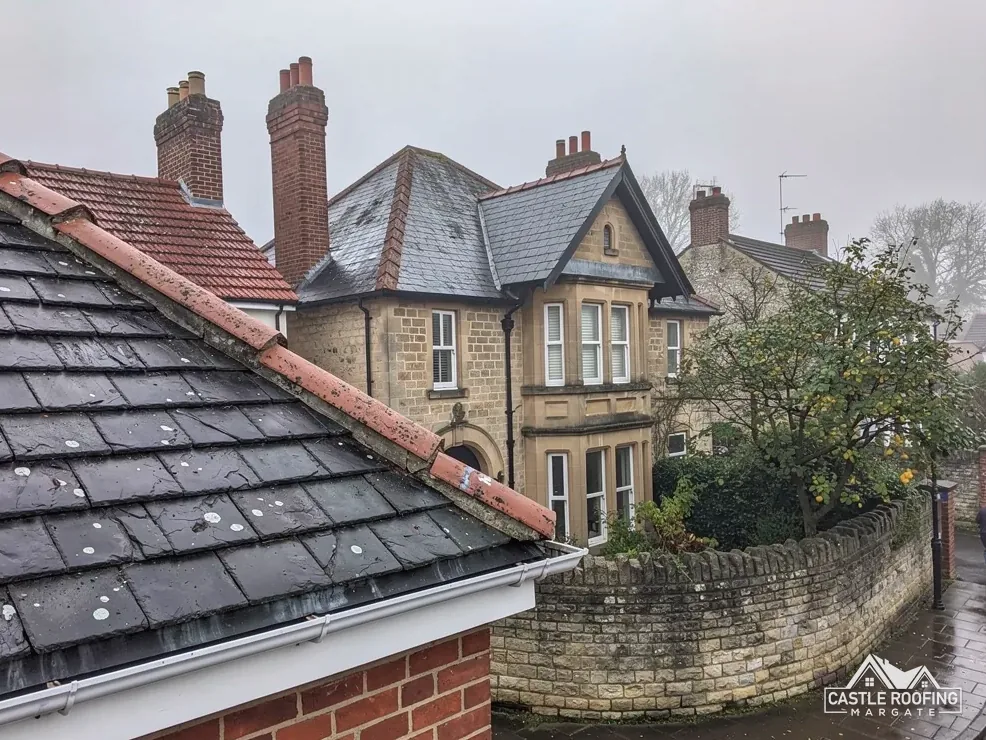
Nine Chimneys, Downs land and two Article 4 areas
Nine Chimneys
Laurenden Forstal Nine Chimneys is Grade II*, so any roof or stack beside it begins with a look at the list.
Landscape land
Challock's centre falls inside the Kent Downs National Landscape, and that status trims the roof additions a house can make unprompted.
Two directions
Ashford's published list shows two Article 4 areas near Challock, so outside changes are checked with the council.
Challock parish
Challock's chimneys, barn and landscape on the record
| Council | Ashford Borough Council |
|---|---|
| Building control | Ashford Borough Council's own Building Control team |
| Scaffold and skip licences | Kent County Council |
| Population, 2021 | 1,089 (Challock parish) |
| From Margate | 29.7 road miles, about 38 min |
| Listed entries within 500 m | 14 on the Historic England list |
| Grade II*, first listed 1984 | Laurenden Forstal Nine Chimneys |
| Grade II, first listed 1984 | Barn Farm Shop |
| Residents, 2021 Census | 1,089 in Challock parish |
A Grade II* house named for its nine chimneys, a Grade II barn shop and a Downs setting put the stacks and the planning paperwork first on a Challock survey.
Sources: ONS Census 2021, Ashford Borough Council, Kent County Council, OSRM road routing.

Challock, chimneys to landscape
Challock roofs, from the nine chimneys of Laurenden Forstal to the Downs around them
Three chapters on the listed stacks, the Kent Downs landscape with its Article 4 areas, and the frost, rain and highway facts behind a Challock job.
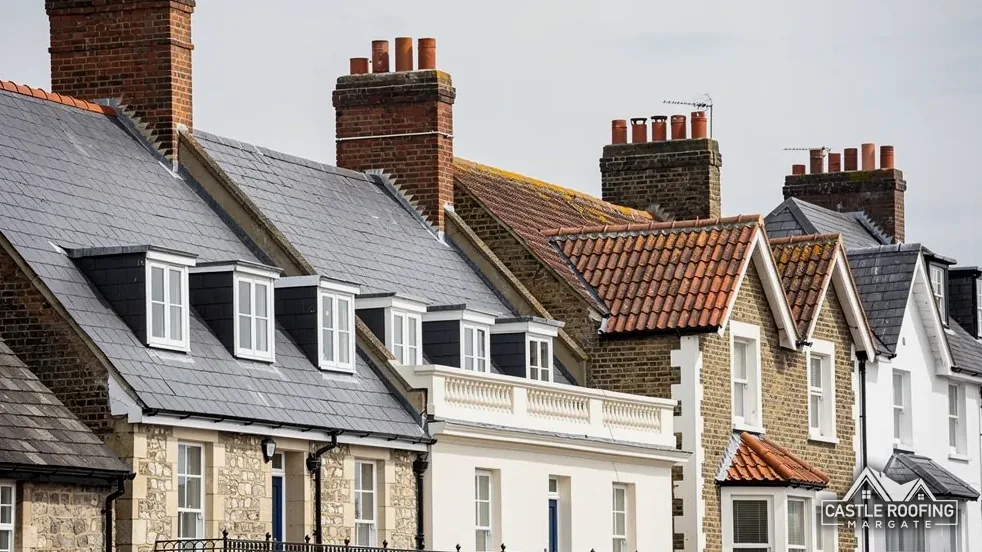
Chapter 01 of 03
Laurenden Forstal Nine Chimneys and the listed barn shop
Challock is 29.7 road miles from Margate, about 38 minutes by road to the south-west, and its headline listing is a house named for its stacks. Laurenden Forstal Nine Chimneys is Grade II*, first listed on 13 August 1984. Barn Farm Shop was also listed on 13 August 1984, at Grade II, and the Clockhouse is Grade II as well. Between them they show how separate buildings close together can each carry their own entry. Historic England's National Heritage List shows 14 entries within 500 metres of the village centre, and Challock parish had 1,089 residents at the 2021 Census.
A listed house is protected as a whole, and on this one the stacks are plainly part of what is protected. Listed building consent, under section 7 of the Planning (Listed Buildings and Conservation Areas) Act 1990, is needed for works that affect a listed building's character. Rebuilding a stack, changing its pots or altering the lead that seals it into the slope would all be judged against that test. Someone else's entry does not stretch to the next house along, though a stack on any older house deserves the same close look, whatever the paperwork says.
A chimney stack has several parts that fail separately. The pots sit in flaunching, the sloping mortar collar that sheds water away from each pot. Below that is the brickwork and its pointing, and at roof level is the lead flashing, the dressed metal that seals the stack into the covering. Each is checked from the ladder or the scaffold, and the pictures show you which one is the problem. Our chimney repairs and lead roofing pages describe how each repair is done.
On a listed house the repair matches what is already there, in brick, mortar and metal, unless Ashford Borough Council agrees a change on application. The application is worded to match the quote, so the council reads what the customer was told. Where the house is not listed, the same inspection still takes in the stacks, because they are the tallest part of the house and the hardest part to judge from the ground. A leaning stack, a stained ceiling beside a chimney breast or loose pots seen from the lane are all worth a call before the next wet spell.
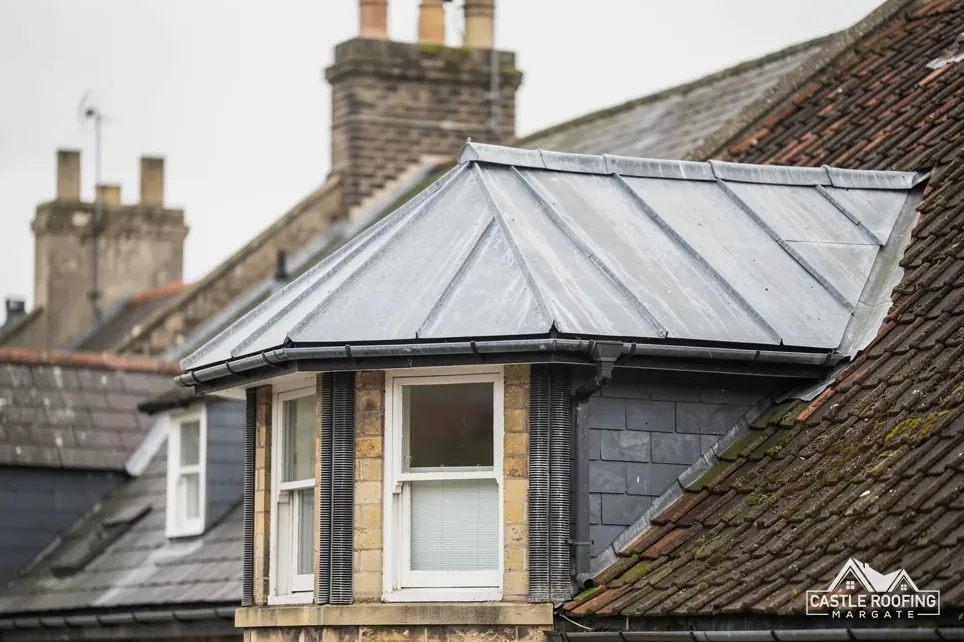
Chapter 02 of 03
Kent Downs land, Article 4 areas and building control
The Kent Downs National Landscape, the name now used for the Area of Outstanding Natural Beauty, takes in Challock's centre, and each address is checked. Land in an area of outstanding natural beauty is article 2(3) land, which means dormers are outside permitted development for a house there. Our roof window planning guide covers the additions that stay open. Whether a conservation area boundary also reaches a Challock address is a question for Ashford Borough Council, since only the council's own map settles it.
Ashford's published list of Article 4 areas shows two near Challock. They are named for the site of School Cottages and for the rebuilding of a dwelling house, and the notices themselves say what each removes. Article 4 directions switch off chosen permitted development rights wherever the council has mapped an area, and each notice says which ones go. Ask the council before changing anything on the outside of the house, and ask early, because a direction may turn a minor job into an application, and a delay costs less at the planning stage than after a scaffold has been booked.
Four checks before a Challock price
Listing entry
The Historic England entry for the address, if there is one.
Landscape status
The Kent Downs status and what it takes from the roof allowance.
Article 4 list
Ashford's Article 4 list, checked against the street.
Approval route
Ashford's Building Control team, using the Planning Portal test.
For a repair or a new covering, the test in planning law is whether the work materially affects the building's external appearance; section 55 of the Town and Country Planning Act 1990 says that work which does not is not development. Building Regulations run alongside. Ashford Borough Council's own Building Control team deals with them, and the Planning Portal sets the practical line: a job affecting less than 25 per cent of the building envelope and less than 50 per cent of the roof is not normally an application. A covering made 15 per cent or more heavier does need approval whatever the area, and on that kind of change the Planning Portal points Challock owners towards a structural engineer or surveyor first.
Flats in a converted building are outside the householder rules, since a dwellinghouse for permitted development excludes any building containing flats. The roof's owner has to act, and finding out whether that is a freeholder, a managing agent or a residents' company is the first call on any such job in Challock.
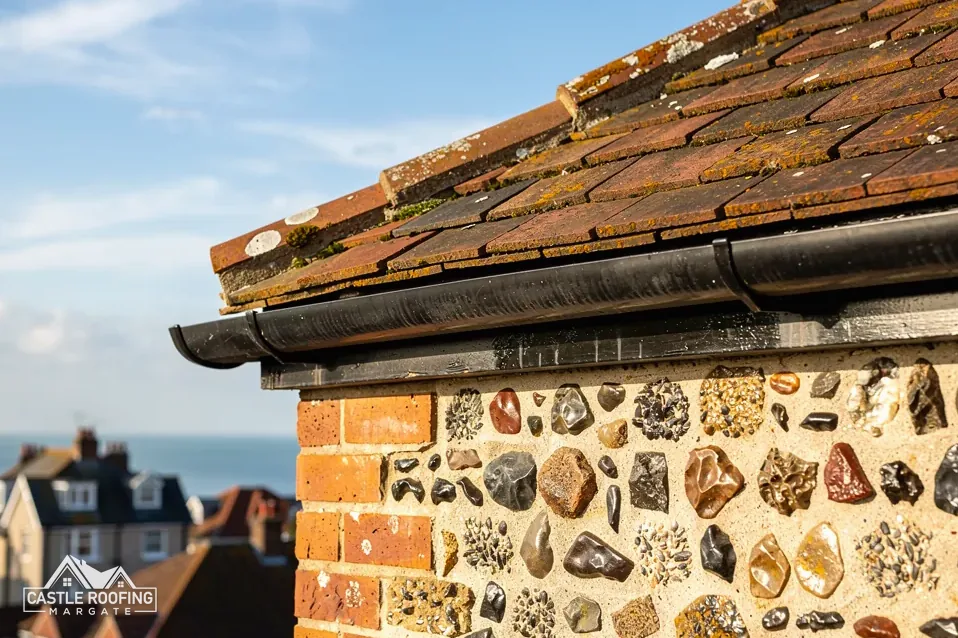
Chapter 03 of 03
Frost, rain and highway licences on Challock's lanes
The Met Office averages for Manston, 1991 to 2020, are about 613 mm of rain a year, 110 days with 1 mm or more, 21.43 days of air frost and a mean wind of 9.86 knots at 10 metres. Manston is a Thanet station, some distance from Challock, so these are scale figures and not a Challock measurement. They show the sort of year a Kent roof has to come through, wet and frosty in turn, and why covering, mortar and flashings are all specified for repeated wetting and drying.
BS 5534, the standard for slating and tiling, is the method for working out how many fixings a roof needs from the exposure of the site. Cupa, a slate maker, grades buildings on slopes or hills as more exposed than sheltered ones, so a Downs position is judged individually and not assumed. Frost is one reason mortar flaunching and pointing are inspected on every stack: water that gets into a crack and freezes opens it a little further each time. Mortar is not banned, and it is no longer relied on alone to hold ridge tiles, so a ridge or verge that has been bedded in mortar for many years is checked for secure mechanical fixing as well.
Highway paperwork comes from Kent County Council, not from Ashford. A scaffold on a Challock lane needs a licence under section 169 of the Highways Act 1980, and Kent County Council issues it on the scaffolding company's application, with 5 working days' notice. A householder files nothing, and the dates are agreed with you before the scaffold is ordered. The charge is £52 per week for 2026 to 2027, a site inspection is £78 if the council calls for one, and 1.2 metres stays clear between scaffold and carriageway. Lanes without a footway need the dates agreed with neighbours who rely on the road, and a driveway or gateway is never blocked without a word beforehand. Where a footway is narrow or missing, the scaffold layout is drawn first so that the required gap to the carriageway can be kept.
A skip standing on a lane carries its own Kent County Council permit, £45 per week for 2026 to 2027, on the same notice and within 5 metres by 2 metres. Old battens, underlay and lead go into it as the roof is stripped, and the lane is swept before the crew leaves. The table below sets out the weather figures used in this chapter, each with its source.
| Measure | Average |
|---|---|
| Rain in a year | About 613 mm |
| Manston days with 1 mm or more of rain | 110 |
| Manston days of air frost | 21.43 |
| Manston mean wind at 10 metres | 9.86 knots (Manston) |
Source: Met Office, Manston 1991 to 2020
10-Year workmanship guarantee. In writing
Around Challock
Round Challock, across Ashford's Downs edge
Challock comes under Ashford Borough Council for planning and building control, with Kent County Council responsible for lane and highway licences, so the same two offices handle every road in the parish, from the village centre to its outlying farms.
Challock chimneys, Downs rules and who to ask
Does the Nine Chimneys listing mean other Challock stacks need consent?
No. Laurenden Forstal Nine Chimneys is Grade II*, first listed on 13 August 1984, and that entry covers that house. A neighbouring house has its own entry or none. If yours is listed, section 7 of the 1990 Act asks for consent for works affecting its character, which can take in rebuilding a stack or changing its pots.
Which Challock houses fall inside the two Article 4 areas?
Ashford Borough Council's published list shows two Article 4 areas near Challock, but a list entry does not tell you whether your house is inside one. Ask the council about your address. A direction under Article 4 takes chosen permitted development rights away across a stated area, and the notice sets out which.
Is my Challock house inside a conservation area?
Ashford Borough Council is the body to ask. Summary datasets miss things, so the council's own answer is the one that counts. If a conservation area does cover the house, it counts as article 2(3) land, which changes the roof additions allowed, and we get the council's answer in writing before drawing anything.
Can a Challock house fit a loft window inside the Kent Downs?
A window in the roof slope is a different question from a dormer. The Kent Downs National Landscape is article 2(3) land, so permitted development for dormers does not apply, and our roof window planning guide sets out the conditions for windows. Ashford Borough Council confirms what applies to your house before a window is ordered.
Which jobs on a Challock re-roof go to Ashford and which to Kent?
Ashford Borough Council handles planning and runs its own Building Control team. The Planning Portal's national test sets 25 per cent of the building envelope and 50 per cent of the roof as the limits; a heavier covering, by 15 per cent or more, needs approval whatever the share. Kent County Council issues the scaffold licence, at £52 per week for 2026 to 2027, and the skip permit at £45 per week.
A Challock roof, seen before it is priced
Send photos or arrange a visit; the survey of the Challock roof ends in one written total.