Three situations that call for a make-safe straight away, a list of leaks that can wait for daylight, what to do indoors in the meantime, and where your rights stand when you ask for an urgent visit.
A leak rarely picks a convenient moment. It starts on a wet Sunday evening, or you notice the ceiling sagging after a night of rain, and the question in your head is whether this justifies a call right now or can wait until a proper survey is possible. The honest answer is that it depends on where the water is going and what it is touching.
This page sorts roof leaks into those two groups. A few signs mean the house should be made safe at once, because they put people at risk or let a lot of water in. Plenty of others are real faults that deserve a repair soon but not a rushed one, and treating them as emergencies costs more than it needs to. After that comes what you can do indoors while you wait, what to photograph for an insurer, and the single case in which the law deals with an urgent callout otherwise than a planned job. If water is coming in as you read this, our page on roof repairs and emergency work lists how to reach us by phone or WhatsApp.
Three signs that mean make it safe now
A make-safe is the temporary job that stops the harm tonight: a slate refixed, a sheet over an opening, a loose ridge tile secured. Three situations call for one without delay, because the risk is to people, not only to plaster.
- Water near anything electrical. If it is dripping from or around a ceiling light, a junction box, a socket or a fan, leave that light and fitting off and isolate that circuit at the consumer unit. Do not touch a wet fitting. Have an electrician check the wiring before the circuit is used again.
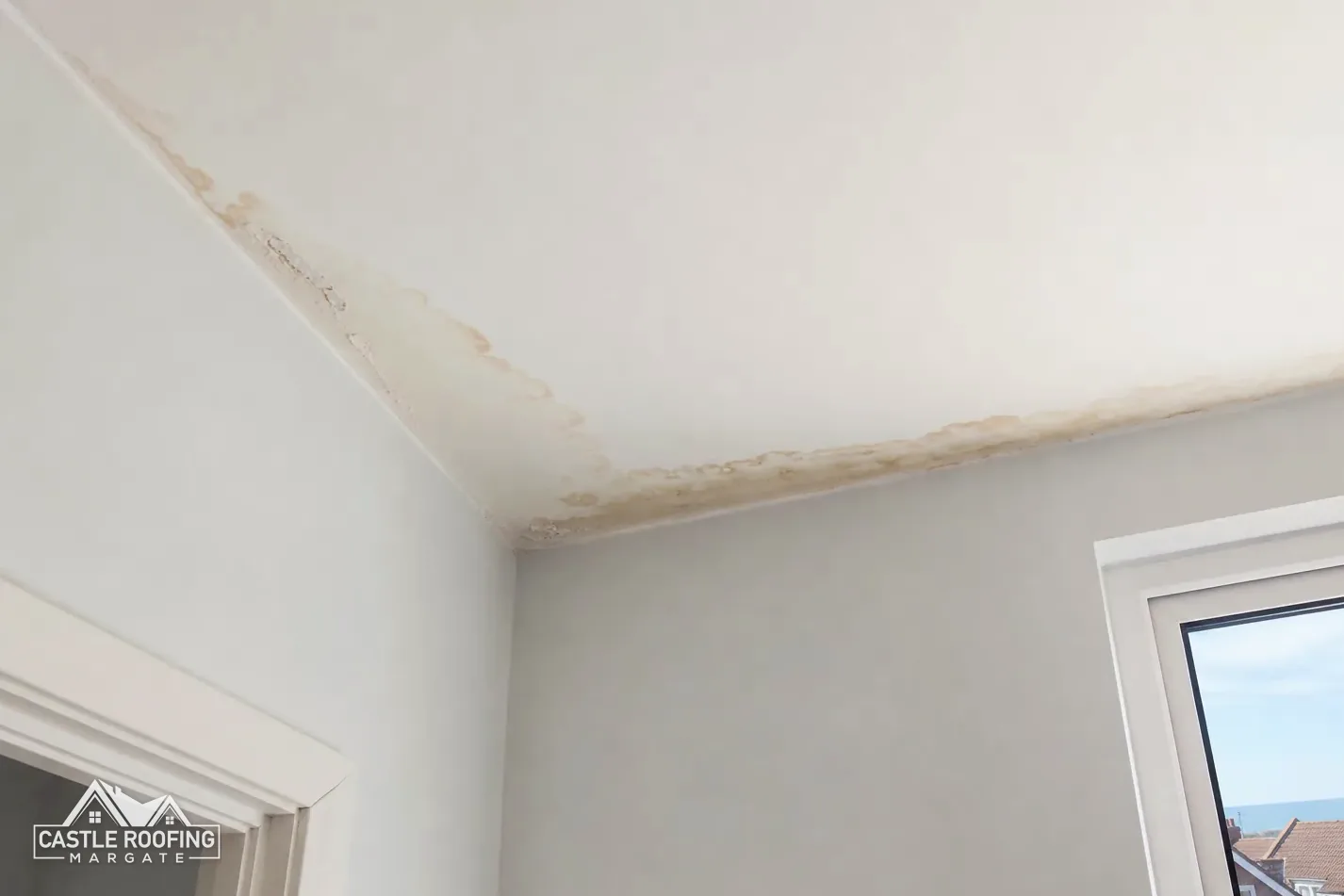
- A ceiling that is bulging or sagging. Plasterboard holding water is heavy and can come down without warning. Keep everyone out of that room and keep furniture and the bed out of the area below.
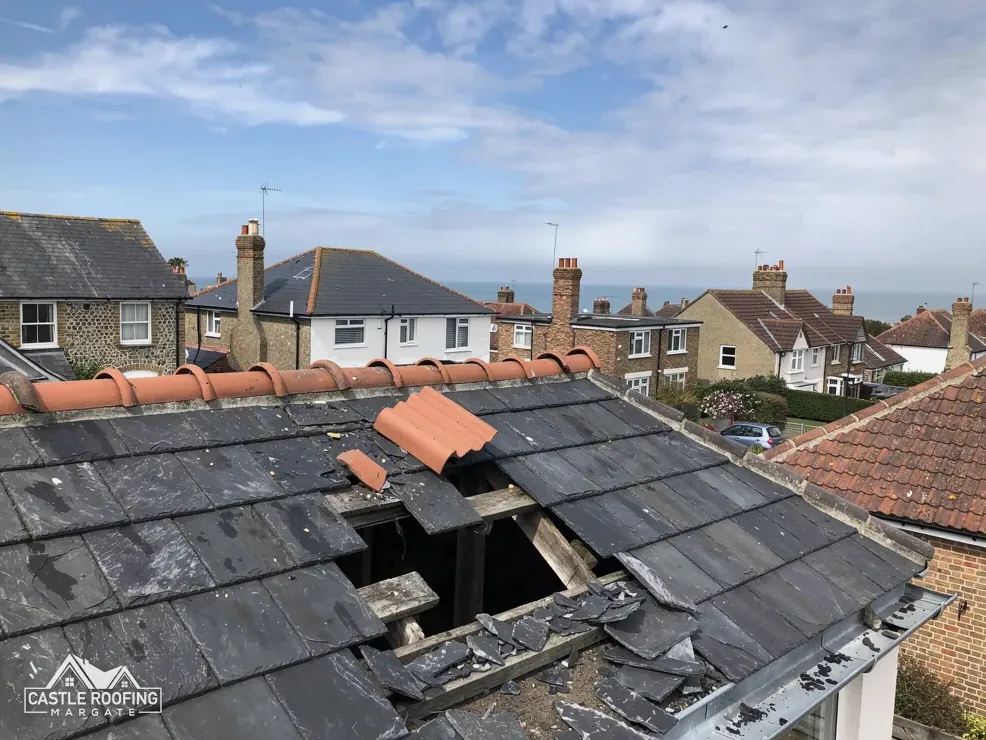
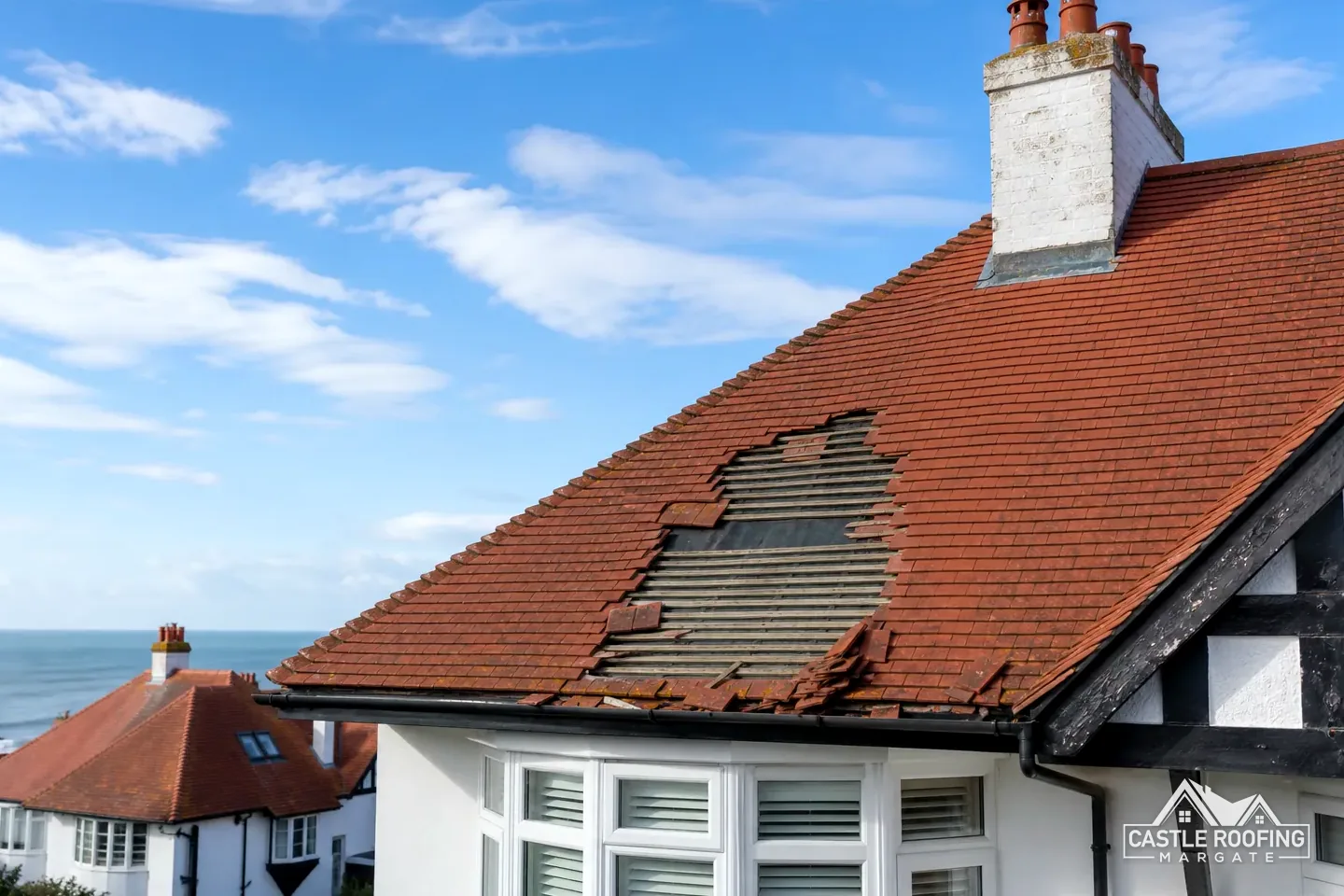
- A missing section of roof. A gap where slates, tiles or ridge pieces have gone, or daylight visible from the loft, lets in as much rain as the weather brings, and pieces still loose can fall onto a path or a neighbour's garden.
In each case the first job is to get people away from the hazard. After that, ring for a make-safe and say plainly which of the three you have. Never go onto the roof yourself. Wet slate and moss are slippery, and the Work at Height Regulations 2005 ask employers to take suitable measures to prevent falls: that duty is why a roofer arrives with proper access, and it is a good reason for you to stay on the ground.
Leaks that can wait for a proper visit
A leak can be a real fault without being an emergency. A slow drip into a bucket, a stain that has not grown, or a damp patch after a wet week all need finding and mending, yet none of them needs a scramble at night. A rushed job in the dark and rain risks a patch that fails by spring, and a surveyed repair done in daylight can save paying for two visits.
| What you see | Urgency | Do meanwhile |
|---|---|---|
| Slow drip into a bucket | Soon, not tonight | Bucket, towel, photos |
| Stain that has stopped growing | Book a survey | Mark the edge in pencil |
| Damp patch on a still, cold morning | Check for condensation first | Ventilate, note the weather |
| Gutter overflowing at the corner | Next dry day | Photograph the overflow |
| Cracked tile, no leak inside | Planned repair | Photograph from the ground |
Condensation is worth ruling out, because damp air condensing in a cold loft can run off nails and timber without any rain at all, and it often shows on still, cold mornings.
Waiting is not the same as ignoring. A leak left for months soaks insulation and timber, so book the survey, mark the stain's edge in pencil and photograph it every few days. If the patch grows quickly, or the weather forecast turns, it has moved into the first group and needs a roofer sooner.
What to do indoors while you wait
Whichever group the leak falls into, the hour after you spot it is yours to use. A few steps indoors limit the damage and give the roofer a clearer picture.
- Shift furniture, rugs and lamps out from under the drip, and unplug chargers and extension leads on nearby tables.
- Put a bucket or a washing-up bowl under it, with a folded towel inside to deaden the splash and the noise.
- Cover what cannot move with polythene or an old sheet, and lift any carpet edge that is soaking.
- Photograph the stain, the drip and the wet belongings, with a wide shot of the room.
- If it is safe to stand on the joists, look at the roof timbers from the loft with a torch, and note dark streaks or damp insulation. Never step between the joists onto the ceiling.
- Write down the time it started, how heavy the rain was and which way the wind was blowing.
Resist the urge to put a tarpaulin over the roof from a ladder. A sheet that is not fixed properly can lift in the next gust and strip tiles with it. Our page on a tarpaulin over a roof leak explains what a safe one involves and who should fit it.
If a bulge in the ceiling is growing, it is better to stay out of the room and let someone with the right equipment deal with it, because the water has to go somewhere and the plaster will not choose a quiet moment.
Photos and the insurer call
If the house is insured, call the insurer early. IStructE's advice runs in this order: insurer first, then a make-safe, with every photo and receipt kept along the way. The photographs in the list above are not only for the roofer. They are the record of how the damage looked when it was fresh, and they are what the insurer sees.
Which? notes that most insurers run a 24-hour emergency helpline, so the call to the insurer can come before the call to the roofer, or straight after it. Ask what the policy needs before temporary work begins, and whether the insurer wants to inspect first. Keep the receipt for the make-safe, because it belongs in the claim, and ask whether the insurer has a preferred contractor you must use.
- Photograph the inside damage and any wet belongings before you move them.
- Photograph the roof from the ground, taking in the area where you think the water entered.
- Keep fallen slates, tiles or lead exactly as they came off.
- Write down the date and time you first saw the leak.
Whether a leak counts as storm damage turns on the storm wording in your policy, and the Financial Ombudsman Service says insurers often exclude damage that develops gradually or results from ordinary ageing. Our page on whether a roof leak is covered by insurance goes into that in more detail. The roofer describes what the roof shows; the insurer decides the claim.
Your rights when you ask for an urgent visit
A contract signed in your own home usually brings a cooling-off period, yet a call you make about an urgent problem is handled differently. It helps to know which side of the line you are on before anything is signed.
- Signing at home, say in the living room once the roof has been surveyed, makes the deal an off-premises contract, and the cancellation window closes at the end of 14 days after the day you agreed.
- If the trader never told you about your right to cancel, the period can run for up to 12 months longer.
- Starting the work inside those 14 days needs your written request.
The exception is the visit you request yourself because of an urgent problem. Regulation 28(1)(e) of the Consumer Contracts Regulations 2013 removes any right to cancel where you yourself asked the trader to call round for urgent repair or maintenance work. The text is on regulation 28 on legislation.gov.uk, and it is short. So an emergency make-safe you ring for is not covered by the 14 days. Do not read it too widely: a larger job suggested on the same visit, such as replacing the whole slope, is a separate contract, and it is worth treating it as one.
The Consumer Rights Act 2015, section 49, expects reasonable care and skill from the trader, whatever the contract says. The Citizens Advice consumer helpline is 0808 223 1133.
Our answer on cancelling an emergency roof repair sets out where the line sits.
Cost, scaffold and what a make-safe is
MyJobQuote (October 2026) gives a typical UK range for an emergency roofer's call-out of £150 to £300, with extensive storm damage repairs costing £1,200 or more. Treat those as national guide figures rather than a price for your roof. Our written price is one total, issued after the roof has been seen or your photos have been studied, and it covers the make-safe and any repair we agree.
A make-safe and a permanent repair are often separate jobs on separate days, for good reasons. Slates and lead need dry weather. Materials may need ordering to match what is there. And if the lasting repair needs scaffold over the pavement, a licence has to be in place first. Kent County Council issues scaffold licences, the scaffolding company applies for one, and the council asks for 5 working days' notice. That is why the first visit often stops the water and the second puts the roof right.
- The make-safe is described to you as temporary.
- It is photographed, so you and the insurer can see what was done.
- It is taken off or folded into the lasting repair.
- The lasting repair is given as a single written total after the survey is complete.
On the first call, expect to be asked where the water is, what it is near, and for photos. We then say what can be made safe and what should wait, with no promise about when anyone arrives until the roof and the weather are understood. That is the ordinary way to separate a real emergency from a job for the diary, and it protects you from paying emergency rates for a slow drip.